

 | Today's Date:

Iraqi Forces Enter Kataib Hezbollah Stronghold Jurf al-Sakhar After Oil Probe
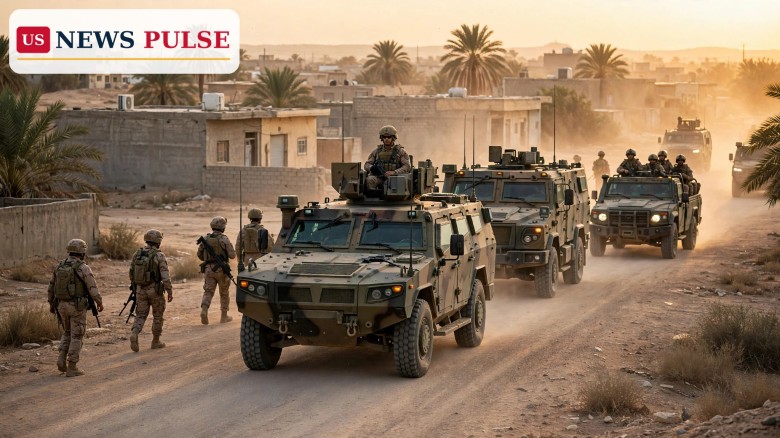
Iraqi security forces moved into Jurf al-Sakhar on Friday, November 20, 2026, entering a town the Iran-aligned armed group Kataib Hezbollah has controlled for about a decade. The deployment follows a compromise deal struck the day before and an investigation into an oil-smuggling network that investigators say siphoned state-owned oil worth hundreds of millions of dollars through illicit refineries in the area.
It is the first time in roughly 12 years that Iraqi state forces have taken up positions inside the town, in Babil province about 50 to 60 kilometres southwest of Baghdad. Under the deal, its members are expected to withdraw within a month, and its 45th, 46th and 47th brigades are to be reassigned.
Key Points
- Iraqi security forces deployed in Jurf al-Sakhar, also known as Jurf al-Nasr, on Friday, November 20, 2026, ending about a decade of control by the Iran-aligned Kataib Hezbollah armed group.
- The move follows a compromise deal sealed on Thursday, November 19: Kataib Hezbollah members are expected to withdraw within a month, and its 45th, 46th and 47th brigades are to be reassigned.
- Prime Minister Ali al-Zaidi ordered the deployment after an investigation found an oil-smuggling network siphoning state-owned oil worth hundreds of millions of dollars through illicit refineries in the area.
- Nine senior security and oil officials have been dismissed in connection with the investigation, according to security officials.
- Kataib Hezbollah, branded a terrorist group by the United States, has denied the smuggling claims. It has held the town since recapturing it from Islamic State in 2014.
What Happened
On Friday, Iraqi security forces deployed across Jurf al-Sakhar. The joint force comprises an Iraqi army brigade, a Federal Police battalion and an Energy Police regiment assigned to guard oil pipelines, along with two brigades from the Popular Mobilisation Forces. A new command headquarters was set up in the town, and a strategic road is due to reopen on Saturday.
The deployment was not a battle for the town. It followed the compromise deal sealed on Thursday, which lets the state return to a place closed off for about 12 years without a direct confrontation with one of Iraq's most powerful armed groups. Prime Minister Ali al-Zaidi ordered the move after the oil-smuggling investigation, and it was driven by pressure from the United States and its Gulf allies, according to Al Jazeera.
Background: Jurf al-Sakhar and a Decade of Militia Control
Jurf al-Sakhar sits in Babil province southwest of Baghdad, where control of roads, farmland and oil infrastructure has long been contested. Kataib Hezbollah took the town as it helped recapture the area from Islamic State in 2014. The town then remained closed off, and the group kept its grip even after Islamic State was driven out of the rest of the country.
Kataib Hezbollah is one of Iraq's most powerful Iran-aligned armed groups and a prominent part of the Popular Mobilisation Forces, the state-linked umbrella of mostly Shia paramilitary groups. The United States has branded it a terrorist group. The town's long closure became a symbol of the limits of Baghdad's authority.
Jurf al-Sakhar Oil Smuggling Probe: What the Investigation Found
The trigger for the deployment was the oil-smuggling investigation. According to security officials, investigators found a network siphoning state-owned oil worth hundreds of millions of dollars through illicit refineries in the Jurf al-Sakhar area. Oil is the backbone of Iraq's economy, so theft on that scale is both a financial blow and a political one.
Nine senior security and oil officials have been dismissed, a sign of how far the alleged network reached into the institutions meant to protect Iraq's oil. The Energy Police regiment in Friday's deployment is there to guard the pipelines, cutting off the route the network is accused of exploiting. Kataib Hezbollah has denied the claims, setting up a dispute over the facts that will matter as the investigation proceeds and the withdrawal is tested.
Reactions
The clearest reaction so far has come from Kataib Hezbollah itself, which has denied the smuggling claims at the heart of the investigation. The denial matters because the deployment rests on the finding that a smuggling network operated through illicit refineries in the town.
Al Jazeera reported that the deployment was driven by pressure from the United States and its Gulf allies, who have long pressed Baghdad to curb Iran-aligned armed groups and stop oil revenues leaking outside state control. For Prime Minister Ali al-Zaidi, the operation is a public assertion of state authority, and the dismissals of nine senior officials present it as a clean-up operation aimed at corruption as well as militia control.
Why It Matters
The deployment matters first because it breaks a stalemate that has lasted about 12 years. Jurf al-Sakhar has been closed off since Kataib Hezbollah took it in the fight against Islamic State, and its reopening restores the state's presence in a part of Babil province where Baghdad's writ did not run. For residents, it could mean the return of normal state services and freedom of movement, if the deployment holds.
It matters second because of the oil. Iraq depends on oil revenue to fund its government, and a smuggling network worth hundreds of millions of dollars is a direct drain on the state. It matters third for the wider region: a peaceful, negotiated entry into a Kataib Hezbollah stronghold is the outcome Baghdad, Washington and the Gulf states would prefer. But a compromise is only as strong as its follow-through, and the test will be whether the group's members actually leave within a month.
What Happens Next
The immediate test is the timetable in the compromise deal. Kataib Hezbollah members are expected to withdraw from Jurf al-Sakhar within a month, and the group's 45th, 46th and 47th brigades are to be reassigned to other duties. The new command headquarters will oversee the transition, and the oil-smuggling investigation continues.
Readers can follow the wider regional picture in our coverage of a Houthi missile striking Riyadh's PIF Tower, Saudi Arabia shooting down a Houthi missile and five drones and Russian missiles landing in Poland as Warsaw suspects deliberate provocation.
Frequently Asked Questions
What happened in Jurf al-Sakhar?
Iraqi forces deployed there on Friday, November 20, 2026, ending a decade of Kataib Hezbollah control under a compromise deal sealed the day before.
Why did Iraqi forces move into the town?
Prime Minister Ali al-Zaidi ordered it after an investigation found an oil-smuggling network worth hundreds of millions of dollars. Nine senior security and oil officials have been dismissed.
What is Kataib Hezbollah?
It is an Iran-aligned Iraqi armed group and a prominent part of the Popular Mobilisation Forces. The United States has branded it a terrorist group. It has held Jurf al-Sakhar since helping recapture it from Islamic State in 2014.
Will Kataib Hezbollah leave the town?
Under the deal, its members are expected to withdraw within a month, and its 45th, 46th and 47th brigades are to be reassigned.
What happens next?
A new command headquarters is set up in the town, a strategic road reopens on Saturday, and the investigation continues. The test is whether the withdrawal happens on schedule.

The US News Pulse newsroom covers breaking news across the United States and the world, working from wire services, official statements and on-the-record sources. Every story is reviewed against our editorial standards before publication. Corrections and tips: info@usnewspulse.com
About our newsroomLeave a Comment