

 | Today's Date:




Army Plans to Resume Helicopter Training Near Reagan National in December
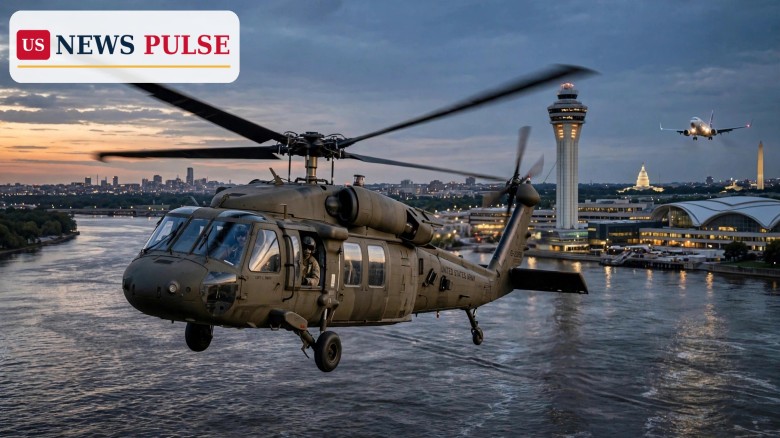
The US Army intends to resume helicopter training flights through the crowded airspace around Ronald Reagan Washington National Airport as early as the second week of December, nearly two years after a midair collision over the Potomac River killed 67 people. An Army spokesperson told Politico on Monday that "there is intent to resume flights" and that it is coordinating with the Federal Aviation Administration and Congress. But the FAA said Friday, November 21, that it has received no formal request and no new agreement is in place, leaving the timetable and the safety questions around it unresolved.
Key Points
- The Army told Politico on November 23 it intends to resume helicopter training flights around Reagan National, possibly the week of December 6.
- The FAA said on November 21 it has received no formal request; approval is required before training restarts.
- Training flights were suspended in May 2025 after a Black Hawk came too close to the airport, forcing diversions.
- It follows the January 29, 2025 midair collision between an Army Black Hawk and an American Airlines jet that killed 67.
- Rep. Don Beyer and Sen. Maria Cantwell say safety measures and a full risk assessment must come first.
What Happened
The plan surfaced on Monday, when Politico reported the Army intends to restart the training flights, possibly in the second week of December. An Army spokesperson confirmed the intent, saying the service is working with the FAA and Congress; officials briefed congressional committees last week.
The FAA pushed back. On Friday, November 21, it said it had received no formal request and that approval would be required before any flights could restart. No new agreement is in place. That leaves the Army's December target as an ambition, not an approved schedule: it can say it intends to fly, but it cannot fly until the FAA signs off.
Background: The Collision That Changed the Rules
Reagan National sits in some of the most crowded airspace in the United States, its runways just across the Potomac from downtown Washington, where commercial jets share the sky with military helicopters.
That shared airspace turned deadly January 29, 2025, when an Army Black Hawk collided with an American Airlines regional jet, Flight 5342, over the Potomac as it approached Reagan National. All 67 aboard both aircraft were killed.
The National Transportation Safety Board later found the probable cause was the FAA's failure to act on recommendations to reduce midair-collision risk near the airport, putting the regulator, not just the Army, at the centre of the tragedy.
Training flights were suspended in May 2025, after a Black Hawk came too close to the airport and forced diversions. Since then, Congress has mandated ADS-B In technology, which lets aircraft see each other's positions, after the crash. The Army says it is ready to return, but the NTSB's recommendations are not all implemented and the FAA's statement makes clear the formal approval process has not begun.
Army Helicopter Training Near Reagan National: The Plan
What the Army describes is a resumption, not an expansion: training flights through the same airspace as before, coordinated with the FAA and briefed to Congress. It has not said how many flights it plans, which routes they would use, or what safety procedures would apply — details normally settled in the formal request the FAA says it has not received.
The timing matters: the second week of December would put the flights back in the air during one of the busiest travel periods of the year. But coordination is not approval. Until the Army files its request and the FAA reviews it, there is no approved plan — and no date on which a helicopter can legally return to the training routes.
Reactions and Quotes
The strongest reaction came from Senator Maria Cantwell of Washington, the Senate Commerce Committee's top Democrat. Cantwell said resuming training flights around Reagan National is "exactly the wrong direction" until critical safety measures are in place and a full safety risk assessment is complete.
Representative Don Beyer, a Virginia Democrat whose district includes Reagan National, was more measured but raised the same concern: the Army had assured his office no flights would take place without FAA approval, he said on November 23, but NTSB recommendations have not been fully implemented.
The Army has not backed away. Its spokesperson's statement — "There is intent to resume flights" — was brief but deliberate. The FAA was equally deliberate: by saying publicly it has received no formal request, it made clear the Army cannot simply announce its way back.
Why It Matters
It matters because the airspace over the Potomac is where the deadliest American aviation disaster in a generation happened, and the safety fixes ordered after it are still unfinished. The NTSB's finding that the FAA failed to act on warnings about collision risk near Reagan National was a rebuke of the system meant to keep the skies safe. Resuming training flights there before the recommendations are fully implemented would test whether the lessons of January 2025 have been learned.
Reagan National is not a remote training range: it is one of the busiest airports in the country, minutes from the White House and the Capitol. The airport's crowded airspace has already drawn scrutiny this year, including the FBI's hunt for three men who flew a drone in restricted airspace at Reagan National. The public will be watching the first helicopter that returns — and remembering the 67 people who did not come home.
What Happens Next
The next step is the Army's: file the formal request the FAA says it has not received. Once it does, the FAA will review the proposal — routes, altitudes and safety procedures — before deciding. Congress will be watching: the Senate Commerce and Armed Services committees have been briefed, and Cantwell expects a full safety risk assessment before any approval.
If the FAA approves, the first flights could follow soon — the Army has spoken of the second week of December. If the agency asks for changes, or lawmakers demand more, the return could slip into the new year. Either way, the flights will not resume until the FAA says yes.
Frequently Asked Questions
When could Army helicopter training flights resume?
The Army aims to resume flights in the second week of December, but the FAA says it has received no formal request and approval is required first. There is no confirmed date.
Why were the training flights suspended?
They were suspended in May 2025 after a Black Hawk came too close to Reagan National and forced diversions, months after the January 2025 collision that killed 67 people.
What did the NTSB find?
The NTSB found the probable cause was the FAA's failure to act on recommendations to cut midair-collision risk near Reagan National.
What are lawmakers saying?
Sen. Maria Cantwell called the resumption "exactly the wrong direction" until safety measures and a full risk assessment are done; Rep. Don Beyer said the Army assured him no flights will happen without FAA approval.
Does the Army need FAA approval to resume?
Yes. The FAA says approval is required before training can restart, and no new agreement is in place.

The US News Pulse newsroom covers breaking news across the United States and the world, working from wire services, official statements and on-the-record sources. Every story is reviewed against our editorial standards before publication. Corrections and tips: info@usnewspulse.com
About our newsroomLeave a Comment