

 | Today's Date:




FCC Tech Import Waivers: 71 Firms Pledge $4.4 Billion and 4,700 US Jobs - US News Pulse
The Federal Communications Commission has granted conditional waivers to 71 companies, allowing them to keep importing drones, wireless routers, robots and power inverters into the United States in 2026 even though the equipment sits on Washington's national-security "covered list" — and in return the firms have pledged $4.4 billion in investment and 4,700 American jobs to move production onto US soil.
The FCC tech import waivers, reported by Reuters on Friday, November 20, 2026, show the FCC using access to the American market as leverage to pull technology manufacturing home. Companies may keep selling gear that would otherwise be barred, but only while they build the factories and hire the workers the agency says security demands.
Key Points
- The FCC granted conditional import waivers to 71 companies covering drones, wireless routers, robots and power inverters on the national-security "covered list".
- In exchange, the companies committed to $4.4 billion in investment and 4,700 jobs to shift production to the United States.
- The FCC's own graphic rounds the figures to $4 billion in investment and 4,000 jobs.
- More than ten Wi-Fi router vendors plan to start manufacturing in the United States soon under the programme, according to PCMag.
- The FCC may next target Chinese optical transceivers used by data centres.
What Happened
The Federal Communications Commission issued the waivers to 71 companies whose products appear on its "covered list" of communications equipment deemed a threat to national security. Without a waiver, the gear could not legally be imported or sold in the United States. The waivers are conditional: they let imports continue in 2026 while the companies carry out the manufacturing commitments they made to the agency.
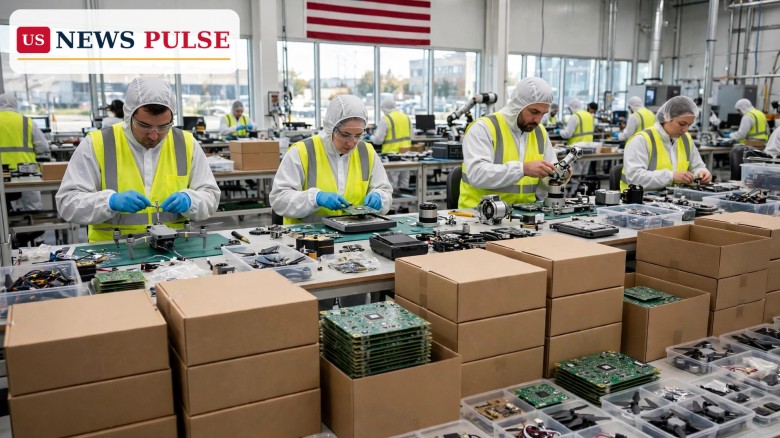
The products at issue are not niche. Drones are used by farmers, surveyors, police departments and filmmakers; wireless routers sit in tens of millions of American homes and offices; robots and power inverters run through warehouses, factories and solar installations. A sudden ban would have disrupted all of those markets at once, which is why the FCC chose a negotiated path instead of a cliff edge.
Background: The Covered List and the China Tech Crackdown
The waivers are the latest step in a rapid escalation of FCC action against Chinese-linked technology. In July 2026 the agency voted to bar the sale of devices containing key hardware from Chinese firms deemed national security risks. In October it voted to bar all Chinese laboratories from testing electronic devices, including smartphones, cameras and computers, for use in the United States.
FCC Chair Brendan Carr argued then that testing labs were a "critical gateway" with access to sensitive product information months before it reached the market, and said they could "allow insecure gear into the US market, disrupt communications networks, or even steal intellectual property". The agency noted 82 percent of electronics were tested in China in 2025, against about 4 percent in the United States. December import bans on new Chinese drone models and new Chinese-made consumer routers are also due. The waiver programme sits on top of those bans: the same gear Washington is pushing out is allowed in temporarily, on condition the companies build in America instead. For more, see our report on the FCC's move to bar Chinese labs from testing US electronics.
FCC Tech Import Waivers: What the Deal Requires
The bargain is simple: market access in exchange for American factories. Each of the 71 companies keeps the right to import its covered equipment while it invests in US production, hires American workers and re-routes its supply chain away from facilities Washington distrusts. The waivers are conditional, so the privilege lasts only as long as the commitments behind it hold.
Wi-Fi routers are the clearest early test. More than ten router vendors plan to manufacture in the United States soon under the programme, according to PCMag, a notable shift for a category long dominated by overseas assembly.
Reactions: Security Tool or Industrial Policy?
FCC Chair Brendan Carr praised the policy as a national-security tool that drives manufacturing growth, presenting the waivers as proof Washington can use its market power to rebuild domestic industry without cutting off products Americans need today.
Commissioner Anna Gomez, the FCC's lone Democrat, criticised the programme as industrial policy unrelated to security. Her objection goes to the heart of the debate: is the covered list a security instrument, to be used only where a genuine threat exists, or a lever for reshaping where technology is made? The Senate Commerce Committee advanced Carr's senior counsel, Danielle Thumann Severs, to join the commission 15-0 after Democrats boycotted the hearing. Industry reaction has been quieter: router vendors preparing US lines suggest manufacturers see the waivers as a workable bridge — keep selling now, build later.
Why It Matters
The waiver programme shows how the United States now governs technology trade: not with tariffs alone, but with conditional access to the world's largest consumer market. For buyers, the waivers mean drones, routers, robots and inverters stay on shelves while domestic alternatives are built. For workers, the pledged 4,700 jobs and $4.4 billion are a concrete, if promised, payoff. And the programme sets a template: if the FCC can trade import permission for factory construction here, the same approach could spread to other covered equipment, turning a security blacklist into a broader industrial policy tool. That is what Commissioner Gomez warned about, and what Chair Carr celebrates.
What Happens Next
The first thing to watch is whether the router vendors follow through, with factory announcements, hiring and production timelines showing whether those plans are real. The second is the FCC's next target: the agency may move against Chinese optical transceivers used by data centres, the components Microsoft warned in November could stall the American AI buildout if banned outright. The waivers themselves will also need watching: if the investment and jobs materialise, the FCC can claim a rare win for security and manufacturing alike. For the wider story of how Carr is reshaping the agency, see our report on the FCC's first-ever approval of prison cellphone jamming.
Frequently Asked Questions
What are the FCC tech import waivers?
Conditional permissions for 71 companies to keep importing drones, wireless routers, robots and power inverters on the FCC's national-security "covered list" that would otherwise be barred.
Which products do the waivers cover?
Drones, wireless routers, robots and power inverters, used in homes, farms, warehouses, factories and solar installations across the United States.
What did the companies promise in return?
$4.4 billion in investment and 4,700 jobs to shift production to the United States. The FCC's own graphic rounds the figures to $4 billion and 4,000 jobs.
Why did Commissioner Anna Gomez object?
Gomez, the FCC's lone Democrat, called the programme industrial policy unrelated to security, arguing the covered list should be a security instrument, not a lever for reshaping where technology is made.
What could the FCC target next?
Chinese optical transceivers used by data centres, the high-speed components at the centre of Microsoft's warning that a ban could stall the US AI data centre buildout.

The US News Pulse newsroom covers breaking news across the United States and the world, working from wire services, official statements and on-the-record sources. Every story is reviewed against our editorial standards before publication. Corrections and tips: info@usnewspulse.com
About our newsroomLeave a Comment