

 | Today's Date:




TSMC Eyes $22.6 Billion Texas Chip Fab in Brazos County, Tax Break Key - US News Pulse
Taiwan Semiconductor Manufacturing Company, the world's largest contract chipmaker, has told Texas officials that a property tax break will decide whether it builds a $22.6 billion chip manufacturing facility in Brazos County, Texas, or expands instead at its existing base in Arizona. The disclosure, in a document filed with the Texas comptroller's office on Monday, November 23, 2026, puts one of the biggest industrial prizes in American manufacturing up for grabs and sets two states that have spent years courting the semiconductor industry into direct competition.
Key Points
- A Texas property tax break under the JETI programme will decide whether the $22.6 billion project goes to Brazos County, TSMC says.
- The site covers 3,200-plus acres and would make 2-nanometre or better chips for AI, computing and mobile devices.
- Arizona, home to TSMC's US plant since late 2024, is the rival site.
- At least 2,099 direct jobs are projected over four decades.
- It is the first public sign of a major new TSMC hub beyond Arizona.
What Happened
A TSMC unit applied to the Texas Comptroller of Public Accounts under the Jobs, Energy, Technology and Innovation programme, known as JETI, seeking a limit on the property taxes the project would pay. In the filing, the company said the requested tax limitation "dictates whether TSMC commits to the project in Texas". The application describes one or more fabs plus support infrastructure on 3,200-plus acres in Brazos County, anchored by Bryan and College Station.
Reuters reported the filing on Tuesday, November 24. It commits TSMC to nothing; it makes the commitment conditional and names the alternative. Arizona remains a rival site, and TSMC said expanding there "may offer certain operational and economic advantages". At $22.6 billion, it would rank among the largest private investments in Texas history.
Background: Why TSMC, Why Texas, Why Now
TSMC makes the chips that power much of the modern world, producing advanced semiconductors for customers including Apple, Nvidia and AMD. As a foundry, it builds chips to order rather than selling its own brand. For decades, almost all of that cutting-edge production sat in Taiwan, a concentration Washington came to see as a strategic risk after the pandemic exposed fragile chip supply chains.
The United States has spent four years trying to change that geography. Federal incentives under the 2022 CHIPS and Science Act lured advanced chipmaking onto American soil, and TSMC answered with a major commitment in Arizona. Its Phoenix complex began operating in late 2024. That is why the filing is so pointed: TSMC is an established Arizona operator telling Texas that a second American hub is possible, but only if the economics work.
Texas is a natural candidate. The state already hosts a large semiconductor ecosystem, including Samsung's growing complex in Taylor and Texas Instruments' expanding operations, and it offers affordable land, low taxes, abundant energy and engineers. Brazos County adds a specific advantage — Texas A&M University in College Station, one of the country's largest engineering schools. The JETI programme, which replaced the expired Chapter 313 scheme, lets school districts limit a new facility's taxable value in exchange for jobs and investment.
The TSMC Texas Chip Fab Plan in Detail
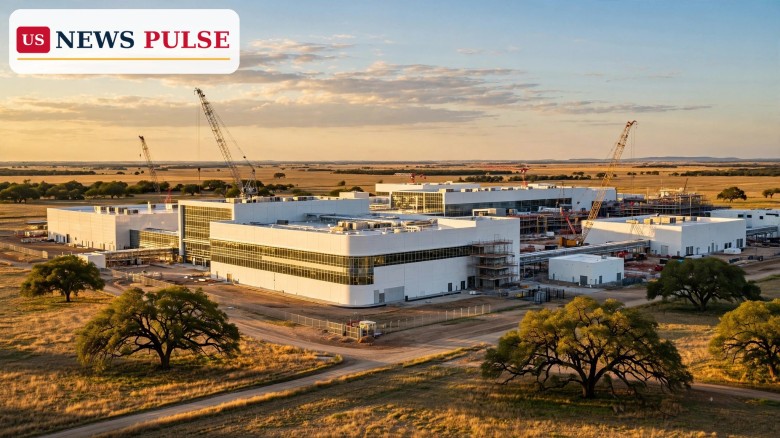
The site spans more than 3,200 acres, far larger than a single fab building, suggesting room for several fabrication plants and support infrastructure. The acreage signals phased thinking: a first plant, with more to follow if demand justifies it.
The technology matters as much as the money. Chips on 2-nanometre processes, or better, are the leading edge: smaller transistors mean faster, more efficient chips. These chips train and run large AI models, power data centres and sit in flagship smartphones. Today that leading-edge production sits overwhelmingly in Taiwan and South Korea.
The jobs figure is modest for the investment, as is typical of modern chipmaking: at least 2,099 direct jobs over four decades, highly skilled and highly paid, pulling in many more indirect jobs. But it also shows why the tax question matters: a fab's economics are dominated by the plant's cost, not its payroll.
Reactions and Quotes
TSMC's own words in the filing are the clearest statement of its position. The company said the requested tax limitation "dictates whether TSMC commits to the project in Texas", leaving no doubt about what it wants. On the alternative, it was equally direct, saying that expanding in Arizona, where it has operated a semiconductor plant since late 2024, "may offer certain operational and economic advantages". Together they frame a straight comparison of costs.
Texas officials have not commented publicly, and the comptroller's office has set no date to act. Under JETI, the process involves the comptroller, the school district and the governor's office, and takes months. The proposal now becomes a public debate in Texas over whether the break is worth the jobs. Arizona can afford to wait: its Phoenix complex is already a cornerstone of its economy.
Why It Matters
The first reason is national security. The United States has made reshoring advanced chip production a strategic priority, arguing it cannot depend on factories an ocean away for the components in its military systems, AI infrastructure and economy. Every leading-edge fab on American soil reduces that dependence.
The second is economic geography. The industry is concentrating in a handful of American clusters — Phoenix, Austin, Taylor, upstate New York — and each new fab deepens the cluster it joins. If TSMC chooses Brazos County, central Texas becomes a third pole of advanced chipmaking in the state; if it chooses Arizona, Phoenix's lead grows.
What Happens Next
The application now enters the JETI review process. Expect hearings in Brazos County on the jobs promised and the tax revenue forgone, and Texas lawmakers to weigh in. TSMC will keep its options open: the most likely sequence is months of negotiation, the tax decision first and the build decision after it. If the limitation is granted on terms TSMC accepts, a commitment could follow quickly. If not, the project goes elsewhere, most plausibly to the desert outside Phoenix.
Frequently Asked Questions
How much would TSMC invest in the Texas facility?
The filing puts it at $22.6 billion.
What kind of chips would the plant make?
Chips on 2-nanometre or better technology, for AI, computing and mobile devices.
How many jobs would the project create?
At least 2,099 direct jobs over four decades.
Why is a tax break the deciding factor?
TSMC says it "dictates whether TSMC commits to the project in Texas".
What happens if Texas refuses the tax break?
The project would most likely go to Arizona, where TSMC has run a plant since late 2024.
Related coverage: TSMC's $1 Billion Anthropic and OpenAI Bet and FCC Tech Import Waivers.

The US News Pulse newsroom covers breaking news across the United States and the world, working from wire services, official statements and on-the-record sources. Every story is reviewed against our editorial standards before publication. Corrections and tips: info@usnewspulse.com
About our newsroomLeave a Comment