

 | Today's Date:


CIA Waterboarded a Fourth Detainee at Its Afghan Black Site, Files Show
CIA waterboarding went further than the agency has ever admitted, newly released records from a federal investigation into its torture programme suggest. The New York Times reported on Wednesday, November 26, 2026, that the CIA appears to have waterboarded a fourth detainee, at a secret prison in Afghanistan, in addition to the three men it has officially acknowledged. The disclosure comes from partially redacted records of special prosecutor John Durham's 2008-2012 investigation, released after the newspaper sued under the Freedom of Information Act.
Key Points
- The New York Times reported on Wednesday, November 26, 2026, that the CIA appears to have waterboarded more detainees than the three it has officially acknowledged, based on records from special prosecutor John Durham's 2008-2012 investigation.
- A former CIA contract translator told an FBI agent in 2012 that he saw a detainee called "Bashir" strapped to a board with his head tilted into water, while three or four people carried out the procedure in a hallway.
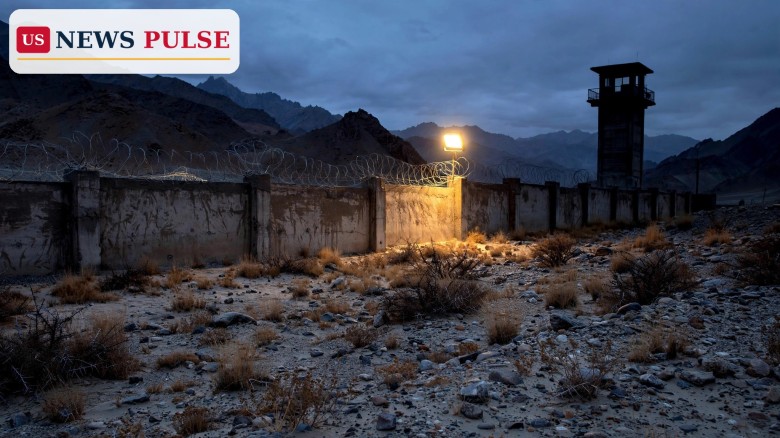
- The Times identified the site as the black site outside Bagram Air Force Base near Kabul, known as Detention Site Cobalt or the "Salt Pit", notorious for abusive conditions and a detainee death.
- The CIA has acknowledged waterboarding only Abu Zubaydah, waterboarded 83 times per the 2014 Senate report, Khalid Sheikh Mohammed and Abd al-Rahim al-Nashiri, all now at Guantanamo Bay.
- Durham's inquiry ended with no criminal charges, his findings reports remain secret, and the CIA did not respond to requests for comment.
What Happened
The disclosure rests on one eyewitness account in the Durham files. In 2012, a former CIA contract translator told an FBI agent he had seen a detainee strapped to a board, head tilted down into water, while three or four people carried out what he described as waterboarding. He said he came across the scene in a hallway, saw it only in passing and took no part. He knew the man only as Bashir, also rendered Bahir.
The Times matched the description to the CIA black site outside Bagram Air Force Base, known as Detention Site Cobalt, the Salt Pit. The translator also described a detainee death there, consistent with the known death of Gul Rahman, who died of hypothermia at the site in 2002 after being shackled to a concrete floor.
Background and Context
Waterboarding simulates drowning: a detainee is strapped to a board, tilted head-down, and water is poured over a cloth covering the face. The CIA has long said it waterboarded only three men, all senior al-Qaeda figures, and only at black sites in Thailand and Poland in 2002 and 2003. Abu Zubaydah was waterboarded 83 times, according to the Senate Intelligence Committee's 2014 report. The others were Khalid Sheikh Mohammed and Abd al-Rahim al-Nashiri. All three are now held at Guantanamo Bay, their cases still unresolved.
Durham, then a federal prosecutor in Connecticut, was appointed in 2008 to examine whether CIA personnel broke the law in interrogating detainees, including destroying videotapes of interrogations. His inquiry ran until 2012 and ended with no criminal charges. His findings were never made public. The records released to the Times are a heavily redacted window into that inquiry.
CIA Waterboarding at the Salt Pit: What the New Files Show
The new files do not prove, on their own, that the CIA waterboarded a fourth man. They contain one account, given to the FBI in 2012, of something glimpsed in a hallway. What gives it weight is the corroboration around it. The description of the site matches Detention Site Cobalt in layout and atmosphere. The reference to a detainee death matches the documented death of Gul Rahman there.
It also fits a pattern the 2014 Senate report documented: the CIA's use of waterboarding was broader and less controlled than its public account suggested. The report found the agency misled the White House and Congress, and that its techniques produced little of value. Rahman's death was the only one the Senate report attributed directly to the agency's treatment, and no one was ever prosecuted.
Reactions and Quotes
The CIA did not respond to requests for comment, and has never acknowledged waterboarding anyone in Afghanistan. The agency's defenders have long said the programme produced intelligence that saved lives, a claim the 2014 Senate report rejected, finding the techniques were not an effective way to obtain accurate information.
The Justice Department resisted the Times' Freedom of Information Act lawsuit for years, and the released records are partially redacted. Human rights groups have long argued the full record should be made public, and that the failure to prosecute anyone for the Salt Pit death left accountability unfinished. The new account is likely to renew those calls.
Why It Matters
The disclosure challenges the last clean line the CIA has drawn around its programme: waterboarding used on three men, at two sites, under strict headquarters control, then stopped. A fourth case, at a third site, in Afghanistan, would mean the technique was used more widely, in rougher conditions and with less oversight. Waterboarding is torture under international law. No CIA officer has ever been prosecuted for waterboarding a detainee.
The programme's unfinished business keeps surfacing. The three acknowledged victims remain at Guantanamo Bay, their trials stalled in part because evidence obtained through torture cannot be used against them. The debate flares whenever a new document emerges, as it did when a cyber breach exposed unclassified intelligence data at the CIA and the Office of the Director of National Intelligence, and whenever lawmakers raise the conduct of the war on terror, as a freshman lawmaker did in accusing the defence secretary of war crimes over boat strikes.
What Happens Next
The immediate question is whether the government will release more of the Durham files, and whether Bashir can be identified. The Times' lawsuit continues, and further releases could corroborate the account or cast doubt on it. Congress could also seek the records, though whether the current Congress will do so is uncertain.
For now, the account stands as an unconfirmed but credible addition to a record that has grown more damning with every release. But what happened in those hallways is still, a quarter of a century on, not fully answered.
Frequently Asked Questions
How many detainees has the CIA acknowledged waterboarding?
Three: Abu Zubaydah, Khalid Sheikh Mohammed and Abd al-Rahim al-Nashiri, all now at Guantanamo Bay. The agency says they were waterboarded only in Thailand and Poland, never in Afghanistan.
What is the new allegation?
A former CIA contract translator told the FBI in 2012 that he saw a detainee called Bashir strapped to a board with his head tilted into water at the site the Times identified as Detention Site Cobalt, the Salt Pit outside Bagram.
What was the Salt Pit?
A CIA black site outside Bagram Air Force Base near Kabul Detainee Gul Rahman died there of hypothermia in 2002.
What was the Durham investigation?
A Justice Department inquiry led by special prosecutor John Durham from 2008 to 2012 into whether CIA personnel broke the law interrogating detainees. It ended with no charges.
Has anyone been prosecuted for the CIA's waterboarding?
No. No CIA officer has ever been prosecuted for waterboarding a detainee

The US News Pulse newsroom covers breaking news across the United States and the world, working from wire services, official statements and on-the-record sources. Every story is reviewed against our editorial standards before publication. Corrections and tips: info@usnewspulse.com
About our newsroomLeave a Comment