

 | Today's Date:


DOJ Recovers $8 Billion, Charges 800 in Largest Anti-Scam Crackdown Ever
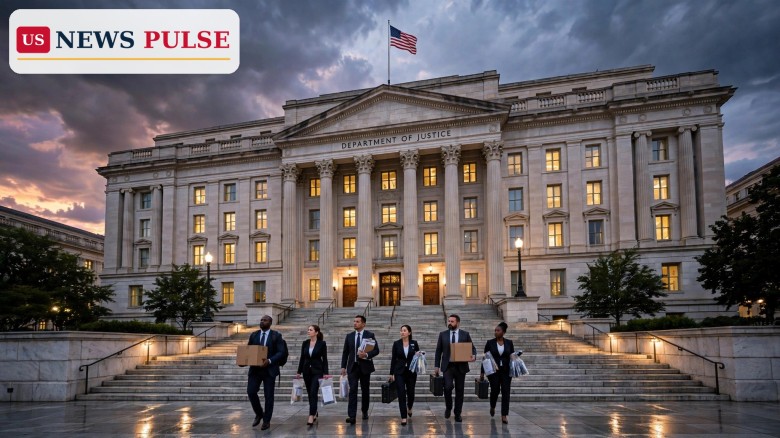
The Justice Department has charged more than 800 defendants and recovered over $8 billion in intended victim losses in the largest anti-scam enforcement surge in its history, Attorney General Todd Blanche announced on Tuesday, November 24, 2026, alongside FBI Director Kash Patel in Washington. The DOJ anti-scam crackdown, built on a government-wide fraud offensive ordered in March, has reached 85 federal districts and four continents, dismantling the call centres and compounds where transnational syndicates run their schemes.
Key Points
- Attorney General Todd Blanche announced on November 24, 2026 that prosecutors charged more than 800 defendants and recovered over $8 billion in the largest anti-scam surge in Justice Department history.
- Since President Trump's March executive order on fraud, the Justice Department has filed more than 400 criminal cases across 85 federal districts.
- The FBI's Operation Blackout seized nearly $17 billion, confiscated over 14,000 devices and dismantled 29 scam compounds on four continents.
- A Gallup study cited by Blanche found 10 percent of Americans said they or a household member fell victim to a scam in 2025, with $68 billion lost in a year.
- Disrupted schemes include prison-run jury-duty extortion, Mexico timeshare fraud tied to cartels, and sextortion rings targeting seniors and young people.
What Happened
Blanche and Patel laid out the scale of the operation at the Justice Department on Tuesday, presenting it as the biggest coordinated strike against fraud in the department's history. The $8 billion recovered is money that would otherwise have been lost by victims, and the cases span 85 of the 94 federal judicial districts. Results so far include charges, extraditions, guilty pleas and prison sentences.
The announcement caps eight months of work since President Trump's March executive order directing a government-wide crackdown on fraud. The Justice Department has since filed more than 400 criminal cases, drawing on the FBI, the Postal Inspection Service, Homeland Security Investigations and prosecutors nationwide.
Background: A Fraud Epidemic Worth Tens of Billions
The crackdown comes as fraud has become one of the most common crimes in America. Blanche cited a recent Gallup study finding that 10 percent of Americans said they or someone in their household fell victim to a scam in 2025, with estimated losses of $68 billion in a single year. That would make scams a larger drain on households than many categories of property crime combined.
Modern fraud runs on industrial lines: call centres staffed around the clock, tested scripts, and money moved through layers of accounts and cryptocurrency. Earlier actions show the pattern. The United States sanctioned 45 targets linked to the Prince Group in a billion-dollar scam crackdown, and an immigration bail-bond firm fined $811 million kept operating under a new name. Even small, personal frauds keep multiplying: a Massachusetts woman was indicted in a $1 million romance scam targeting an 85-year-old man.
The March executive order gave the campaign its mandate, directing agencies to treat fraud as a coordinated threat rather than isolated cases. The result is the largest anti-scam surge the department has ever mounted, by defendants charged and money recovered.
DOJ Anti-Scam Crackdown: How Operation Blackout Works
The sharpest edge of the campaign is Operation Blackout, the FBI's global offensive against international fraud syndicates. Patel said federal agents and international partners have seized nearly $17 billion in illicit funds, confiscated more than 14,000 digital devices and dismantled 29 scam compounds across four continents. The compounds are the physical heart of the fraud industry: guarded buildings where workers run romance scams, investment frauds and impersonation schemes at industrial scale.
The devices matter as much as the money. Phones, laptops and servers carry the scripts, victim lists and payment trails that let investigators map a syndicate and move to the next compound. The $17 billion seized is separate from the $8 billion in intended victim losses recovered by prosecutors.
Among the schemes disrupted: inmates using contraband cellphones and handwritten scripts to run jury-duty extortion scams from prison; Mexico-based timeshare fraud allegedly run by major drug cartels; and sextortion, extortion and impersonation schemes targeting seniors, widows and young people.
Reactions
Blanche presented the results as proof that the March crackdown is working, pointing to charges, extraditions, guilty pleas and prison sentences already secured across 85 districts. He framed the $8 billion recovered and the 800 defendants charged as the headline measures of a campaign still expanding, with more cases in the pipeline.
Patel emphasised the global reach of Operation Blackout, describing a campaign that follows the money and the networks across borders rather than stopping at the water's edge. The 29 compounds dismantled and nearly $17 billion seized, he said, show the bureau hitting the infrastructure of fraud, not just individual scammers. No direct quotations from either official appeared in the initial reporting, which relied on the figures given at the news conference.
Why It Matters
The surge matters because scams have become a mass crime with an industrial base, and the response is now organised on the same scale. An $8 billion recovery and more than 800 defendants show the government can reach the operators, but $68 billion in annual losses shows how much ground remains. The gap between the two numbers is the real measure of the problem.
It matters, too, because of who is targeted. Seniors, widows and young people are the groups officials singled out, and the least able to absorb a loss. A romance scam that takes a retiree's savings or a sextortion scheme aimed at a teenager does damage a prison sentence for the operator does not undo.
What Happens Next
The cases filed will now move through the courts, with guilty pleas and trials expected in the coming months and further extraditions as international partners hand over suspects. Officials signalled that Operation Blackout will continue, with more compounds targeted as intelligence from seizures already made is worked through.
The department has set its own bar with the $8 billion and 800-defendant totals. Watch the Gallup measure too: if the share of Americans falling victim begins to fall, the surge will have done more than fill courtrooms.
Frequently Asked Questions
How many people has the Justice Department charged?
More than 800 defendants, with over $8 billion recovered, Blanche announced on November 24, 2026.
What is Operation Blackout?
The FBI's global offensive against international fraud syndicates: nearly $17 billion seized, more than 14,000 devices confiscated and 29 scam compounds dismantled across four continents.
How many criminal cases have been filed since March?
More than 400 cases across 85 federal districts, following President Trump's March executive order on fraud.
How common are scams in the United States?
Ten percent of Americans said they or a household member fell victim to a scam in 2025, according to Gallup, with an estimated $68 billion lost in a year.
What kinds of schemes were disrupted?
Jury-duty extortion run by inmates with contraband phones, Mexico timeshare fraud tied to cartels, and sextortion schemes targeting seniors and young people.

The US News Pulse newsroom covers breaking news across the United States and the world, working from wire services, official statements and on-the-record sources. Every story is reviewed against our editorial standards before publication. Corrections and tips: info@usnewspulse.com
About our newsroomLeave a Comment