

 | Today's Date:





North Korea Expels Swiss Diplomat, Orders Pyongyang Office Closed in 48 Hours
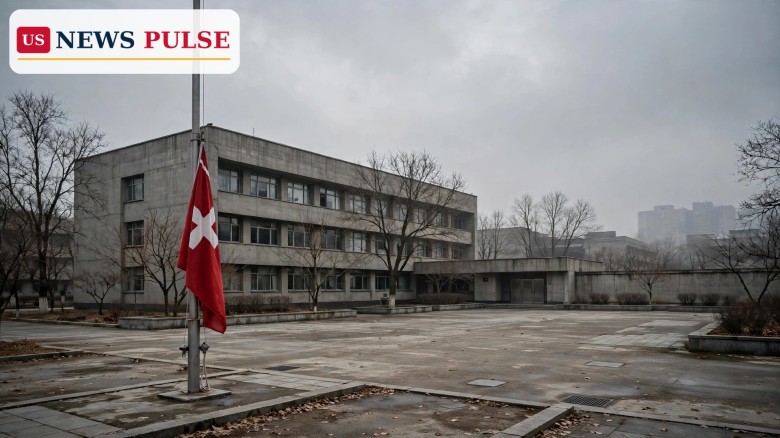
North Korea has expelled Switzerland's top diplomat in Pyongyang and ordered the Swiss diplomatic office closed within 48 hours, in the sharpest diplomatic rupture between the two countries in years. Pyongyang's Foreign Ministry declared office head Sylvain Astier persona non grata on Wednesday, November 25, 2026, and handed him a memorandum demanding the mission shut down, according to a statement carried by state media KCNA. The expulsion is retaliation for Switzerland adding a North Korean children's camp to its sanctions list last week, a move Pyongyang denounced as an "overtly hostile act".
Key Points
- North Korea declared Sylvain Astier, head of Switzerland's Pyongyang office, persona non grata and ordered him to leave within 48 hours.
- The Foreign Ministry also ordered the Swiss office closed, in a statement carried by KCNA on Wednesday, November 25, 2026.
- Pyongyang said the move answers Switzerland's decision to sanction the Songdowon International Children's Camp near Wonsan.
- Switzerland listed the camp over its alleged role in deporting Ukrainian children from Russian-occupied areas.
- The office had only reopened on October 19, 2026, and Bern says it has not been officially contacted.
What Happened
According to the Foreign Ministry statement carried by KCNA, ministry official Pak Hyon-su summoned Astier and handed him a memorandum demanding the closure of the Swiss office and his departure within 48 hours. The statement declared Astier persona non grata — the formal term for an envoy a host country no longer accepts — and framed the expulsion as a direct response to Bern's sanctions decision.
The move came a day after Kim Yo-jong, the powerful sister of leader Kim Jong-un, threatened to shut the office. The expulsion followed within 24 hours. Switzerland said neither its embassy in Beijing, which oversees relations with North Korea, nor the Pyongyang office itself had been officially contacted — meaning Bern learned of the decision through state media rather than diplomatic channels.
Background and Context
The Swiss office in Pyongyang is a small mission, but it is one of the few Western footholds in one of the world's most isolated capitals. Only a small number of countries maintain a diplomatic presence in North Korea, and each mission is a rare channel for contact, consular work and information in a country that otherwise keeps the outside world at arm's length. Losing one of them narrows that contact further.
The office had only just reopened. On October 19, 2026, Swiss Foreign Minister Ignazio Cassis visited Pyongyang and the office resumed operations, presented at the time as a modest reopening of engagement after a long closure. Barely five weeks later, the same office is being ordered shut — a measure of how quickly the relationship has soured.
The trigger was Switzerland's decision last week to add the Songdowon International Children's Camp, near the east-coast port city of Wonsan, to its sanctions list, over the camp's alleged role in the forced deportation of Ukrainian children from Russian-occupied areas — a practice that has drawn international condemnation and war-crimes allegations against Russia. North Korea's ties with Russia have deepened sharply during the war in Ukraine, so sanctioning a North Korean camp over the deportations touches two nerves at once: the relationship with Moscow and Pyongyang's sensitivity to Western measures framed around human rights.
North Korea Expels Swiss Diplomat: What the Closure Means for Pyongyang's Few Diplomatic Channels
The closure matters because diplomatic channels in Pyongyang are scarce, and each one that disappears makes the country harder to reach. The Swiss office was not a large embassy, but in a capital where most Western countries have no representation at all, even a small mission provides a way to pass messages, monitor conditions and maintain a human link.
For Switzerland, the expulsion is a setback to a cautious re-engagement that had only just begun with Cassis's October visit. For the wider diplomatic community, it is a reminder that North Korea answers sanctions it dislikes with concrete retaliation, even when the target is a single facility and the sanctioning country is a neutral state.
Reactions and Quotes
Pyongyang's own language was blunt. The Foreign Ministry called Switzerland's sanctions decision an "overtly hostile act", the phrase it used to justify both the expulsion and the closure order — not a routine sanctions update, in its view, but a deliberate affront requiring a response.
Kim Yo-jong's intervention the day before set the tone. Her threat to shut the office signalled that the leadership had already decided on retaliation, and her role as the regime's public voice on such disputes has grown steadily; her statements are now read closely in Seoul, Washington and Tokyo as a guide to Pyongyang's intentions.
Switzerland's response was notably restrained. Bern said neither its Beijing embassy nor the Pyongyang office had been officially contacted, a statement that confirmed the lack of formal notice without escalating the dispute.
Why It Matters
The expulsion removes one of the few Western diplomatic presences in Pyongyang. North Korea already has one of the smallest foreign diplomatic communities of any capital, and each departure makes the country more opaque to the outside world. When a neutral country with no military presence in the region loses its office, the loss is felt well beyond Switzerland.
It also shows how sanctions now trigger retaliation far from their original target. Switzerland sanctioned a single children's camp over its alleged role in deporting Ukrainian children; North Korea answered by expelling a diplomat and closing a mission. Other governments will weigh that pattern before taking similar steps.
What Happens Next
The immediate question is whether Astier leaves North Korea within the 48-hour deadline, which runs to Friday, November 27. Watch for confirmation from Bern that he has departed, and for any statement on whether Switzerland will lodge a formal protest or seek to preserve some presence in Pyongyang. Also watch what happens to the office and for further commentary from KCNA.
Frequently Asked Questions
Who was expelled from North Korea?
Sylvain Astier, head of Switzerland's diplomatic office in Pyongyang. North Korea declared him persona non grata and ordered him to leave within 48 hours.
Why did North Korea expel the Swiss diplomat?
Pyongyang said it was retaliation for Switzerland sanctioning the Songdowon International Children's Camp near Wonsan over its alleged role in deporting Ukrainian children from Russian-occupied areas.
How long does Astier have to leave?
Within 48 hours of the announcement on Wednesday, November 25, 2026, so the deadline runs to Friday, November 27.
When did the Swiss office in Pyongyang reopen?
The office reopened on October 19, 2026, when Swiss Foreign Minister Ignazio Cassis visited Pyongyang, barely five weeks before North Korea ordered it closed.
Has Switzerland confirmed the expulsion?
Not formally. Switzerland said neither its embassy in Beijing nor its Pyongyang office had been officially contacted.
Related: IAEA Warns North Korea Completed Yongbyon Uranium Enrichment Expansion | Kim Yo-jong Warns North Korea Will Answer US Hostility With Stronger Response | North Korea Fires Missiles Into Sea of Japan in New Sondok Weapons Test

The US News Pulse newsroom covers breaking news across the United States and the world, working from wire services, official statements and on-the-record sources. Every story is reviewed against our editorial standards before publication. Corrections and tips: info@usnewspulse.com
About our newsroomLeave a Comment