

 | Today's Date:





Somali Gang Violence in Minnesota Sparks Pushback as Police Warn of Rising Youth Crime
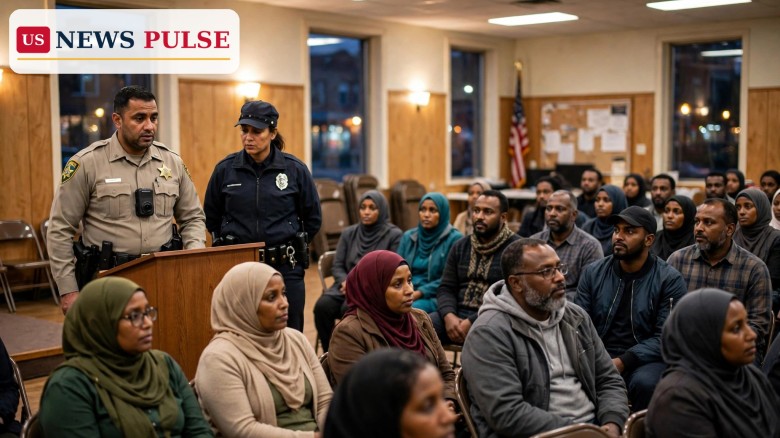
Somali gang violence in Minnesota has become the focus of a tense public debate, after Somali community leaders pushed back against blame falling on their whole community while law enforcement warned that youth gang violence is surging from the Twin Cities to Lewiston, Maine.
Somali community members and law enforcement leaders met in the Twin Cities on Thursday, November 19, 2026, to discuss gang-related crime. The meeting followed weeks of shootings tied by police to gang activity.
Key Points
- Somali community members and law enforcement leaders met in the Twin Cities on Thursday, November 19, 2026, to discuss gang crime, with the community rejecting blame on all Somali Americans.
- Ramsey County Sheriff Bob Fletcher estimates about a dozen Somali gangs involving roughly 300 young people operate in the metro area, out of an estimated 1,000 to 2,000 total gang members across the region.
- Fletcher said about 100 of the 300 young people have been arrested, but many cycle back into what he called "the gang life".
- Police in Lewiston, Maine, reported 35 gun-related incidents this year, including 22 involving juveniles, in a city with a large Somali refugee population.
- An October 2 shooting outside Aerie Stadium at Eden Prairie High School's homecoming was connected by police to Somali gang activity, followed by a retaliatory shooting at a Bloomington gas station in which more than 100 rounds were fired.
What Happened
The Twin Cities meeting on November 19 brought together Somali community members and senior law enforcement figures to talk about gang-related crime in the Minneapolis-St. Paul area. Community members used the meeting to challenge the idea that the violence reflects on the Somali American community as a whole, arguing that a small number of young people in gangs should not define a population of about 84,000 Somali individuals living in the metro area.
Ramsey County Sheriff Bob Fletcher laid out the scale of the problem as police see it. He estimates that about a dozen Somali gangs, involving roughly 300 young people, operate in the metro area, a fraction of the estimated 1,000 to 2,000 gang members of all backgrounds across the region. Minnesota Bureau of Criminal Apprehension Superintendent Drew Evans told the meeting that prevention is hard to measure.
Background and Context
The Twin Cities are home to the largest Somali community in the United States, with about 84,000 Somali individuals living in the Minneapolis-St. Paul area. Most arrived as refugees fleeing civil war in Somalia, and the community has built businesses, mosques, schools and civic organisations across the metro area. Community leaders say that progress is threatened when crime stories are framed as a story about Somalis rather than about a small group of offenders.
The debate has been building for months. Representative Tom Emmer, a Minnesota Republican, wrote to US Attorney Daniel Rosen on July 23, 2026, flagging what he called an "alarming rise" in Somali gang violence. Community advocates say the attention has also fuelled sweeping claims that go beyond the evidence. The Minnesota BCA said on October 19 that more than 40 law enforcement agencies had agreed to coordinate gang-violence efforts with county-based quick reaction teams.
Somali Gang Violence in Minnesota: What Police Say and What the Community Answers
Police say the violence is real and escalating. The October 2 shooting outside Aerie Stadium during Eden Prairie High School's homecoming was connected by police to Somali gang activity, and a later retaliatory shooting at a Bloomington gas station involved more than 100 rounds fired. The two incidents showed how quickly a dispute can spiral into revenge attacks.
The pattern extends beyond Minnesota. In Lewiston, Maine, a city with a large Somali refugee population, police reported 35 gun-related incidents this year, including 22 involving juveniles. Maine Immigrant and Refugee Services launched a "Voices Against Gun Violence" programme in June, an effort led from inside the immigrant community to steer young people away from guns. Community leaders in both states say mentoring, jobs and early intervention are the answer.
Reactions and Quotes
Sheriff Fletcher was blunt about the cycle of arrests and reoffending, saying many of the young people arrested return to what he called "the gang life". His point was that arrests alone are not solving the problem, and that the same faces keep appearing in gang cases. Superintendent Evans struck a different note, saying prevention is "difficult to measure" and stressing that understanding the drivers of violence matters as much as enforcement.
Community members at the meeting pushed back against broad blame, arguing that the actions of a few hundred young people should not be laid at the door of tens of thousands of Somali Americans. Representative Emmer's July letter, flagging an "alarming rise" in Somali gang violence to the US Attorney, shows the political pressure on federal prosecutors to act, but it also shows why community leaders are wary: once the issue is framed in ethnic terms, they say, every Somali teenager becomes a suspect in the public mind.
Why It Matters
The debate matters because the response will shape two communities at once. In Minnesota, the Twin Cities have spent decades building a Somali American community that is now woven into the region's economy and politics. Handled as a policing challenge aimed at a few hundred young people, leaders say it can be contained; framed as a story about Somalis, it risks alienating the families police need. The violence is also spreading across state lines: Lewiston shows the same pattern 1,400 miles away.
What Happens Next
The coordinated effort announced on October 19, bringing together more than 40 law enforcement agencies with county-based quick reaction teams, is now the main test of the enforcement response. Watch whether arrests of gang members rise and whether the retaliatory shootings slow. On the community side, watch whether the November 19 meeting leads to concrete programmes, and whether US Attorney Daniel Rosen acts on Representative Emmer's July letter.
Frequently Asked Questions
How many Somali gangs do police say operate in the Twin Cities? About a dozen Somali gangs involving roughly 300 young people, Sheriff Bob Fletcher estimates, out of 1,000 to 2,000 total gang members in the region.
What happened at the November 19 meeting? Somali community members and police leaders met in the Twin Cities to discuss gang crime, with the community rejecting blame on all Somali Americans for a small group's actions.
What shootings have police linked to Somali gang activity? An October 2 shooting outside Aerie Stadium at Eden Prairie High School's homecoming was connected by police to Somali gang activity, and a later retaliatory shooting at a Bloomington gas station involved more than 100 rounds.
What is happening in Lewiston, Maine? Police reported 35 gun incidents this year, 22 involving juveniles, and Maine Immigrant and Refugee Services launched its "Voices Against Gun Violence" programme in June.
How large is the Somali community in the Twin Cities? About 84,000, in the Minneapolis-St. Paul area — the largest Somali community in the United States.
Read our earlier report on the attack on Uber driver Mohamed Yusuf in Minnesota, the federal Minnesota daycare fraud investigation, and Hannah Pingree's win in the Maine governor's race.

The US News Pulse newsroom covers breaking news across the United States and the world, working from wire services, official statements and on-the-record sources. Every story is reviewed against our editorial standards before publication. Corrections and tips: info@usnewspulse.com
About our newsroomLeave a Comment