More than 51 million Americans had already cast a ballot by Saturday afternoon, October 31, 2026, pushing early voting in the 2026 midterm elections past the 50 million mark with three days still to go before Election Day on Tuesday, November 3. The surge has already beaten the entire early-voting total from the last midterms in 2022, and it sets up a high-turnout finish to a campaign that will decide control of Congress for the final two years of President Donald Trump's second term.
According to data from the University of Florida's Election Lab, cited by The Guardian and other trackers, the national early-vote total reached 51.31 million by 2:30 p.m. local time on October 31. The Guardian's Saturday-morning analysis put the figure at more than 50.5 million, while the Election Lab's own count had stood at 49.6 million on Friday evening. Whichever snapshot is used, the direction is the same: the 2026 early vote has blown past the 45.9 million ballots cast early in 2022, by roughly five million votes, and it is still climbing.
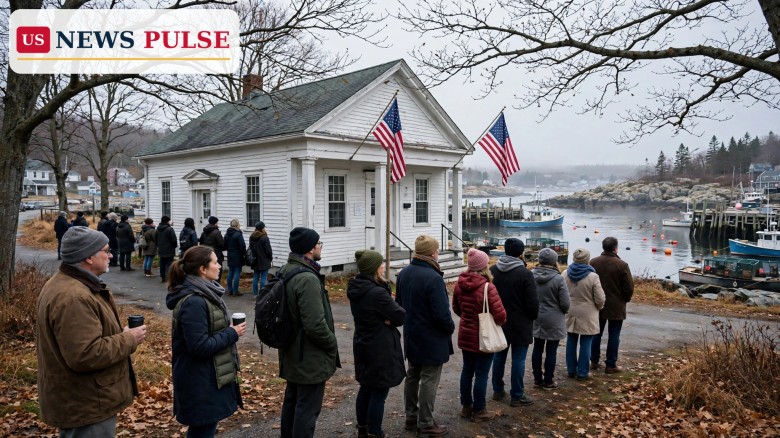
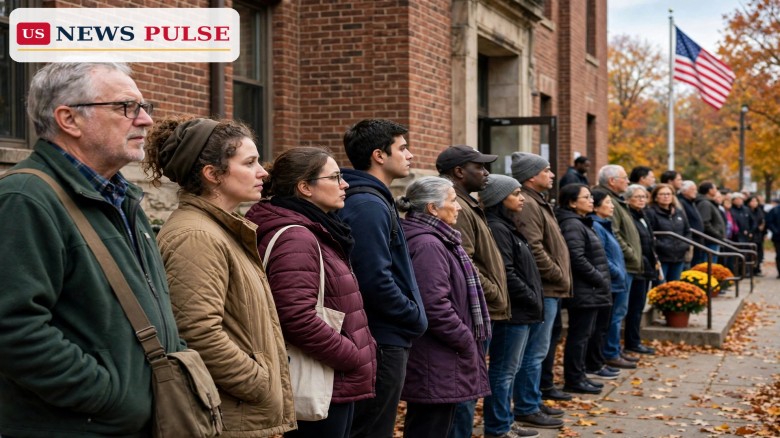
The milestone landed on the final weekend of early voting in many states. In Virginia, long lines formed at polling places on Saturday, the last day of early in-person voting there, according to NHK World. Across the country, election offices have added voting sites, staff and equipment to handle demand, as the biggest raw increases have concentrated in large states and battlegrounds.
The University of Florida's Election Lab tracks early in-person voting and mail ballots returned to election offices. Its figures count ballots recorded, not voters' choices, and different trackers show slightly different national totals at any given hour because state figures arrive on different schedules. That is why Saturday's reports ranged from just above 50 million in the morning to 51.31 million by the afternoon. The underlying story, however, is not in dispute: turnout is running well ahead of 2022 at the same stage, and the gap has widened every day of the final week.
The in-person share of the vote has driven much of the surge. More than 28 million of the early ballots were cast in person, up sharply from about 20.5 million in-person early votes in 2022. Mail ballots make up the rest of the total, continuing a pattern in which Americans increasingly vote before Election Day itself rather than waiting for Tuesday.
The climb to 50 million has been steady all month. The Election Lab count passed 40 million in late October, then 43 million, then 47.9 million by midday on Friday, October 30 — the point at which it passed the entire 2022 early-vote total. By Friday evening it stood at 49.6 million, split between 22.9 million mail ballots and 26.8 million in-person votes. Saturday's jump past 50 million, and then to 51.31 million, was the latest step in that climb.
For comparison, the Election Lab's final 2022 tally was 45,920,446 early ballots, including 20,487,803 cast in person and 25,432,643 returned by mail. The 2026 total has therefore already exceeded the whole of 2022 by about five million ballots, with two more days of early voting in some states and Election Day itself still ahead. Analysts quoted by NHK said overall turnout could surpass the 2022 total, a view echoed by other trackers that describe 2026 as a record early-voting midterm.
State-level jumps underline how broad the surge is. Compared with the same stage of the 2022 election, advance voting increased by 44 percent in Maine, 34 percent in Kansas and 32 percent in Michigan, according to an Associated Press analysis. Texas, the biggest early-voting state in raw numbers, had already passed seven million early votes by Saturday, with an earlier count showing a 50 percent increase on the equivalent point in 2022. California stood at about 5.1 million and Florida at about 4.7 million.
In the roughly 27 states that report party registration on early ballots, Democrats account for about 43 percent of early voters and Republicans about 32 percent, with the rest unaffiliated. In raw numbers, The Guardian reported 10.7 million registered Democrats have voted early, compared with 7.8 million registered Republicans, in the states that collect such information.
Those figures describe who has voted, not how they voted. Party registration does not reveal which candidates any individual supported, and the states that report registration do not represent the full country. Millions of votes also remain to be cast on and before Election Day, including in states that do not report party data at all. Polls and forecast models continue to show Democratic advantages in the generic congressional ballot, but analysts and election officials caution that early totals alone do not decide an outcome.
The party split matters politically because it shapes each campaign's final-weekend strategy. Both parties spent Saturday, October 31, travelling to win over remaining voters. President Trump stayed at his Mar-a-Lago club in Florida on Saturday and is due in Kansas and Iowa on Sunday, according to Reuters, while Vice President JD Vance is scheduled to campaign in northern New York on November 2. At his Daytona Beach rally on Friday, October 30, Trump called the contest "the most important midterm election in history" and pledged to end the war in Iran.
Trump's Daytona Beach message framed the election as a referendum on his presidency, telling supporters the midterms would determine whether his agenda survives a hostile Congress. Democrats, by contrast, have framed the vote as a referendum on the Trump administration, aiming to regain control of both the House and Senate. The Associated Press has predicted the election will determine whether the next two years of Trump's term run smoothly under a Republican-controlled Congress or become far harder under a Democratic majority.
Election officials, meanwhile, have focused on logistics rather than predictions. The surge has forced offices in the largest states to expand capacity, and forecasters have warned that a storm system moving into the central United States on Election Day could affect travel to the polls in key races in Iowa, Kansas, Michigan and Texas. Rain is expected across much of the central United States on Tuesday, though the flooding threat on the day itself is currently assessed as low.
High early turnout matters for two reasons. First, it changes the arithmetic of the final days: with more than 51 million ballots already banked, the campaigns' remaining task is persuading a shrinking pool of Election Day voters and making sure mail ballots are returned on time. Second, it signals enthusiasm. Midterm elections usually draw far fewer voters than presidential years, so a record early vote suggests an electorate unusually engaged by the stakes — control of Congress, the cost of living, tariffs, and the war in Iran, all of which have featured heavily in the campaign.
It also matters for confidence in the count. A large early vote means election offices can process many ballots before Tuesday night, but it also means the first results reported on election night will reflect a different mix of voters than in years when most ballots were cast on the day. That mix is one reason analysts warn against reading early party-registration figures as a result.
Early voting continues in some states through Sunday, November 1, and Monday, November 2, before Election Day on Tuesday, November 3. Trump is scheduled to hold rallies in Kansas and Iowa on Sunday, after restoring both events following a brief cancellation, and Vance campaigns in northern New York on Monday. Results will then determine whether Republicans hold the Senate, where they now lead 53-47 and Democrats need a net gain of four seats, and whether they keep their narrow House advantage.
Whatever the outcome, the 2026 early vote has already made history. Passing 50 million ballots before Election Day, and beating the whole of 2022 by millions, it has set a new midterm benchmark — one that future campaigns and election administrators will measure themselves against.
More than 51 million, according to the University of Florida's Election Lab. The total reached 51.31 million by 2:30 p.m. local time on Saturday, October 31, after passing 50 million the previous day.
The 2022 midterm early-vote total was 45.9 million ballots. The 2026 total is already about five million higher, with Election Day still to come.
In the states that report party registration, more registered Democrats than Republicans have voted early — 10.7 million against 7.8 million. But registration does not show how anyone voted, and those states do not cover the whole country, so the figures are not a result.
Texas leads in raw numbers with more than seven million early votes, followed by California at about 5.1 million and Florida at about 4.7 million. The biggest percentage jumps on 2022 include Maine, Kansas and Michigan.
Tuesday, November 3, 2026. All 435 House seats and 35 Senate seats are on the ballot, along with 36 governors' races and many state and local contests.
Related coverage: Early voting nears 50 million as Democrats lead Republicans and Newsom warns judges as California ballot-list errors are exposed before midterms.
Leave a Comment



 | Today's Date: