

 | Today's Date:





New Thumb Implant Gives Severe Arthritis Patients a Faster, Stronger Recovery
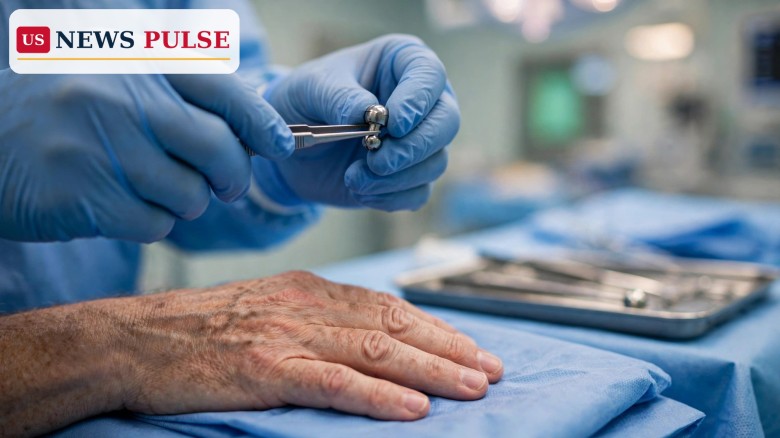
For millions of Americans, opening a jar, turning a key or holding a pen has become a daily struggle as arthritis wears away the joint at the base of the thumb. Now a small thumb implant, a ball-and-socket device, is spreading across the United States, offering severe thumb arthritis patients recovery in weeks rather than months. The Swiss-designed KeriMedical TOUCH CMC 1 won US Food and Drug Administration approval in 2025, after more than a decade of use in Europe, where it has been implanted over 130,000 times.
Key Points
- The KeriMedical TOUCH CMC 1 is a ball-and-socket implant fitted into the trapezium bone at the thumb's base.
- It won FDA approval in 2025 after more than ten years and 130,000 procedures in Europe.
- A randomised trial in Hand found implant patients recovered faster and stayed stronger over two years than trapeziectomy patients.
- The 45-minute outpatient operation leaves most patients feeling normal in about six weeks, against six to nine months after trapeziectomy.
- The failure rate is about 2 percent, but implants need replacing every 10 to 15 years and the procedure is a last resort.
What Happened
The implant is now offered at a growing number of American hospitals and hand surgery centres, including Ohio State University's Wexner Medical Center. It treats carpometacarpal arthritis, the wear-and-tear disease of the joint where the thumb meets the wrist, which affects millions of Americans. Unlike the standard operation, it removes no bone: a small metal ball-and-socket joint is seated into the trapezium, restoring a smooth pivot while preserving the bone and the thumb's length.
That preservation is the implant's main appeal. The traditional operation, a trapeziectomy, removes the trapezium and rebuilds the joint with a rolled tendon. It is proven, but the missing bone shortens the thumb and the rebuilt joint needs months to strengthen. The implant keeps the skeleton intact, protecting the pinch and grip strength patients use every day.
Background and Context
Thumb arthritis develops when the cartilage cushioning the carpometacarpal joint wears thin, letting bone grind on bone. It is most common in people over 50, more often in women, in people whose work loads the thumb repeatedly, and in those with a family history of the disease. Early signs are pain at the thumb's base while gripping, stiffness and a grinding sensation; later the joint can deform and simple tasks such as writing or buttoning a shirt become painful.
Care usually starts with splints, hand therapy, anti-inflammatory medicines and steroid injections. These can control symptoms for years, but they do not repair worn cartilage. When pain becomes constant, surgery has traditionally meant a trapeziectomy, a reliable operation with a slow rehabilitation: patients are often warned to expect six to nine months before the hand feels normal. It is that long recovery that has driven interest in a faster alternative.
Thumb Implant Arthritis: How the New Device Works
The TOUCH CMC 1 uses the same ball-and-socket principle that has made hip replacements so successful. The socket is fixed into the trapezium bone, and a polished ball attached to the base of the thumb's metacarpal rotates inside it, restoring the joint's natural range of motion while keeping the thumb's length, which matters because even a small shortening changes pinching and gripping.
The operation takes about 45 minutes as an outpatient procedure. Patients go home the same day, start moving the thumb that evening, and leave with just an ACE bandage instead of a heavy cast. In the trial published in Hand, implant patients regained movement faster and stayed stronger over two years than trapeziectomy patients, most feeling normal at around six weeks.
Reactions
The strongest evidence comes from the randomised trial, whose authors reported faster recovery, quicker gains in movement and better preserved strength for implant patients over two years. Surgeons adopting the technique point to the same trade-off: a much shorter road back to normal use, against the fact that no implant lasts forever. The device needs replacing every 10 to 15 years, so it is a last resort, offered only after bracing, therapy and injections have failed.
The failure rate in European follow-up is about 2 percent, in line with knee and hip replacements. That has reassured surgeons cautious about a new joint for the hand, where small mechanical differences matter greatly. For patients the calculation is practical: getting the working hand back in weeks rather than most of a year matters to people who type, cook or work a manual trade.
Why It Matters
Thumb arthritis is not rare, and its burden grows as the population ages and more people work later in life. Hands are central to almost every job and household task, so a disease that weakens the thumb's grip quietly erodes independence, earnings and quality of life. A treatment that restores strength faster has value far beyond the operating theatre.
The implant also reflects a wider shift in joint surgery, where preserving bone and restoring natural movement is increasingly preferred to removing damaged structures. The same philosophy has reshaped knee and hip surgery over two decades, and the thumb is a natural next step. If the American experience matches Europe's, the device could become a standard option alongside trapeziectomy.
What Happens Next
The implant's spread in the United States is still early, and the next test is long-term American data. European follow-up covers more than a decade and 130,000 procedures, but surgeons want to see five- and ten-year results in American patients, including revision rates and performance in younger, more active people. Hospitals are also weighing training, cost and insurance coverage, which will decide how fast it moves from specialist centres to wider use.
Frequently Asked Questions
What is the new thumb implant?
The KeriMedical TOUCH CMC 1, a Swiss-designed ball-and-socket prosthesis in the trapezium bone, working like a miniature hip replacement for severe thumb arthritis.
How is it different from a trapeziectomy?
A trapeziectomy removes the trapezium and rebuilds the joint with a tendon. The implant preserves the bone and thumb length, protecting grip strength and speeding recovery.
How long does recovery take?
Most implant patients feel normal in about six weeks, against six to nine months after trapeziectomy. The 45-minute operation is outpatient, and patients move the thumb the same evening.
How long does the implant last?
Implants need replacing every 10 to 15 years. The failure rate in European studies is about 2 percent, in line with knee and hip replacements.
Who can get the implant?
It is a last resort for severe thumb arthritis, after bracing, therapy and injections have failed. A hand surgeon assesses each patient's suitability.
Read more in health: World's First Deceased-Donor Bone Marrow Transplant Cures Severe Aplastic Anemia, Voceryq FDA Approval: First DNA Medicine to Cut Surgeries for Rare Airway Disease and Virginia Measles Death: Child Dies in State's First Fatal Case of 2026.

The US News Pulse newsroom covers breaking news across the United States and the world, working from wire services, official statements and on-the-record sources. Every story is reviewed against our editorial standards before publication. Corrections and tips: info@usnewspulse.com
About our newsroomLeave a Comment