


 | Today's Date:





Missing Memory Card Flips Georgia House Race as 388 Late Votes Put Greene Ahead
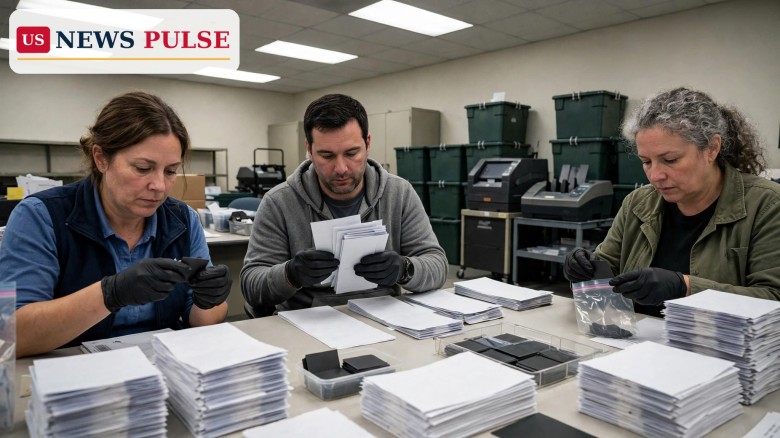
A memory card holding 388 Election Day ballots sat uncounted in Seminole County, Georgia, for five days after the November 3 midterm elections — and when officials finally found it and added the votes, the result of a closely watched Georgia House race flipped. Republican incumbent Gerald Greene, who had trailed Democrat Harry James by 58 votes, moved ahead by 262 votes in House District 154.
The votes were found during a routine post-election check, when the Secretary of State's office noticed about 388 more voters had checked in than ballots counted. Secretary of State Brad Raffensperger called the oversight "unacceptable" and opened an investigation on Friday, November 7. No evidence has been presented publicly that the 388 ballots were fraudulent.
Key Points
- A memory card with 388 Election Day votes from Seminole County was not uploaded to the county's election management system on November 3, 2026.
- The card was found during a routine post-election check, after officials spotted about 388 more voters checked in than ballots counted.
- Adding the votes moved Republican Gerald Greene from 58 votes behind Democrat Harry James to 262 votes ahead in District 154.
- Updated unofficial totals, released Saturday, November 8, put Greene at 10,193 votes and James at 9,932.
- Secretary of State Brad Raffensperger called the oversight "unacceptable" and opened an investigation on Friday, November 7.
What Happened
On Election Day, Tuesday, November 3, 2026, voters across Georgia cast ballots in the midterm elections, including in the race for Georgia House District 154, a southwest Georgia seat held by Republican incumbent Gerald Greene and challenged by Democrat Harry James. When the first unofficial results were reported, James appeared to lead Greene by 58 votes — a narrow margin in a race that would help decide which party controls the Georgia House.
But the count was incomplete. A memory card carrying 388 votes from Seminole County had never been uploaded to the county's election management system. Memory cards record votes from voting machines at each precinct and are carried to the county office for upload after polls close. The gap emerged when the Secretary of State's office compared voters checked in against ballots counted, found about 388 more check-ins, and traced the missing card. Once added, the updated totals released Saturday, November 8, showed Greene with 10,193 votes and James with 9,932. The Associated Press had not called the race as of Sunday morning.
Background and Context
Georgia House District 154 covers Seminole County and nearby communities in the southwest corner of Georgia, near the Florida line. The 2026 midterms delivered a strong night for Democrats, and early results suggested they had won an apparent majority in the 180-seat Georgia House — their first in more than two decades. If Greene's lead holds, that majority would shrink from 93 seats to 92, leaving a two-seat margin instead of three.
The episode arrives in a midterm cycle already marked by election-administration problems elsewhere. In New York, ballot scanners failed across Westchester County on Election Day, forcing poll workers to store paper ballots in secure orange emergency bags. In seven states, National Guard members helped monitor ballot drop boxes and protect election cyber infrastructure. And in the courts, the Ninth Circuit reversed itself within hours to keep a shield for election workers in place on Election Day.
Georgia House Race Memory Card: How 388 Votes Went Missing
Seminole County officials say all of the county's memory cards were accounted for and that chain of custody was followed. Their explanation is that the county's election management system computer failed to complete processing for the final precinct's card — a technical failure, in their account, rather than a card that was lost or left behind. The Secretary of State's investigation will test that explanation, examining how the card was missed and whether the county followed the required procedures.
The distinction matters. A lost card raises questions about security; a card never processed raises questions about the software, the workflow, and the checks meant to confirm every precinct is counted before certification. Georgia counties must certify by Monday, November 9, with state certification due by November 20. The 388 votes are not disputed as legitimate ballots — the question is procedural: how valid votes went uncounted for five days.
Reactions and Quotes
Raffensperger, a Republican who has frequently defended Georgia's election system, did not mince words: he called the oversight "unacceptable" and opened an investigation on Friday, November 7, into how the card was missed and whether procedures were followed. Seminole County officials say all memory cards were accounted for and chain of custody was followed, blaming the election management system computer for failing to complete processing for the final precinct's card. Neither Greene nor James had commented publicly as of Sunday.
Why It Matters
The District 154 flip matters first because of the arithmetic of power in Atlanta. Democrats appeared to have won their first Georgia House majority in 22 years, Losing one seat to Greene would cut that majority from 93 seats to 92 in the 180-seat House — still a majority, but a thinner one, resting on a handful of close races.
It matters second because of trust. Elections in Georgia are conducted under some of the most intense public scrutiny in the country, and every administrative error — even one that is caught and corrected — becomes part of a larger argument about whether results can be believed. The error was found through a routine check, and the votes were legitimate ballots cast by real voters. But the five-day delay is the part that will linger — and the part the investigation must explain.
What Happens Next
Investigators will look at how the memory card was missed, whether Seminole County followed the required procedures, and whether the election management system computer failed as county officials have said. The findings could lead to new guidance for counties, changes in upload verification, or disciplinary action. Counties must certify by Monday, November 9, and the state by November 20, and the candidates may seek a recount if the final margin qualifies under Georgia law. With Greene ahead by 262 votes out of more than 20,000 cast, a recount request is a realistic possibility.
Frequently Asked Questions
What happened in the Georgia House District 154 race?
A memory card with 388 votes from Seminole County was not uploaded on November 3. When the votes were added on November 8, Gerald Greene moved from 58 votes behind Harry James to 262 votes ahead.
How were the missing votes found?
During a routine check, officials noticed about 388 more voters had checked in than ballots counted, which led them to the card.
Are the 388 ballots legitimate?
Yes, as far as officials have said. No evidence has been presented publicly that any of the ballots were fraudulent.
What did Secretary of State Brad Raffensperger do?
He called the oversight "unacceptable" and opened an investigation on Friday, November 7, into how the card was missed.
Does the flip change control of the Georgia House?
Not on its own. Democrats would still hold a majority, but it would shrink from 93 seats to 92.
Leave a Comment