


 | Today's Date:

Judge Chutkan Blocks Trump's 250-Foot Triumphal Arch for 14 Days After Approval
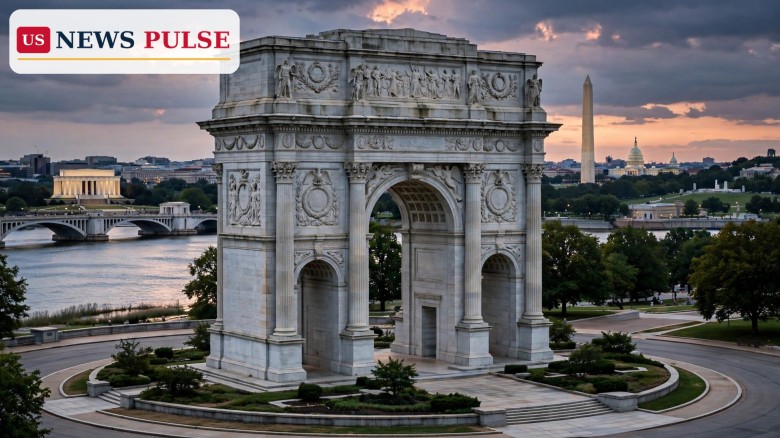
A federal judge blocked construction of President Donald Trump's planned 250-foot triumphal arch in Washington for 14 days on Thursday, November 5, 2026, less than two hours after a planning commission approved the final design for the monument at Memorial Circle.
US District Judge Tanya Chutkan issued a temporary restraining order barring the administration from starting any construction, excavation, demolition or other ground-disturbing work at the site while the court weighs lawsuits arguing that Congress never authorised the arch.
Key Points
- Judge Tanya Chutkan granted a 14-day temporary restraining order late Thursday, November 5, less than two hours after planners voted 8-4 to approve the final plans.
- The order bars any construction, excavation, demolition, land-disturbance, utility-installation or roadway-closure activity at Memorial Circle.
- In a 33-page opinion, Chutkan found the District of Columbia and Virginia are likely to win, ruling Congress never authorised the arch.
- Federal officials must tell all employees, contractors and subcontractors that construction work is prohibited, and file a compliance report by Monday, November 9.
- It followed Chutkan's Tuesday order requiring the government to notify her within one hour of the planning decision and give 30 minutes' notice before any construction.
What Happened
The National Capital Planning Commission voted 8-4 on Thursday to approve the final site and building plans for the arch, clearing the last planning hurdle for a monument that would stand 250 feet tall at Memorial Circle, between the Lincoln Memorial and Arlington National Cemetery. The approved design is a 166-foot stone arch by architect Nicolas Leo Charbonneau, topped with three gilded figures.
Commission chair Mark Paoletta called the project "the grandest arch ever built by mankind" and a "generational security opportunity". More than 130 people had signed up to testify, almost all opposed. The administration had said construction could begin November 5, with excavation lasting six to eight months.
Within two hours of the vote, Chutkan issued her order, freezing all construction-related activity while she considers a longer stay and a preliminary injunction, and ordered officials to notify every employee, contractor and subcontractor that the work is prohibited.
Background and Context
The arch was first announced about a year ago as a centrepiece for the 250th anniversary of the United States. The 250-foot monument would be concrete clad in granite, with two gilded eagles and a central winged figure, and construction was expected to take about three years at one of the capital's busiest traffic circles.
The fight built over a week. On October 30, Chutkan questioned the administration's national-security case for the arch at a hearing, asking, "It doesn't make the use of national security talismanic in this case," and "What's the harm to the government to wait 3 or 4 months?" The next day, the District of Columbia and Virginia filed a federal lawsuit to stop the project, calling it "flagrantly unlawful" and arguing it bypasses Congress and nearly doubles the 130-foot height limit.
The administration has defended the project as a national-security measure and a "generational national defense opportunity". But documents reviewed in court showed no security component in the plans. An August National Park Service review found adverse effects on 42 historic sites, and a study found the arch's shadow would fall across more than 75,000 Arlington graves.
Chutkan Blocks Trump's 250-Foot Arch: What the Ruling Says
In her 33-page opinion, Chutkan ruled in the consolidated cases of Lemmon v. Trump, brought by three Vietnam veterans and a historian, and District of Columbia v. National Park Service, brought by the District and Virginia with Arlington County. She found the plaintiffs are likely to succeed on their claim that Congress never authorised the arch.
The order is deliberately broad, barring the administration from "initiating, making or otherwise effectuating any construction, excavation, demolition, land-disturbance, utility-installation or roadway-closure activity, or any other construction-related work" at Memorial Circle, closing off preparatory groundwork that could have begun within hours of the planning vote.
Chutkan deferred ruling on a longer stay and the injunction request. But her Tuesday order had already set the terms: the government had to notify her within one hour of the commission's decision and give 30 minutes' notice before any construction.
Reactions and Quotes
At the hearing, Paoletta framed the arch as a historic achievement, calling it "the grandest arch ever built by mankind". The administration's court filings struck a similar note, with senior officials calling the project a "generational national defense opportunity".
District Attorney General Brian Schwalb said, "The Court should not allow this cynical gambit to succeed," warning that breaking ground "will inflict irreparable harm on both the District and Virginia". Virginia Attorney General Jay Jones joined the suit, which said the administration was trying to "outrun judicial review".
Chutkan had signalled her scepticism days earlier, pressing the Justice Department at the October 30 hearing: "What's the harm to the government to wait 3 or 4 months? What's the rush to put this arch up?" She also asked what would count as final agency action: "when bulldozers start digging up the ground?"
Why It Matters
The ruling stops, for two weeks at least, a project the administration had been racing to start before the courts could rule. Construction was set to begin the moment the planning commission approved the final plans, and the lawsuits argued that once ground was broken, the harm to the District and Virginia would be irreversible.
It is also a test of presidential power over the capital's landscape. The arch would reshape Memorial Circle, the gateway between the Lincoln Memorial and Arlington National Cemetery, and the case turns on whether a president can build a monument of this scale without Congress.
What Happens Next
The administration must file its compliance report by Monday, November 9, and the court will then take up the longer stay and the preliminary injunction. If Chutkan extends the freeze, the arch could remain blocked for months; if the order lapses, the administration could move quickly to break ground.
The timing also matters for the 250th anniversary. With construction expected to take about three years, even a short delay pushes the project closer to the deadline, and a longer court fight could put the schedule out of reach.
Frequently Asked Questions
What did Judge Chutkan order?
A 14-day temporary restraining order barring the Trump administration from starting any construction or other ground-disturbing work at Memorial Circle for the 250-foot triumphal arch.
Why did she block the arch?
She found the District of Columbia and Virginia are likely to win their claim that Congress never authorised the arch, and that construction would cause irreparable harm.
What is the 250-foot arch?
A planned monument at Memorial Circle, between the Lincoln Memorial and Arlington National Cemetery, announced about a year ago for the 250th anniversary of the United States.
When will the court decide what happens next?
The administration must file a compliance report by Monday, November 9, and the court will then consider a longer stay and the preliminary injunction requested by the veterans and a historian.
Can construction start after the 14 days?
Only if the court does not extend the order or grant an injunction. The administration would still have to give the court notice before any construction activity.
Leave a Comment