


 | Today's Date:
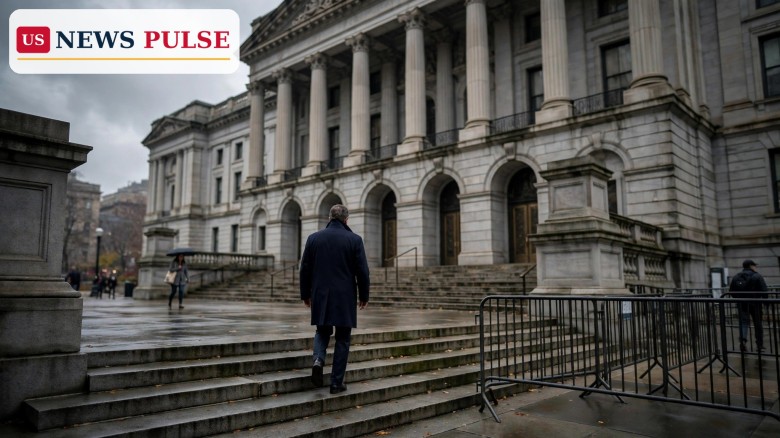




Supreme Court Transgender Jail Case Sent Back in Darlene Griffith Order

The Supreme Court on Monday ordered a fresh look at a transgender woman's civil rights case against a Colorado county jail, throwing out a lower court's ruling in her favour and sending the dispute back for a new analysis under the justices' recent decisions on transgender issues.
The unsigned order in the case of Darlene Griffith, who has lived openly as a woman for more than 20 years, shows how far the court's recent rulings now reach into the nation's prisons and jails.
Key Points
- The Supreme Court vacated a 2025 10th Circuit ruling that had let some of Darlene Griffith's claims against El Paso County, Colorado, proceed.
- Griffith alleges she was denied a female unit at the El Paso County Jail in 2020, was repeatedly assaulted by a male inmate, and was frequently searched by male deputies.
- The case returns to the Denver-based appeals court, which must re-examine it under the justices' recent rulings on care for minors and transgender athletes.
- The Justice Department urged the move, arguing that under the court's "clear guidance" the jail's housing policy "cannot be challenged".
- The order follows President Donald Trump's directive on housing federal inmates by biological sex.
What Happened
On Monday, November 9, the justices issued a brief order granting the county's petition, vacating the 10th Circuit's judgment and sending the case back. The move, known as a grant, vacate and remand, is a routine step when a new decision changes the legal landscape. The order gave no separate reasoning.
Griffith sued El Paso County after her stay in its jail in 2020. She says she asked to be housed with women and was refused, was placed where a male inmate repeatedly assaulted her, and was searched by male deputies. The county sought early dismissal, but the 10th Circuit ruled last year that some allegations cleared the "low bar" for surviving dismissal, while stressing it was not deciding whether housing inmates by biological sex is unconstitutional.
The county sheriff had appealed, arguing administrators face "inconsistent mandates" on housing transgender inmates safely. The justices agreed to intervene, wiped out the appeals court's ruling and told it to take another look.
Background: The Case So Far
Griffith has lived openly as a woman for more than 20 years, according to the record in the case. Her lawsuit, filed after her 2020 detention, is one of a growing number testing how US jails house transgender people.
The 10th Circuit's 2025 decision did not find that the jail had violated Griffith's rights. It held only that her complaint stated claims strong enough to survive dismissal. That narrow ruling was enough for the county to seek Supreme Court review, with the Justice Department backing the county.
The legal landscape has shifted quickly since. The Supreme Court has since upheld a Tennessee ban on gender-affirming care for minors and bans on transgender athletes on female teams — decisions the Justice Department says now control lower courts on sex-based classifications in prisons.
Supreme Court Transgender Jail Case: The Question Before the Courts
At the heart of the dispute is a contested question: when a jail houses inmates by biological sex, can a transgender inmate challenge that policy in court at all? The Justice Department told the justices the answer is now no, because the court's recent decisions supply "clear guidance" that such classifications are permitted.
"Like sports and medicine, prisons are another area where 'everyone agrees' that some sex-based classifications are permitted," the department's lawyers wrote, urging the court to order reconsideration.
The order also follows President Donald Trump's directive last year that the federal Bureau of Prisons house inmates by biological sex. Last month, the justices said the administration cannot immediately deny gender-affirming care to federal prison inmates while that challenge plays out.
Reactions and Quotes
The Justice Department's filing framed the case as already settled by the court's own recent work. Under the "clear guidance" of the rulings on care for minors and school sports, it argued, "the jail's housing policy cannot be challenged" — a position that, if adopted, would end Griffith's case without a trial.
The county sheriff stressed the practical bind facing jail administrators, who he said are "subject to inconsistent mandates on how to classify and house transgender inmates while maintaining safety and security in their facilities".
The 10th Circuit had been careful to limit what it decided, saying Griffith's allegations passed only the "low bar" for surviving dismissal and emphasising it was not weighing in on whether the housing policy itself is unconstitutional.
Why It Matters
Prisons and jails are becoming the third front in the Supreme Court's reshaping of transgender rights law, after sports and medicine. How the 10th Circuit handles the remand will signal whether the recent rulings close the door to housing challenges or leave room for assault-based cases.
The stakes reach beyond Colorado: thousands of transgender people are held in state and local jails. A ruling that housing policies cannot be challenged would give administrators broad cover; a ruling that Griffith's claims can proceed would keep the question alive.
For Griffith, the order is a setback but not a final defeat: the court did not rule on her rights or uphold the jail's policy. It told the appeals court to look again.
What Happens Next
The case returns to the Denver-based 10th US Circuit Court of Appeals, which will re-examine Griffith's claims under the Supreme Court's recent transgender rulings. It could reaffirm its earlier decision, narrow it or dismiss the claims outright. No timetable has been set, and either side could ask the Supreme Court to intervene again.
Separately, the challenge to the federal Bureau of Prisons policy continues, with the justices' order last month keeping gender-affirming care available to federal inmates for now. Together, the two tracks will shape how transgender people are housed in American prisons.
Related coverage: Supreme Court SNAP ruling | Epstein files special counsel call | James Comey third case
Frequently Asked Questions
Who is Darlene Griffith?
A transgender woman who has lived openly as a woman for more than 20 years. She sued El Paso County, Colorado, alleging her civil rights were violated at the county jail in 2020.
What did the Supreme Court actually decide?
The court did not decide whether her rights were violated or whether the jail's policy is lawful. It vacated the 10th Circuit's ruling and sent the case back for a new analysis.
Why did the justices send the case back?
The 10th Circuit ruled in 2025, before the Supreme Court upheld a ban on gender-affirming care for minors and bans on transgender athletes on female teams. The Justice Department argued the new "clear guidance" means the jail's policy cannot be challenged.
Does this mean the jail's housing policy is legal?
No. The order makes no ruling on the policy's legality. The 10th Circuit must now decide, on remand, whether Griffith's claims survive under the Supreme Court's recent decisions.
What happens next?
The 10th US Circuit Court of Appeals in Denver will re-examine the case. It could reaffirm its earlier ruling, narrow it or dismiss the claims, and either side could seek Supreme Court review again.
Leave a Comment