

 | Today's Date:


International Student Enrollment Falls 9% in US as New Arrivals Drop 15%
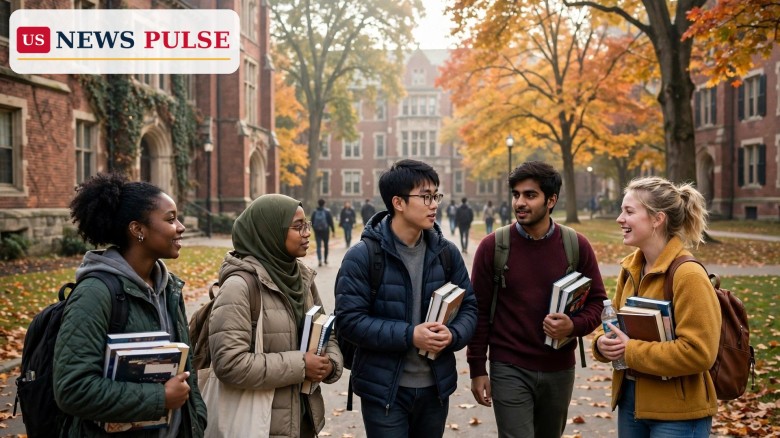
International student enrollment in the United States fell 9 percent this fall, and first-time arrivals dropped 15 percent, according to a survey of more than 800 colleges and universities released Monday by the Institute of International Education. The figures are the clearest sign yet that the Trump administration's immigration crackdown is reshaping American higher education. Graduate enrollment fell 15 percent, undergraduate enrollment slipped 3 percent, and international students' contribution to the US economy dropped by $2.4 billion this fall.
Key Points
- Overall international enrollment fell 9 percent this fall; first-time arrivals dropped 15 percent, the Institute of International Education found.
- Graduate enrollment fell 15 percent, undergraduate enrollment 3 percent; numbers from India, the top source country, also fell.
- Of 800-plus surveyed colleges, 88 percent blamed the visa process and 70 percent blamed travel restrictions.
- Optional Practical Training participation fell 6 percent as Homeland Security proposed a $70,000 fee per OPT student.
- Students' contribution to the US economy fell $2.4 billion; Cleveland State alone faces a $2-4 million budget hit.
What Happened
The Institute of International Education, known as IIE, released the findings Monday as an early look at enrollment trends, ahead of the full data it publishes next year. More than 800 US colleges and universities took part, making it one of the broadest snapshots yet of how international enrollment is moving under tougher immigration policies. The 9 percent decline covers all international students enrolled this fall; the 15 percent drop in new students measures those entering the United States for the first time.
Colleges blamed Washington. Among surveyed schools, 88 percent blamed the visa application process and 70 percent blamed travel restrictions, while 95 percent predicted students would look to another country if Optional Practical Training is limited. The program, known as OPT, lets graduates work temporarily in the United States after their degrees. Homeland Security has proposed a $70,000 fee for every student in the program; the rule is not final, but participation already fell 6 percent this fall.
Background: A Year of Tighter Rules
The decline follows a year in which the Trump administration tightened nearly every part of the system international students depend on. Visa applicants face social media checks, thousands of student visas have been revoked, and Homeland Security has terminated the legal status of thousands of students, detaining and deporting many. This summer the administration finalized a rule barring students from staying more than four years without federal approval, although a judge has temporarily blocked it.
Politics is not the only reason students are looking elsewhere. Mirka Martel, IIE's head of research, said more global competition and the rising cost of a US degree also contributed. Students who once saw an American degree as the obvious choice now weigh cheaper options in Asia and Europe. The pattern matches other data: a survey last week found students turning from the United States and Britain toward Asia and Europe, and government figures showed August arrivals down 28 percent from 2024.
International Student Enrollment: Where the Decline Hits Hardest
The national figures hide sharp pain at individual campuses. At Cleveland State University in Ohio, international enrollment has dropped 46 percent in two years, from 1,542 students in fall 2025 to 828 this fall, and fewer than 50 new international students started this fall. Provost Nigamanth Sridhar put the budgetary impact at $2 million to $4 million, a hole driven almost entirely by lost tuition from students who never arrived.
The graduate programs hit hardest, down 15 percent, are the ones that power American research, staffing laboratories and teaching undergraduates. The economic damage also extends beyond campus budgets: NAFSA, the association for international educators, found with the education technology company JB International that international students' contributions to the US economy dropped by $2.4 billion this fall. Students pay tuition, rent apartments and support jobs in college towns.
Reactions and Quotes
Veena Dubal, general counsel for the American Association of University Professors, said the message reaching families abroad is unmistakable. "No one aspires to send their kids to get educated in the US," she said. "It feels like an unsafe place."
Fanta Aw, chief executive of NAFSA, said students are also worried about research funding. "They're saying to themselves, 'Too much uncertainty in the United States. It's too difficult... Why subject ourselves to this?'" Aw said, noting students are going to places like China.
"I am here in this position, in this job, because I had the opportunity to come to the United States as an international graduate student and then decided to stay here and build a career," said Cleveland State Provost Nigamanth Sridhar. "So international education is personal to me."
Sarah Spreitzer of the American Council on Education said substantial immigration bills are unlikely while Trump remains president, but congressional oversight might halt new policies aimed at international students. "Those types of things could provide more certainty," she said.
Why It Matters
International students are far more than a line in a university budget. They fill graduate programs in science, technology, engineering and mathematics, staff the laboratories behind American research, and pay full tuition that subsidizes aid for domestic students. When they stop coming, universities lose revenue, research slows and college towns lose spending. The decline also touches American standing: for decades the United States has been the top destination for international students, a source of soft power. If students increasingly choose China and Europe, the United States risks losing a pipeline of talent and goodwill built over generations.
What Happens Next
The proposed $70,000 OPT fee is expected to face legal challenges, and its fate will shape whether the work program that draws so many students survives. The four-year stay limit is already tied up in court after a judge temporarily blocked it. The midterm elections, in which Democrats won both chambers of Congress, could bring oversight that slows new policies aimed at international students, even if major immigration legislation remains unlikely while Trump is president. IIE releases full data next year.
Frequently Asked Questions
How much did international student enrollment fall this fall?
Overall enrollment fell 9 percent, and first-time arrivals fell 15 percent, according to IIE's survey of more than 800 colleges and universities.
Why are fewer international students coming?
Among surveyed colleges, 88 percent blamed the visa process and 70 percent blamed travel restrictions, alongside revoked visas, a proposed $70,000 OPT fee and rising costs.
What is Optional Practical Training?
OPT lets international graduates work temporarily in the US after their degrees. Participation fell 6 percent this fall, and 95 percent of schools said students would look elsewhere if OPT is limited.
Which students are affected most?
Graduate enrollment fell 15 percent, far more than the 3 percent undergraduate decline, and numbers from India also dropped. Cleveland State saw a 46 percent fall in two years.
What is the cost to the US economy?
NAFSA found international students' contributions fell $2.4 billion this fall, while schools face millions in lost tuition, including $2-4 million at Cleveland State.
Related coverage: International Students Turn Away From US and UK as Visa Rules Push Them to Asia and Europe and International Students in US Fall 28% to Covid-Era Low as Science Leaders Sound Alarm.

The US News Pulse newsroom covers breaking news across the United States and the world, working from wire services, official statements and on-the-record sources. Every story is reviewed against our editorial standards before publication. Corrections and tips: info@usnewspulse.com
About our newsroomLeave a Comment