

 | Today's Date:



Boston Judge Weighs Blocking Trump Freeze on Refugee Green Cards and Deportations
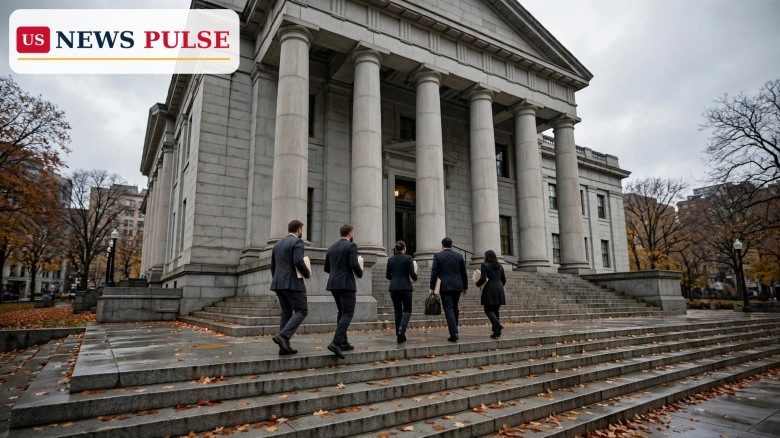
A federal judge in Boston signalled on Friday, November 20, 2026, that he may block the Trump administration from freezing thousands of refugees' green card applications and from enforcing a rule that would speed the deportation of refugees stripped of their legal status.
US District Judge Myong Joun questioned whether the government can indefinitely halt processing of permanent-residence applications, and said he was struggling to understand why the administration cut the time to contest the loss of status from 30 days to 10.
Key Points
- Judge Myong Joun in Boston appeared open at a Friday hearing to blocking the freeze on refugees' green card applications and the fast-track deportation rule.
- Joun said he was "struggling" to understand the cut from 30 days to 10 days to contest a status termination.
- A November 2025 memo from USCIS Director Joe Edlow halted permanent-residence processing for refugees who entered under President Joe Biden and ordered re-interviews.
- An October 14, 2026 interim rule cut the contest period from 30 days to 10; it is temporarily halted while the court considers the case.
- Plaintiffs say more than 100,000 refugees are at risk and the freeze is not authorised under the Refugee Act of 1980.
What Happened
The hearing took place on Friday, November 20, 2026, in the US District Court for the District of Massachusetts in Boston. Judge Joun heard arguments in Partnership for the Advancement of New Americans et al v. Edlow et al, case number 1:26-cv-14817, a Democracy Forward challenge for refugee groups and four refugees from Afghanistan, Ethiopia, Colombia and Iran.
The plaintiffs asked the court to block two policies: the November 2025 Edlow directive halting permanent-residence processing for refugees who entered under President Joe Biden and ordering re-interviews of those already admitted, and the October 14, 2026 interim rule cutting the time to contest a status termination from 30 days to 10. Judge Joun pressed the government's lawyer on both, questioning whether the administration can halt green card processing indefinitely. Assistant US Attorney Vincent Engingro defended the changes as needed for security and public safety. Judge Joun did not rule from the bench, but his questions left little doubt about where his scepticism lay.
Background and Context
Refugees admitted to the United States have long had a clear path to permanent residence. Under the Refugee Act of 1980, a refugee is expected to apply for a green card one year after arrival, and applications have historically been processed routinely once security checks are complete. A green card, in turn, opens the path to US citizenship after five years.
That routine was broken in November 2025, when USCIS Director Joe Edlow issued a memo halting all permanent-residence processing for refugees who entered under President Joe Biden and ordering previously admitted refugees to be reviewed and re-interviewed. The interim rule followed in October 2026: published on October 14, it cut the period to respond to a Notice of Intent to Terminate status from 30 days to 10 days. Challenged within days, it was temporarily blocked on October 27, 2026, by US District Judge Julia Kobick in Boston, until the case could be heard by a colleague. That colleague is now Judge Joun, and Friday's hearing was the first full airing of the dispute before him. Judge Joun dismissed the administration's Harvard admissions lawsuit on November 2, 2026, on narrow procedural grounds.
Refugee Green Card Freeze: What the Judge Questioned
The freeze sits at the heart of the case because of its scale and its open-ended nature. Lawyers for the plaintiffs told the court that more than 100,000 refugees are at risk from the freeze and the re-vetting orders. They argued the Refugee Act of 1980 gives the government no authority to stop processing applications indefinitely or to re-vet refugees years after they were cleared to enter.
Judge Joun focused on the indefinite character of the halt. A temporary pause while a policy is reviewed is one thing, his questions suggested; a freeze with no end date, applied to people the government itself admitted as refugees, is another. The government answered that security requires speed and a fresh look at admissions made under the previous administration. Whether that rationale can support an indefinite freeze is the question Judge Joun must now decide.
Reactions and Quotes
Judge Joun's most pointed moment came when he addressed the 10-day rule directly, telling the courtroom he was "struggling" to understand the decision to cut the time refugees have to contest terminations of their legal status from 30 days to 10. It was the clearest sign of the day that the judge is troubled by the rule.
Lawyers for the plaintiffs framed the case as a test of whether the administration can rewrite refugee law by memo and interim rule. The government, through Assistant US Attorney Vincent Engingro, stood by the changes as a security measure. Refugee advocates say the freeze has left families in limbo, unable to travel freely, to sponsor relatives, or to take the next step toward citizenship.
Why It Matters
The stakes reach far beyond the courtroom in Boston. A green card is the gateway to stability: it allows work without restriction, travel abroad, and eventually citizenship. Freezing that step indefinitely leaves more than 100,000 people in a legal halfway house, admitted to the country but barred from putting down permanent roots.
The case also tests the limits of executive power over refugee policy. Congress wrote the Refugee Act of 1980 to set the terms under which refugees are admitted and settled, and the plaintiffs argue the administration cannot override that framework with an internal memo and an interim rule. A ruling for the plaintiffs could constrain similar freezes across the immigration system; a ruling for the government would bless re-vetting refugees it already admitted.
What Happens Next
Judge Joun will now decide whether to issue a preliminary injunction blocking the green card freeze and the 10-day rule while the case proceeds. The interim rule remains temporarily halted in the meantime. A written order is expected in the coming weeks, and the loser is likely to appeal to the First Circuit.
Frequently Asked Questions
What did Judge Joun signal at the hearing? He appeared open to blocking the freeze and the fast-track rule, saying he was "struggling" to understand the cut.
How many refugees are affected? Lawyers for the plaintiffs say more than 100,000 refugees are at risk from the freeze and the re-vetting orders.
What is the 10-day rule? An interim rule issued October 14, 2026, that cut the time refugees have to contest a termination of their legal status from 30 days to 10 days. It is temporarily halted while the court considers the case.
What law do the plaintiffs rely on? The Refugee Act of 1980, which they argue does not authorise the freeze on green card processing or the re-vetting of already-admitted refugees.
What happens next? Judge Joun will decide on a preliminary injunction in Partnership for the Advancement of New Americans et al v. Edlow et al, No. 1:26-cv-14817.
Read our earlier report on the October ruling that blocked the 10-day rule, Judge Joun's Harvard admissions dismissal, and the ICE green card holder investigation.

The US News Pulse newsroom covers breaking news across the United States and the world, working from wire services, official statements and on-the-record sources. Every story is reviewed against our editorial standards before publication. Corrections and tips: info@usnewspulse.com
About our newsroomLeave a Comment