

 | Today's Date:


Trump Finalises College Accreditation Overhaul, His 'Secret Weapon' on Campuses
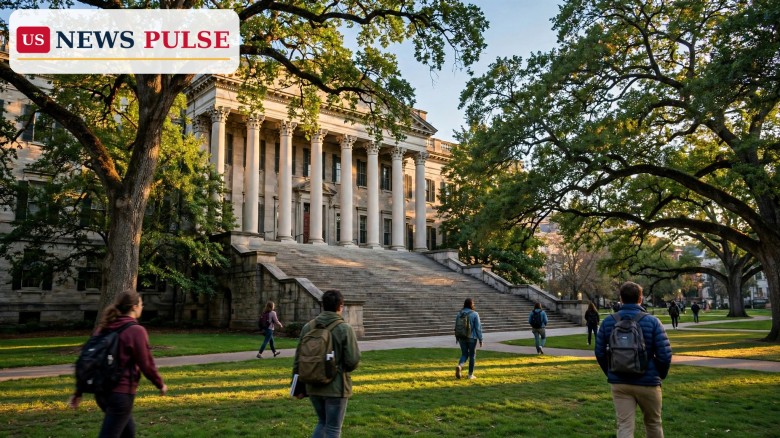
WASHINGTON — President Donald Trump has finalised the most sweeping overhaul of American college accreditation in decades, using the little-known system that decides which universities can receive federal student aid as the lever he once promised would be his "secret weapon" against higher education.
The Education Department released the final rule on October 29, 2026, and it takes effect on July 1, 2027.
Key Points
- The Education Department released the final "Accreditation, Innovation, and Modernization" (AIM) rule on October 29, 2026, calling it the most significant accreditation overhaul in decades.
- The rule follows Executive Order 14279, signed by Trump in April 2025, and takes effect July 1, 2027.
- Accreditors must now judge colleges on academic freedom and intellectual diversity, and may not enforce what the administration calls "illegal diversity, equity, and inclusion requirements".
- The rule makes it easier to create new accreditors and for schools to switch between them; the department said it made "no substantive changes" from the August draft.
- Five state university systems — Georgia, North Carolina, South Carolina, Tennessee and Texas — will switch to a new accreditor, the Commission for Public Higher Education.
What Happened
The Education Department published the final AIM rule on Thursday, October 29, describing it as the most significant overhaul of the federal system that recognises college accreditors in decades. The rule carries out Executive Order 14279, which Trump signed in April 2025 to reform accreditation and strengthen higher education.
Under the new rule, the private agencies that accredit American colleges must now judge schools on academic freedom and intellectual diversity, putting campus speech and viewpoint diversity at the centre of accreditation. Accreditors are also barred from enforcing requirements the administration defines as illegal diversity, equity and inclusion mandates.
The rule also opens the door to competition. It is easier to create new accrediting agencies and easier for colleges to switch between them, loosening a system in which schools have often been locked into one regional accreditor for decades. The department said it made "no substantive changes" from the August draft.
Background: Why Accreditation Matters So Much
Accreditation is one of the most powerful and least understood levers in American higher education. It is the gatekeeper for federal student aid: a college that loses accreditation loses its students' access to federal loans and grants, which for most institutions would be a death sentence.
Trump understood that power long before he returned to the White House. On the 2023 campaign trail he told supporters accreditation would be his weapon against what he sees as ideological capture on campus. "Our secret weapon will be the college accreditation system," he said.
The administration has already tested that approach. Last year it declared Columbia University in violation of federal antidiscrimination laws and recommended its accreditor strip the university's status — a step the accreditor declined to take. The new rule is designed to change that balance.
College Accreditation Overhaul: What the AIM Rule Changes
The heart of the AIM rule is a new set of expectations for accreditors. Agencies recognised by the federal government must now evaluate whether colleges protect academic freedom and intellectual diversity, turning campus debate into a formal accreditation standard. Colleges that restrict speech, in the administration's view, could face consequences at review.
At the same time, the rule forbids accreditors from imposing diversity, equity and inclusion requirements the administration defines as illegal. For years many accreditors pressed colleges to adopt DEI plans and show progress on diversity goals; under the new rule that pressure is meant to stop.
The rule also breaks open the accreditor market. New agencies will find it easier to win federal recognition, and colleges will find it easier to move between accreditors. The clearest sign of that shift: five state university systems, in Georgia, North Carolina, South Carolina, Tennessee and Texas, will leave their current accreditor for the new Commission for Public Higher Education. The move follows a Justice Department complaint accusing 30 elite universities of dodging the ban on affirmative action, another front in the administration's campaign against campus policies it opposes.
Reactions
Critics warn the rule risks turning accreditation into an instrument of federal control. The Council for Higher Education Accreditation has warned it could make accreditation a lever for federal influence over campus policy and speech — the outcome, critics say, accreditation was designed to prevent by keeping quality judgments with academics, not politicians.
Higher education groups also warn the new tests for academic freedom and intellectual diversity are vague enough to be applied unevenly, and colleges could face pressure to change curricula, hiring and speaker policies. For institutions that depend on federal aid, getting it wrong is existential.
The administration sees it differently. It argues accreditors enforced their own ideological preferences for years while failing to hold colleges accountable for poor outcomes, and the rule restores accreditation to its purpose: judging whether a college delivers a quality education.
Why It Matters
The rule matters because accreditation is the choke point of American higher education. Federal student aid flows through it, and with it the ability of millions of students to afford college. The fight over student loans is already one of the most charged debates in US politics, and this overhaul extends that fight into the institutions themselves.
It also redefines who sets the terms of campus life. If accreditors must police intellectual diversity and may no longer enforce DEI requirements, power shifts from administrators who built DEI bureaucracies toward the federal government's definition of academic freedom — felt in hiring, admissions and curricula long before any formal review.
What Happens Next
The rule takes effect on July 1, 2027, giving colleges, accreditors and state systems more than seven months to prepare. The five state systems moving to the Commission for Public Higher Education will be watched as a test of whether the new accreditor can win federal recognition and handle the switch smoothly.
Legal challenges are widely expected, and the courts may decide how far the federal government can go in telling accreditors what to judge. Meanwhile colleges are reviewing their academic-freedom and diversity policies, and new agencies are expected to seek recognition. The overhaul Trump promised as a campaign weapon is now federal policy.
Frequently Asked Questions
What is the AIM rule? The "Accreditation, Innovation, and Modernization" rule is the Trump administration's final overhaul of the federal system that recognises college accreditors, released October 29, 2026 and effective July 1, 2027.
Why does accreditation matter? Accreditation is the gatekeeper for federal student aid. A college that loses it loses its students' access to federal loans and grants.
What does the rule change? Accreditors must judge colleges on academic freedom and intellectual diversity, and may not enforce what the administration calls illegal DEI requirements. New accreditors are easier to create, and schools can switch more easily.
What did Trump call accreditation? On the 2023 campaign trail, Trump called it his "secret weapon" against higher education: "Our secret weapon will be the college accreditation system."
Which university systems are switching accreditors? Five state systems — Georgia, North Carolina, South Carolina, Tennessee and Texas — will switch to the Commission for Public Higher Education.

The US News Pulse newsroom covers breaking news across the United States and the world, working from wire services, official statements and on-the-record sources. Every story is reviewed against our editorial standards before publication. Corrections and tips: info@usnewspulse.com
About our newsroomLeave a Comment