

 | Today's Date:

COP31 Collapses Without a Deal as EU and Panama Reject the Antalya Pact
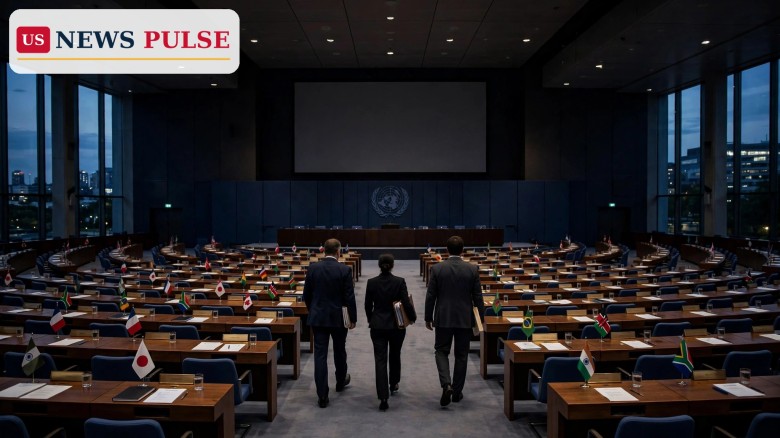
ANTALYA, Turkey — COP31 collapsed without a deal on Sunday, November 22, 2026, after the European Union and Panama formally objected to the final text, ending the longest United Nations climate summit in history in failure, more than 44 hours past its deadline.
COP31 President Murat Kurum told delegates there was no consensus and the decisions had not been adopted. The summit ended without a new climate agreement, in a draft that did not even mention fossil fuels.
Key Points
- UN climate talks in Antalya ended on Sunday, November 22, 2026, with no agreement adopted, a record 44-plus hours past the Friday, November 20 deadline.
- The European Union formally objected to the Antalya pact at the closing plenary, and Panama objected too, blocking a deal under the consensus rule.
- COP31 President Murat Kurum told delegates: "We recognise that there is no consensus on this document. Therefore, these decisions have not been adopted."
- The final draft acknowledged for the first time that warming is on course to exceed 1.5C, but named no fossil fuels and called for no transition away from them.
- It dropped a proposed $120 billion-a-year adaptation-finance target for 2035, replacing it with a non-binding call to triple adaptation funding by 2035.
What Happened
The summit was due to end on Friday, November 20. Instead, talks stretched through the weekend, passing the deadline by more than 44 hours and making COP31 the longest UN climate summit ever. Nearly 200 countries were negotiating by consensus, so one formal objection could block a deal.
Kurum tabled a final text and gave delegations until 03:00 GMT on Sunday to object, with an approval session set for 06:00 GMT. At the closing plenary the EU objected. Ireland's climate minister, Darragh O'Brien, said: "We want to formally object to the Antalya pact because it fails to meet the moment... We will not endorse a decision that does not respond to the science." Panama objected too, and Kurum closed the meeting: "It is clear that there are parties in this hall who oppose this text." No vote was taken and no agreement was adopted.
Background and Context
COP31 opened on November 9, 2026, in Antalya, ten years after the Paris Agreement entered into force. It was chaired by Turkey's environment minister, with Australia's Chris Bowen leading the negotiations, and it arrived with grim science: a UN report said 2026 was on track to be one of the four hottest years on record, at 1.47C above pre-industrial levels.
The outcome lands without US federal participation. The United States sent no official delegation, the second year in a row, after President Donald Trump withdrew the US from the Paris Agreement for a second time and from the UN climate convention. UN chief Antonio Guterres had called the talks a "moment of truth".
COP31 Collapse: Why the Deal Failed
The final draft contained one genuine first: it acknowledged that warming is on course to exceed the 1.5C threshold. But it did not name fossil fuels — coal, oil or gas — and called for no transition away from them, despite the 2023 Dubai deal agreeing to move away from fossil fuels.
On money, the draft fell short too. It dropped the proposed $120 billion-a-year adaptation-finance target for 2035, replacing it with a non-binding call to triple adaptation funding by 2035. It aimed for electricity to supply 35 percent of final energy by 2035, but for the EU that was not enough. Germany's Carsten Schneider doubted a deal could still succeed "in the short time left, especially since many colleagues have already left". China had concerns but accepted the text to keep things moving.
Reactions
O'Brien said the pact "does not respond to the science" and does not even mention fossil fuels, the cause of the warming the draft itself acknowledged. Belgium's Jean-Luc Crucke backed the objection: "It is unacceptable. It's not the end of multilateralism, but there has to be courage to say no."
With the conference two days past its end and many delegations already home, the remaining hours could not rebuild a text that would win consensus. No country defended the draft as a success.
Why It Matters
The collapse matters because the gap between science and the talks is now on the record. The draft said warming is on course to pass 1.5C, the threshold the Paris Agreement aimed to hold, yet offered no plan to move away from the fuels driving it and no binding money for the countries that will suffer most.
For the most vulnerable nations, the dropped adaptation target is the sharpest loss. Adaptation finance pays for seawalls, drought-resistant crops and early-warning systems in countries that contributed least to the problem. A non-binding call to triple funding by 2035 is not a commitment, and the summit ended without one.
What Happens Next
The collapse does not undo earlier commitments or erase the existing frameworks for climate cooperation. The Paris Agreement and the Dubai deal still stand; what is missing is a new agreement from Antalya. Attention now turns to national climate plans and the next round of talks, where negotiators must decide whether to return to the same text or start again.
Related coverage: US sends no official delegation to COP31 as nearly 200 nations meet in Antalya, Guterres warns COP31 leaders the climate crisis is outrunning us and Fossil-fuel emissions set to fall in 2026 for first time since Covid, scientists say.
Frequently Asked Questions
Why did COP31 collapse?
The European Union and Panama formally objected to the final text at the closing plenary. Decisions need consensus, so the objections blocked adoption and COP31 President Murat Kurum declared the decisions had not been adopted.
How long did COP31 run?
It opened on November 9, 2026, in Antalya and was due to end on Friday, November 20. It ran more than 44 hours past that deadline into Sunday, November 22, the longest UN climate summit ever.
What was wrong with the final draft?
It acknowledged for the first time that warming is on course to exceed 1.5C, but named no fossil fuels, called for no transition away from them, and dropped a proposed $120 billion-a-year adaptation-finance target for 2035.
Did the US take part in COP31?
No. The United States sent no official federal delegation, the second year in a row, after President Donald Trump withdrew the US from the Paris Agreement for a second time and from the UN climate convention.
Does the collapse undo earlier climate deals?
No. The collapse does not undo commitments from earlier summits, such as the Paris Agreement and the 2023 Dubai deal, or erase the existing frameworks for climate cooperation.

The US News Pulse newsroom covers breaking news across the United States and the world, working from wire services, official statements and on-the-record sources. Every story is reviewed against our editorial standards before publication. Corrections and tips: info@usnewspulse.com
About our newsroomLeave a Comment