


 | Today's Date:


30 Elite Universities Accused of Dodging Affirmative Action Ban in DOJ Complaint
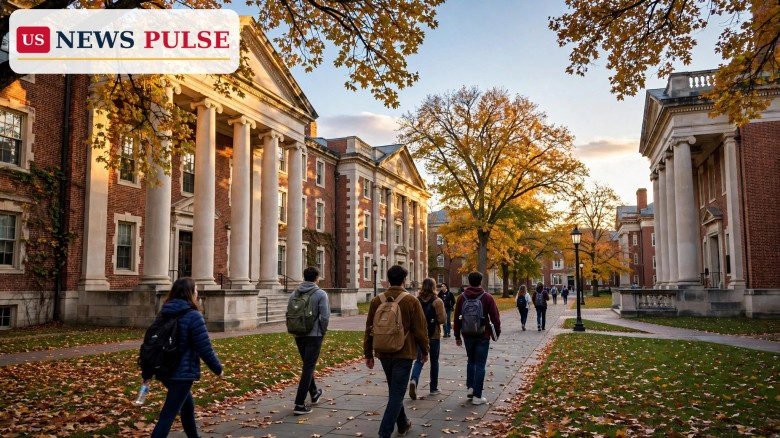
Thirty of America's most prestigious universities have been accused of quietly working around the Supreme Court's ban on affirmative action, in a new civil rights complaint that puts race-conscious recruitment back in the spotlight. The Equal Protection Project filed the complaint on Thursday, November 12, 2026, with the Justice Department's Civil Rights Division, alleging that 30 member schools of the Institute for Recruitment of Teachers (IRT) Consortium violate Title VI of the Civil Rights Act of 1964 by drawing applicants from what it calls a "racially discriminatory pre-screened pool."
The complaint names Harvard, Stanford, Princeton, Yale, Columbia and Cornell, and argues the universities use the consortium to favour minority applicants in a way the Supreme Court ruled unlawful in 2023.
Key Points
- The Equal Protection Project filed the complaint Thursday, November 12, 2026, with the Justice Department's Civil Rights Division against 30 IRT Consortium universities.
- The group says the schools recruit minority students through a "racially discriminatory pre-screened pool", breaching Title VI.
- IRT data cited in the complaint shows more than 90 percent of its 2026 cohort identify as people of colour.
- Schools named include Harvard, Stanford, Princeton, Yale, Columbia, Cornell, Brown, Duke, NYU, Purdue, Rice, Rutgers and Emory.
- It follows the Supreme Court's 2023 ruling that race-based admissions violate Title VI.
What Happened
The Equal Protection Project, founded in 2023 to challenge race-based programmes, lodged the complaint against 30 member schools of the IRT Consortium, a teacher-recruitment network based in Andover, Massachusetts, set up in 1990 to diversify teaching and higher education.
At the centre is the consortium's pipeline. The group says the schools draw from a pool screened by race before the universities ever see it, boosting minority numbers without openly applying racial preferences. Its own data shows more than 90 percent of the 2026 cohort identify as people of colour.
The schools named are: Harvard, Stanford, Princeton, Yale, Columbia, Cornell, Brown, Duke, New York University, Purdue, Rice, Rutgers, Emory, Boston College, Brandeis, UC Berkeley, UC Davis, UC San Diego, the University of Arizona, the University of Connecticut, the University of Kentucky, the University of Maine, the University of Maryland, the University of New Hampshire, the University of Notre Dame, the University of Pennsylvania, the University of Rochester, the University of Vermont and Washington State University.
William Jacobson, the group's president and founder and a Cornell professor, said the complaint was driven by uneven compliance with the 2023 decision. "There is inconsistent compliance with the Supreme Court's affirmative action decision nationally," he said.
Background: The 2023 Supreme Court Ruling
The complaint follows the Supreme Court's June 2023 decision in Students for Fair Admissions v. Harvard, striking down race-conscious admissions at Harvard and the University of North Carolina. The court ruled race-based admissions standards violate Title VI, which bars federally funded institutions from racial discrimination, and the Fourteenth Amendment's equal protection guarantee.
The ruling ended nearly half a century in which universities could treat race as one factor among many. Colleges rewrote their policies, expanded outreach to underrepresented communities, and leaned on essays and background to preserve diversity without considering race.
But critics argue some replacement strategies are affirmative action by another name. Programmes that channel applicants through partner organisations draw particular scrutiny, because they can shape an applicant pool before any formal decision. The IRT Consortium, founded in 1990 to bring more people of colour into teaching and academia, sits squarely in that category.
Affirmative Action and the Teacher Pipeline at the Centre of the Complaint
The legal question is where lawful outreach ends and unlawful discrimination begins. Title VI prohibits discrimination on the basis of race in any programme receiving federal financial assistance — virtually every major American university. The 2023 ruling made clear universities cannot use race as a factor in admissions, even as one consideration among many.
The Equal Protection Project argues the IRT pipeline violates that principle indirectly. If a university recruits from a pool already narrowed on racial lines, the group contends, the advantage for minority applicants is the same in substance as the race-conscious admissions the court struck down.
Jacobson founded the group in 2023, and it says it has challenged about 900 programmes and succeeded in about 350. What the complaint does not yet contain is evidence from inside the universities themselves — which is why it seeks a federal inquiry with the power to demand records and testimony.
Reactions and Quotes
Jacobson framed the complaint as a test of whether the Supreme Court's ruling is being honoured, arguing a full investigation is needed to establish what is happening inside the 30 schools.
He was candid about the limits of the group's own evidence: "We do not have access, obviously, to the internal workings of each of these schools." The remark underscores that the complaint is an allegation, not a finding — it asks the Justice Department to look, and to decide whether the law has been broken.
Why It Matters
The stakes go beyond one teacher-recruitment consortium. Title VI applies to any institution receiving federal money, and a finding of discrimination can put that funding at risk. For universities receiving hundreds of millions a year in federal grants and student aid, even the threat of a Justice Department investigation carries serious weight.
The case also matters for pipeline programmes more broadly. Universities have spent three years since the 2023 ruling building outreach systems designed to preserve diversity without touching race in admissions. If the Justice Department accepts that a race-screened applicant pool is itself unlawful, many of those systems could face fresh legal exposure — and a ruling against the consortium could narrow the channels through which future minority teachers enter the profession.
What Happens Next
The complaint now sits with the Justice Department's Civil Rights Division, which will decide whether to open a formal investigation — typically a review, then requests for information, interviews and document demands, and, if violations are found, negotiations over corrective action or litigation.
No timeline has been set, and the department has not said whether it will take up the case. If it does, the investigation could take months, and its findings could shape how universities nationwide run their recruitment pipelines.
Frequently Asked Questions
Which universities are named?
The 30 schools listed above, including Harvard, Stanford, Princeton, Yale, Columbia, Cornell, Brown, Duke, NYU, Purdue, Rice, Rutgers and Emory.
What law was allegedly broken?
Title VI of the Civil Rights Act of 1964, which bars federally funded institutions from racial discrimination, and the Supreme Court's 2023 ruling.
What is the IRT Consortium?
A teacher-recruitment network based in Andover, Massachusetts, founded in 1990 to diversify K-12 and higher education.
Has the Justice Department opened an investigation?
Not yet. It was filed on Thursday, November 12, 2026, and the Civil Rights Division will now decide whether to investigate. No finding of wrongdoing has been made.
What could happen to the schools?
A finding of a Title VI violation could put federal funding at risk and require the schools to change their recruitment practices, though any outcome would follow a formal investigation.
Related coverage: International students turn away from US and UK; Trump on US antisemitism and Obama; Tariff refunds hit $100 billion.
Leave a Comment