

 | Today's Date:




Trump Approves Second Florida Disaster Declaration for Brevard and Broward
President Donald Trump has approved a second major disaster declaration for Florida, unlocking federal aid for Brevard and Broward counties after a second round of historic fall flooding that began on November 16, 2026. The approval, reported on Friday, November 27, 2026, covers flooding and storms the state has seen since that date "and continuing", and it answers Governor Ron DeSantis's expedited request for eight counties hit by a storm system that dumped as much as 25 inches of rain on parts of Brevard County in five days.
Key Points
- Trump approved a second major disaster declaration for Brevard and Broward counties, covering flooding since November 16, 2026.
- Brevard was already covered by the first declaration; Broward was not — this is a separate second declaration.
- Florida sought the declaration for eight counties after up to 25 inches of rain fell on parts of Brevard in five days.
- The declaration unlocks grants for temporary housing and home repairs, plus loans for uninsured property losses.
- Residents are told to file insurance claims first, then apply at disasterassistance.gov or 1-800-621-3362.
What Happened
The new declaration was reported on Friday, November 27, 2026, in a Florida Phoenix report carried by the Key Biscayne Portal. It is a major disaster declaration — the federal government's most consequential form of disaster aid — and it names Brevard and Broward counties for flooding and storms beginning November 16, 2026, "and continuing". That open-ended wording means damage from the ongoing storm round, not just days already past, falls within its scope.
Brevard County was already covered by the declaration approved earlier in the week, but Broward County was not. This is a separate, second declaration for a separate storm round, not an extension of the first. Florida applied for it for eight counties in total — Brevard, Broward, Flagler, Indian River, Orange, Putnam, Seminole and Volusia — after Governor Ron DeSantis filed an expedited request following the second round of historic fall flooding.
Background: Two Storm Rounds, Two Declarations
Florida's autumn has been defined by two distinct rounds of flooding, and the federal response has now matched them one for one. The first declaration, FEMA DR-4956, was approved on Tuesday, November 24, 2026, for severe storms and flooding that began on October 31. It made federal Individual Assistance available in six counties — Brevard, Indian River, Martin, Okeechobee, Palm Beach and St. Lucie — and Public Assistance in those six plus Hardee County. It answered a November 9 request from Governor DeSantis, which reported 2,973 homes affected, and arrived 15 days later.
Two days later, on Thanksgiving, President Trump signed about $100 million in FEMA disaster relief for Florida at Mar-a-Lago — the first dollar figure attached to the first declaration. Palm Beach County officials alone estimate about $53 million is needed countywide. At the ceremony, Trump said Florida "maybe got hit the worst" of any state this storm season. The second declaration is the next of those measures, and it covers the storm round the first declaration explicitly left out.
Florida Disaster Declaration: What the Second Approval Unlocks
A major disaster declaration opens two doors for residents. The first is grants for temporary housing and home repairs — money that does not have to be repaid, aimed at getting families back into safe homes while longer-term repairs are arranged. The second is low-interest federal loans to cover uninsured property losses, for homeowners and businesses whose insurance does not cover the full cost of the damage. Residents are told to file insurance claims first and then apply for federal aid at disasterassistance.gov or by calling 1-800-621-3362.
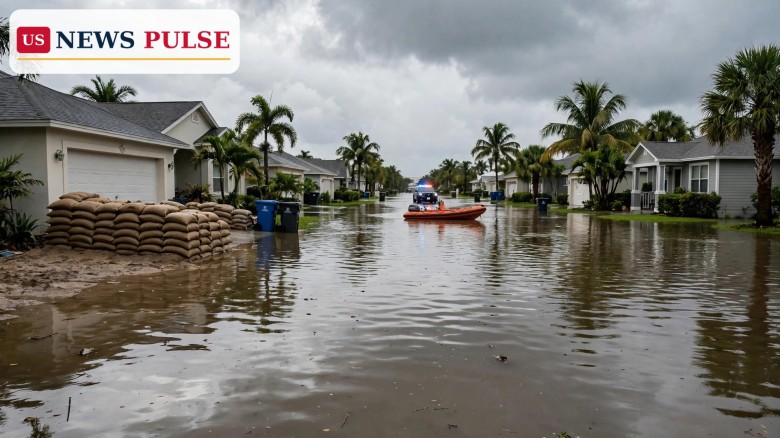
Up to 25 inches of rain fell on parts of Brevard County over five days from November 16, a volume that overwhelms drainage systems built for ordinary storms and turns streets into rivers. Brevard appears in both declarations — the October 31 round and the November 16 round. Broward, by contrast, is newly covered, and its inclusion is the clearest sign that the second storm round struck a wider area than the first.
Reactions
The approval closes a gap that had been open since the first declaration was signed. When Trump put his name to about $100 million in relief at Mar-a-Lago on Thanksgiving, the declaration behind it did not cover the November 17-20 storm round, and Governor DeSantis had already filed a separate request for it. The second declaration answers that request, and it does so within days rather than the 15 days the first request took — a faster turnaround that reflects both the expedited filing and the scale of the rain.
Why It Matters
Two disaster declarations in one week, for two separate storm rounds, is a measure of how punishing Florida's autumn has been. The first covered flooding from October 31; the second covers flooding from November 16. Between them they span nearly a month of storms, and Brevard County — named in both — has now been declared a disaster area twice in a matter of days. For residents, the declarations are not abstract: they are the difference between paying for a ruined home alone and getting federal help to rebuild it.
What Happens Next
Residents of Brevard and Broward counties can now apply for federal aid, starting with an insurance claim and then an application at disasterassistance.gov or 1-800-621-3362. The grants for temporary housing and home repairs will be the first money to move, and the loans for uninsured property losses will follow as damage assessments are completed. The six other counties in Florida's request — Flagler, Indian River, Orange, Putnam, Seminole and Volusia — are not named in this declaration, and whether they are added will depend on further damage assessments.
The wider picture is a state still counting the cost of an autumn of storms. The $100 million signed at Mar-a-Lago was the first dollar figure attached to the first declaration, and Palm Beach County's $53 million estimate covers only one county. As damage from the second round is assessed, the total federal commitment is likely to grow.
Frequently Asked Questions
What did Trump approve for Florida?
A second major disaster declaration for Brevard and Broward counties, covering flooding and storms since November 16, 2026, "and continuing".
How is this different from the first declaration?
The first declaration, FEMA DR-4956, covered flooding from October 31 in six counties. This second declaration covers a separate, later storm round, and adds Broward County, which was not covered before.
What help does the declaration unlock?
Grants for temporary housing and home repairs, plus federal loans to cover uninsured property losses.
How do residents apply?
File an insurance claim first, then apply at disasterassistance.gov or by calling 1-800-621-3362.
Which counties did Florida request?
Eight in total: Brevard, Broward, Flagler, Indian River, Orange, Putnam, Seminole and Volusia. The declaration so far names Brevard and Broward.
Related coverage: Trump Approves Florida Disaster Declaration for Flooding in Six Counties, Trump Signs $100 Million Florida Disaster Relief at Mar-a-Lago on Thanksgiving, Thanksgiving Storm Knocks Out Power to 836,000 Homes as East Coast Floods.

The US News Pulse newsroom covers breaking news across the United States and the world, working from wire services, official statements and on-the-record sources. Every story is reviewed against our editorial standards before publication. Corrections and tips: info@usnewspulse.com
About our newsroomLeave a Comment