

 | Today's Date:


White House Orders Agencies to Get Approval Before Testifying to Congress - US News Pulse
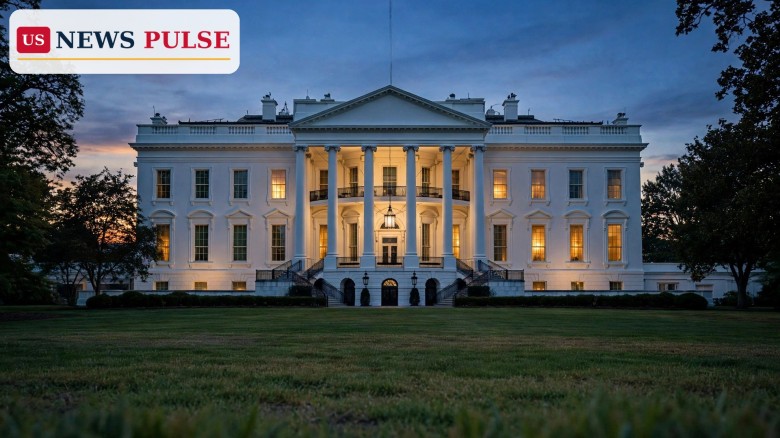
The White House has told every federal department and agency that no employee may agree to appear before a congressional committee until two White House offices approve it first. The order, set out in a one-page memo from White House Counsel Will Scharf on Monday, November 16, 2026, lands seven weeks before Democrats take control of Congress and begin their promised investigations. It covers voluntary appearances, the way most testimony begins, and applies to everyone from cabinet secretaries to junior staff.
Key Points
- White House Counsel Will Scharf issued a one-page memo on Monday, November 16, 2026, ordering every executive department and agency to get White House approval before any employee agrees to testify to Congress.
- Approval must come from the White House Office of Legislative Affairs and the Office of the White House Counsel first.
- The rule covers voluntary appearances, not subpoenas, and the memo says further guidance on other engagements with Congress is forthcoming.
- The memo was obtained by Axios and published in full by PBS News, seven weeks before Democrats take control of the House and Senate in January 2027.
- Commerce Secretary Howard Lutnick had already agreed, before the memo, to testify voluntarily before the Senate Banking Committee on December 10.
What Happened
Scharf sent the memo to the general counsels of every executive department and agency. Its subject line is "White House Approval Regarding Legislative Testimony", and its order is a single sentence: "Executive Departments and Agencies must obtain approval from the White House Office of Legislative Affairs (OLA) and the Office of the White House Counsel (WHCO) before any agency personnel may agree to appear before any congressional committee."
Scharf described the requirement as the "established White House consultation process", meaning prior notification and approval from the two offices before any agency employee agrees to appear. The memo does not say how the two offices will decide which requests to approve, and it does not set out what agencies should do when a subpoena arrives. It ends by saying more instructions are on the way: "Further guidance regarding other engagements with Congress is forthcoming." That leaves open the possibility that the rule could soon reach beyond testimony, to document requests and briefings.
Background: The Oversight Fight So Far
The memo is the second front the White House has opened in a week. On November 9, Scharf wrote to Representative Robert Garcia of California, the top Democrat on the House Oversight Committee and its likely chairman in January, warning that investigations meant to punish rather than legislate could "cross the line into blatant criminality".
Garcia answered that Congress's investigative powers do not need "the permission of the White House", and said the administration appeared to have something to hide. Democrats plan probes into the Trump family's wealth and cryptocurrency business, the Epstein files, Immigration and Customs Enforcement operations, the Iran war and Defense Secretary Pete Hegseth. President Donald Trump posted that Democrats' threats to investigate were illegal and said he was ordering the Justice Department to look into them.
White House Testimony Approval: What the Memo Says
The reach of the memo is what makes it different. White Houses of both parties have long coordinated agency testimony, and have long argued that the president's closest advisers cannot be forced to testify. What is broader here is a written approval requirement covering all personnel at all agencies and every committee, whichever party runs it.
The rule covers voluntary appearances, which is how most testimony begins: a committee asks, and the witness agrees to come. Under the memo, an agency cannot say yes on its own, from cabinet secretaries to junior employees. The memo does not change the power of a subpoena, the legal order a committee can issue to force a witness to appear or hand over records. A federal law dating to 1912 also protects employees' right to give information to Congress, a point Democrats are expected to raise if the White House blocks an appearance.
A White House official told Axios the administration "will not be extorted, intimidated, or threatened into submission by politically motivated baseless investigations", and said reasonable requests will be honoured and the rest turned away.
Reactions
Garcia, who will chair the House Oversight Committee in January, answered the memo in a video on Monday. "They're so upset that we're going to do real oversight," he said. He had already answered Scharf's earlier warning letter by saying that Congress's authority "comes from Article I of the Constitution, not from the permission of the White House", and he has said the House is prepared to sue to enforce its subpoenas.
Trump advisers are shrugging off talk of impeachment, reasoning that Democrats would fall short of the 67 Senate votes needed to remove the president. "The president can count, and he won't be cowed," one adviser said, according to Axios.
Why It Matters
The memo turns a routine piece of White House coordination into a formal gate on Congress's main tool for finding out what the executive branch is doing. If every yes must first clear two White House offices, the administration can slow or quietly block appearances before a committee ever gets to ask a question.
It matters because the stakes in January are unusually high. The incoming Democratic majorities have promised investigations across the administration's most sensitive areas, The White House has now said, in writing, that it will judge which of those inquiries are legitimate.
What Happens Next
The new Congress is sworn in on January 3, but the first test could come sooner. Commerce Secretary Howard Lutnick agreed last week, before the memo, to testify voluntarily before the Senate Banking Committee on December 10. That appearance will be an early sign of how the process works in practice. The real tests begin in January, and Scharf's promised further guidance is still to come.
Frequently Asked Questions
What does the White House memo order?
It orders every federal agency to obtain approval from the White House Office of Legislative Affairs and the Office of the White House Counsel before any employee may agree to appear before a congressional committee.
Does the memo cover subpoenas?
No. It covers voluntary appearances only. It does not change the power of a subpoena and does not say what agencies should do when one arrives.
Who issued the memo?
White House Counsel Will Scharf, on Monday, November 16, 2026. It was obtained by Axios and published in full by PBS News.
Why did the White House issue it now?
Democrats won both chambers on November 3 and take control in January 2027 with a long list of planned investigations.
What happens first?
Commerce Secretary Howard Lutnick is due to testify voluntarily before the Senate Banking Committee on December 10. The new Congress is sworn in on January 3, 2027.
Read more: White House warns Democrats their planned probes could be 'blatant criminality', Stephen Lynch tells White House 'Come at Me, Bro' over Trump investigations, Trump White House plans to govern without Congress if Democrats win midterms.

The US News Pulse newsroom covers breaking news across the United States and the world, working from wire services, official statements and on-the-record sources. Every story is reviewed against our editorial standards before publication. Corrections and tips: info@usnewspulse.com
About our newsroomLeave a Comment