


 | Today's Date:


Hamas Disarmament Stalls as Netanyahu Says No Weapons Surrendered in Gaza
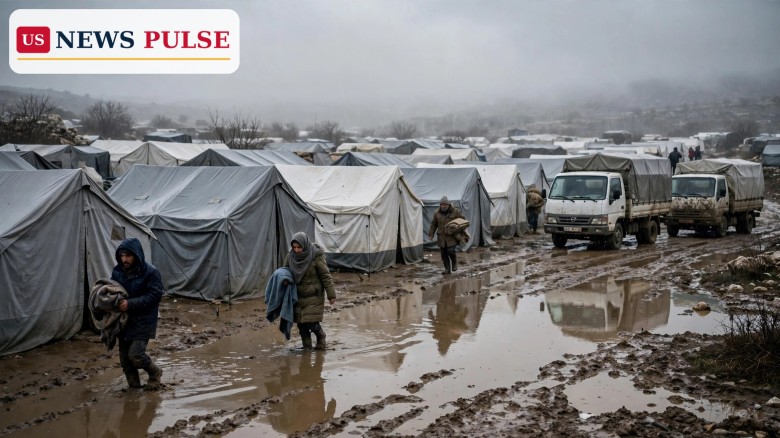
Israeli Prime Minister Benjamin Netanyahu's office said on Tuesday, November 10, 2026, that Hamas has not surrendered a single weapon since the Gaza ceasefire, and it tied any reconstruction of the territory to the group's full disarmament. The English-language statement pushed back against criticism from President Donald Trump's US-backed Board of Peace and allied governments over Israel's restrictions on aid, as winter rain floods displacement camps across Gaza.
Key Points
- Netanyahu's office said on Tuesday, November 10, 2026: "To date, Hamas has not surrendered a single weapon, and it continues to hold the people of Gaza hostage to its terrorist rule."
- Under President Donald Trump's 20-point plan, Hamas must give up its weapons before reconstruction begins, and also demilitarise, step down from governance and begin de-radicalising Gaza.
- Israel says it is allowing winter supplies through COGAT with the Board of Peace, the UN and donors: more than 91,000 tents, over 8,200 trucks of winter clothing and supplies, and 12 sewage-removal trucks.
- Mobile homes remain banned from entering Gaza, even though aid groups call them the most necessary item against heavy rain and winter cold.
- The Board of Peace criticised Israel over winter aid after severe flooding, while also demanding Hamas disarm; eight countries urge Israel to ease dual-use restrictions.
What Happened
The statement was a direct answer to growing international pressure. The Board of Peace, the US-backed body overseeing Gaza's recovery, had criticised Israel over the slow flow of winter aid after severe flooding swamped displacement camps. Several governments joined in, pressing Israel to ease restrictions on dual-use items — goods with both civilian and military uses. Netanyahu's office answered in English, a signal the message was aimed at Washington and the Board as much as at home.
The core of the response was a single claim: Hamas has handed over nothing. "To date, Hamas has not surrendered a single weapon, and it continues to hold the people of Gaza hostage to its terrorist rule," the statement said. Under Trump's 20-point plan, Hamas must give up its weapons before reconstruction begins — the condition that unlocks demilitarisation, Hamas stepping down from governance, and de-radicalisation. The statement also defended Israel's aid record, citing the tents, trucks and sewage repairs, but confirmed the ban aid groups call most damaging: mobile homes remain barred from Gaza.
Background: Trump's 20-Point Plan and the Disarmament Condition
Trump's 20-point plan, the framework that ended the fighting, calls for Hamas to disarm, Gaza to be demilitarised, weapons under international supervision, a Palestinian technocratic government, an International Stabilization Force, a phased Israeli withdrawal, and then reconstruction. The sequence matters: reconstruction comes after disarmament, not alongside it. After a November 5 call in which Trump pressed Netanyahu on the plan, a senior US official told Channel 12 that reconstruction would not begin without progress toward disarming Hamas. The Board's $2.45 billion six-month recovery programme, presented at the UN General Assembly in September, rests on the same order: security first, rebuilding second.
Some of the security machinery is already moving: Israel has approved about 250 foreign troops for Gaza, and the US has converted a former Israeli base near the border into a fortified facility for the force. But it is still forming, with no agreed role in collecting Hamas's weapons. Meanwhile the first winter storm flooded about 70,000 tents, and a sandbank collapse south of Deir al-Balah killed five people, including four children. Save the Children says more than 500,000 children live in critical or catastrophic shelter conditions — the backdrop for the Board and eight governments pressing Israel for faster aid.
Hamas Disarmament: The Condition That Unlocks Reconstruction
Disarmament, as Netanyahu's office frames it, means Hamas handing over weapons, dismantling military structures, stepping down from governing Gaza and beginning to de-radicalise the territory — a test of whether the group will give up power, not merely stop firing. A ceasefire can hold while an armed group keeps its weapons; a reconstruction programme cannot be built on that foundation, in Israel's view, because anything rebuilt could become a military asset again. The statement accuses Hamas of diverting aid to its military — cement meant for homes used to build terror tunnels, water pipes turned into missile launchers, sanitation pumps used to make rockets — the reason Israel gives for restricting dual-use items. It ends by calling on the mediators, Qatar, Egypt and others, to demand Hamas disarm immediately so Trump's plan can be realised.
Reactions and Quotes
The statement carried the day's sharpest language, casting Hamas as the obstacle to the ceasefire's next phase and to Gaza's civilians. The Board of Peace has criticised both sides at once: Israel over winter aid after the flooding, and Hamas over its refusal to disarm — an attempt to hold the plan together by pressing Israel on access while insisting disarmament is not negotiable. The eight countries urging Israel to ease dual-use restrictions argue humanitarian consequences, not disarmament. The United States, which wrote the plan, holds that reconstruction will not begin without progress toward disarming Hamas.
Why It Matters
The statement freezes the two things Gaza needs most — shelter and rebuilding — behind a condition that has not moved. More than 91,000 tents and 8,200 trucks of supplies are real, but they are emergency measures, and the flooding has shown their limits. Reconstruction is the only durable answer to a winter in which half a million children live in critical shelter conditions, and it is now formally tied to a disarmament Hamas has not begun. It also strains the Board of Peace, whose $2.45 billion programme stays on paper if it cannot move either side.
What Happens Next
The next move belongs to the mediators, called on to demand Hamas disarm immediately, while the Board decides how hard to press both sides. The International Stabilization Force is still assembling, its mandate — including any role in weapons collection or verification — unsettled, so no agreed mechanism exists for Hamas to surrender its arsenal even if it chose to. Winter will not wait: more storms are expected, each testing waterlogged tents and flooded camps.
Frequently Asked Questions
What did Netanyahu's office say about Hamas's weapons?
That Hamas has not surrendered a single weapon, and must disarm under Trump's 20-point plan before reconstruction begins.
Why is reconstruction tied to disarmament?
The plan puts disarmament first; Israel says rebuilding cannot start while Hamas keeps an arsenal that could turn new infrastructure into military assets.
What winter aid is Israel allowing in?
More than 91,000 tents, over 8,200 trucks of winter clothing and supplies, 12 sewage-removal trucks, and water and sewage repairs, through COGAT, the Board, the UN and donors.
Why are mobile homes banned?
Israel restricts dual-use items, saying Hamas diverted cement and pipes for military use; aid groups call mobile homes the most necessary winter item.
What happens next?
Mediators must demand Hamas disarm at once. Until then reconstruction stays on hold while the force forms and storms flood the camps.
Related coverage: Trump Presses Netanyahu to Advance Gaza Peace Plan After Israel Election | Israel Approves First 250 Troops for Gaza International Stabilization Force | Gaza Sandbank Collapse Kills Mother and Three Children as Storm Floods 70,000 Tents
Leave a Comment