


 | Today's Date:


Iran Designates Argentina's Navy and Air Force as Terrorist Groups in Tit-for-Tat Move
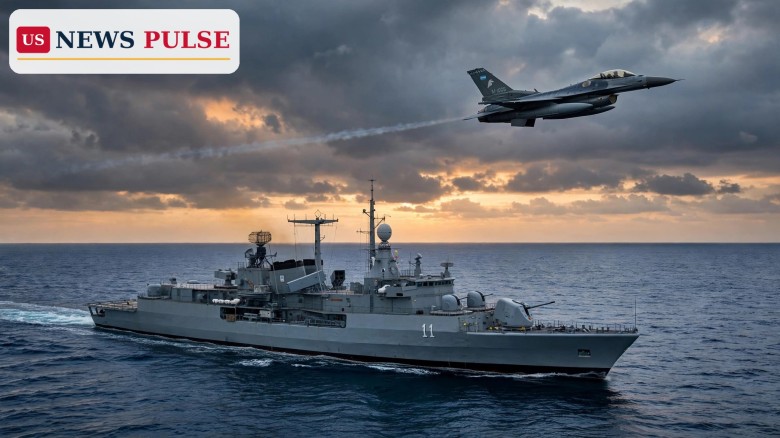
Iran has designated Argentina's navy and air force as terrorist organisations, in a tit-for-tat move answering Buenos Aires' blacklisting of Tehran's Islamic Revolutionary Guard Corps (IRGC) earlier this year. The Iran Argentina terrorist designation was announced by Tehran's Foreign Ministry on Wednesday, November 11, 2026, the second time this month Iran has turned the terrorist label back on a foreign military. The move names only Argentina's naval and air forces — not its army — and Tehran warned that “the responsibility for all consequences arising from this matter will lie with the Argentine government.”
Key Points
- Iran's Foreign Ministry said on Wednesday, November 11, 2026, that it has designated Argentina's navy and air force as “terrorist organizations” on the principle of reciprocity.
- The move answers Argentina's designation of the IRGC as a terrorist organisation in April 2026, which Buenos Aires blamed on the Guard's backing for Lebanon-based Hezbollah.
- Tehran said Argentina acted “in violation of the fundamental principles of international law” and committed a “hostile act” by labelling the IRGC, “one of the pillars of the official armed forces” of Iran.
- It rests on a 2019 Iranian law mandating reciprocal measures against countries that follow the US in blacklisting the IRGC.
- It follows a similar Iranian move earlier in November against Britain, and its practical effect was not immediately clear.
What Happened
Iran's Foreign Ministry announced the designation on Wednesday, saying Tehran now considers the Argentine air force and navy to be terrorist organisations “based on the principle of reciprocity.” The statement made no mention of Argentina's army, limiting the measure to the two services most associated with Argentina's power at sea and in the air.
The ministry added, without elaborating, that “it is evident that the responsibility for all consequences arising from this matter will lie with the Argentine government.” The warning was the sharpest language in the statement, but it spelled out no specific action Tehran intends to take.
The announcement came seven months after Argentina's own step against the IRGC, in the middle of a wider confrontation between Iran and the United States now in its ninth month. Tehran appears to be using reciprocal designations as a diplomatic weapon.
Background: Why Argentina Blacklisted the IRGC
Argentina designated the IRGC as a terrorist organisation in April 2026, following a push from US President Donald Trump's administration for American allies to blacklist the Guard. Buenos Aires said the measure was due to the IRGC's backing for Lebanon-based Hezbollah, which Argentina blames for the 1994 AMIA bombing in Buenos Aires, which killed 85 people and injured hundreds.
The IRGC is an elite force that protects Shi'ite Muslim clerical rule in Iran and controls large parts of its economy. The US designated the Guard a foreign terrorist organisation in 2019, and a 2019 Iranian law requires Tehran to answer in kind against any country that follows Washington's lead.
Argentina's move put it among a small group of US allies that have formally blacklisted the Guard, as President Javier Milei's government has drawn closer to Washington.
Iran Argentina Terrorist Designation Follows the UK Precedent
Argentina is the second country this month to face a reciprocal Iranian designation. Earlier in November, Iran called Britain's MI6 a hostile group and the Royal Navy and Royal Air Force terrorist organisations, retaliating for Britain's July decision to list the IRGC under its State Threats Act. Read our earlier report on Iran's designation of the Royal Navy and RAF.
The pattern is now clear: each time a US ally blacklists the Guard, Tehran answers with a designation of its own. In both cases the statement named the navy and the air force while leaving the army untouched, and Tehran explained neither how the designation would be enforced.
Britain rejected its designation outright, and the episode had no immediate practical effect on British forces. The Argentina designation is likely to follow the same course — a symbolic but pointed diplomatic rebuke rather than a step with operational consequences.
Reactions and Quotes
Tehran's statement was blunt about Argentina's original decision. The Foreign Ministry said Buenos Aires had acted “in violation of the fundamental principles of international law” and committed a “hostile act” by labelling the IRGC, which it described as “one of the pillars of the official armed forces” of the Islamic Republic.
The ministry gave no details of enforcement, and did not say whether the designation would affect Argentine military personnel, vessels or aircraft, or be raised in any international forum. Its warning about responsibility for “all consequences” was left deliberately open-ended.
For now, the exchange remains a war of words — but one that shows how far Tehran will go to answer each blacklisting of the Guard. The same week, US prosecutors charged three alleged Iran-backed operatives over a plot against RAF Fairford. Read about the RAF Fairford terror plot charges.
Why It Matters
The designation matters less for what it does than for what it signals. By answering Argentina's blacklisting with a mirror-image label, Tehran is telling US allies there is a price for following Washington on the IRGC — even if that price is, for now, largely symbolic.
It also widens a confrontation that has spread well beyond the Middle East. Argentina has no troops in the Gulf, yet it has been pulled into the diplomatic fallout of the US-Iran war, which began on February 28, 2026, and is now in its ninth month.
For Argentina, it is a reminder that alignment with Washington carries costs as well as benefits. For Iran, it is a low-cost way to push back against a blacklisting campaign gathering pace among American allies. Read about the FBI adding an IRGC operative to its most-wanted list.
What Happens Next
The immediate question is whether Tehran takes any practical step to enforce the designation, or whether it remains a statement on paper. In the British case, no enforcement followed, and there is little reason to expect a different outcome here.
More significant is whether other countries that have blacklisted the IRGC receive the same treatment. If Tehran keeps answering each new designation in kind, the list of reciprocal labels will grow and the diplomatic space between Iran and the West will narrow.
Diplomats will also watch for any Argentine response, and for whether the episode affects the wider US-Iran negotiations, where both sides have recently spoken of progress toward a settlement.
Frequently Asked Questions
What did Iran designate?
Argentina's navy and air force, in a Foreign Ministry statement on Wednesday, November 11, 2026.
Why did Iran take this step?
Tehran cited reciprocity, answering Argentina's April 2026 decision to designate the IRGC a terrorist organisation.
Does the designation cover Argentina's army?
No. The Iranian statement named only the navy and the air force, and made no mention of Argentina's army.
What is the IRGC?
The Islamic Revolutionary Guard Corps is an elite Iranian force that protects Shi'ite Muslim clerical rule and controls large parts of Iran's economy; the US designated it a foreign terrorist organisation in 2019.
What practical effect will the designation have?
Not immediately clear; the similar designation of Britain's Royal Navy and RAF earlier in November had no immediate practical effect.
Leave a Comment