

 | Today's Date:



Israel Cancels Security Cabinet Meeting on Iran Amid Reported Disputes
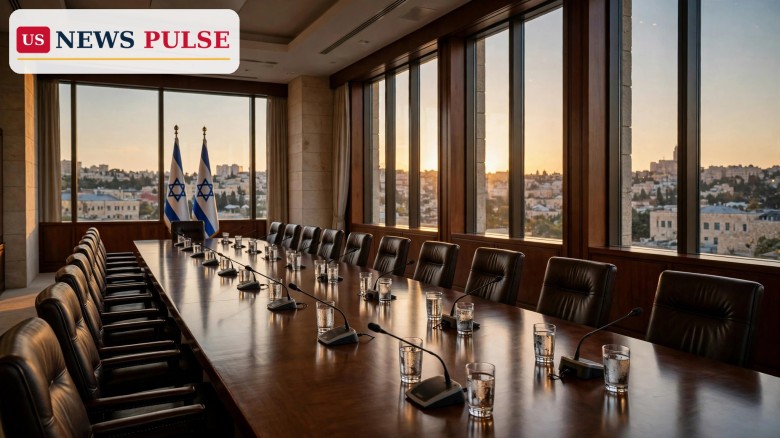
Israel has cancelled a security cabinet meeting on Iran that was due to convene on Thursday evening, replacing it with lower-level security consultations and deepening uncertainty over whether — and when — the government will decide on a new military operation against Tehran. The cancellation was reported by Israeli media on Thursday, hours after the Israel Defense Forces said the country was ready to strike Iran alone “at any moment”. Analysts cited by Iranian media linked the decision to escalating disputes among Israeli officials, although no official reason was given and no new date was announced.
Key Points
- Israel’s security cabinet meeting on Iran, set for Thursday evening, was cancelled and replaced with security consultations.
- Ynet reported the meeting “has been canceled”; the Israeli Broadcasting Authority confirmed the change.
- Analysts cited by Iran’s Mehr News Agency blamed escalating disputes among Israeli officials; no official reason was given.
- Earlier on Thursday, IDF spokesman Brig. Gen. Effie Defrin said Israel was “ready to strike with force at any moment, including on our own, without the Americans”.
- Former defence minister Avigdor Liberman urged Benjamin Netanyahu not to launch a new operation before a replacement government is sworn in.
What Happened
The meeting had been convened by Prime Minister Benjamin Netanyahu for Thursday evening to discuss Iran, at a moment when Israeli officials were openly talking about a possible new strike. Ynet reported that “the security cabinet meeting that was scheduled to convene this evening has been canceled”. The Israeli Broadcasting Authority said the session would be replaced with security consultations, a lower-level format without the decision-making weight of a full cabinet meeting.
The reports gave no details of the Iran issue said to be in dispute, no explanation of why the meeting was cancelled and no indication of when the ministers might reconvene. The cancellation came the same day the military’s chief spokesman told Kan that Israel was prepared to act against Iran on its own.
Background: Weeks of Rising Tension Over Iran
The cancelled meeting was the latest turn in a confrontation that has intensified through November. Earlier this month, Israel’s security cabinet ordered the military to step up preparations for a possible attack on Iran, and Defence Minister Israel Katz warned that Tehran was developing chemical weapons, saying Israel would not allow it to acquire the capability to attack. Those warnings were followed by a series of Iranian drone and missile incidents across the region, including an attack on an air-defence station in Kuwait on Thursday that killed two Italian technicians working for Rheinmetall Italia.
On Thursday, IDF spokesman Brig. Gen. Effie Defrin told Kan that Israel was “ready to strike with force at any moment, including on our own, without the Americans”, a statement read as a signal that a decision could come at any time. President Donald Trump has also spoken about the confrontation in stark terms, saying a war with Iran was funded through January and that regime change was “probably doable”. Against that backdrop, the cancellation has left the direction of Israeli policy unclear.
Israel Cancels Security Cabinet Meeting on Iran Amid Reported Disputes
The cancellation matters because the security cabinet is the forum in which a decision of this gravity would normally be taken. A meeting of ministers was expected to weigh the military’s readiness, the risk of Iranian retaliation and the position of the United States. Its replacement by consultations suggests those questions are being handled by a smaller circle of officials rather than put to a formal ministerial vote.
The reported reason — disputes among officials over the Iran issue — points to disagreement at the top of a caretaker government. Liberman has publicly urged Netanyahu not to launch a new operation before a replacement government is sworn in, arguing that so consequential a step should not be taken by an outgoing administration. Analysts cited by Mehr News Agency, via the Newsquawk wire, offered the same reading. Mehr is an Iranian news agency, and its account should be read with that in mind, but the cancellation itself was reported by Israeli outlets first.
Reactions
The sharpest statement of the day came from the military, not the politicians. Defrin’s remark to Kan — that Israel was “ready to strike with force at any moment, including on our own, without the Americans” — was delivered hours before the cancellation was reported, and it framed the day as one of imminent decision. The cancellation that followed told a different story: of a government that had not yet settled its position.
Liberman, a former defence minister and frequent critic of Netanyahu, has argued that a new operation should wait for a replacement government. Neither Ynet nor the Israeli Broadcasting Authority report gave a reason for the cancellation.
Why It Matters
The cancellation leaves the central question unanswered. Israel has said publicly, through its defence minister and its military spokesman, that it is ready to strike Iran and will not allow Tehran to develop weapons that could threaten it. Yet the meeting that was supposed to turn that readiness into a decision did not take place, and the reports point to disagreement inside the government about what to do next.
For the region, the delay cuts both ways. It removes, for now, the prospect of an imminent Israeli strike, but it also prolongs a period of high tension in which incidents — like the deadly drone attack in Kuwait — can escalate quickly. For the United States, the episode underlines the uncertainty in its ally’s decision-making: Israel says it can act alone, yet its own ministers appear divided over whether, and when, to do so.
What Happens Next
Attention now turns to whether the security cabinet is reconvened, and when. A new date would signal that the government has settled its internal differences and is ready to decide; a prolonged silence would suggest the divisions run deeper. The outcome of the security consultations that replaced Thursday’s meeting may also become clear in the coming days.
Frequently Asked Questions
Why was the security cabinet meeting cancelled? No official reason was given. Analysts cited by Iran’s Mehr News Agency blamed escalating disputes among Israeli officials over Iran.
What are security consultations? Meetings of officials held in place of a formal session of the security cabinet. They do not carry the same decision-making authority as a full meeting of the ministers.
Has Israel decided not to strike Iran? No. No decision to strike — or not to strike — has been publicly announced. The cancellation means the decision was not taken on Thursday.
What did the Israeli military say? IDF spokesman Brig. Gen. Effie Defrin told Kan that Israel was “ready to strike with force at any moment, including on our own, without the Americans”.
What happens next? Watch for a rescheduled security cabinet meeting, any statement from Prime Minister Netanyahu’s office, and any further developments in the region.
Read more: Israel Says It Can Strike Iran Alone ‘at Any Moment’ as Cabinet Meets Tonight; Israel Accuses Iran of Developing Chemical Weapons, Warns of Preemptive Strike; Two Italians Killed in Iranian Drone Attack on Kuwait Air-Defence Station.

The US News Pulse newsroom covers breaking news across the United States and the world, working from wire services, official statements and on-the-record sources. Every story is reviewed against our editorial standards before publication. Corrections and tips: info@usnewspulse.com
About our newsroomLeave a Comment