


 | Today's Date:



France Blames Iran's Revolutionary Guards for Supermarket Fridge Cyberattack
France has publicly blamed Iran's Islamic Revolutionary Guard Corps for a cyberattack that turned supermarket fridges and freezers nationwide into a weapon in October, spoiling food and starting fires. Foreign Minister Jean-Noël Barrot announced the attribution on Monday, November 9, 2026, calling it an attack of "unprecedented scale and unprecedented aggressiveness", the first large-scale sabotage cyberattack on French soil. Paris has summoned Iran's ambassador and says it will seek sanctions at the European level against everyone responsible.
Key Points
- Barrot said the Revolutionary Guards carried out the October 11-12 attacks on refrigeration at about 700 supermarket sites across France.
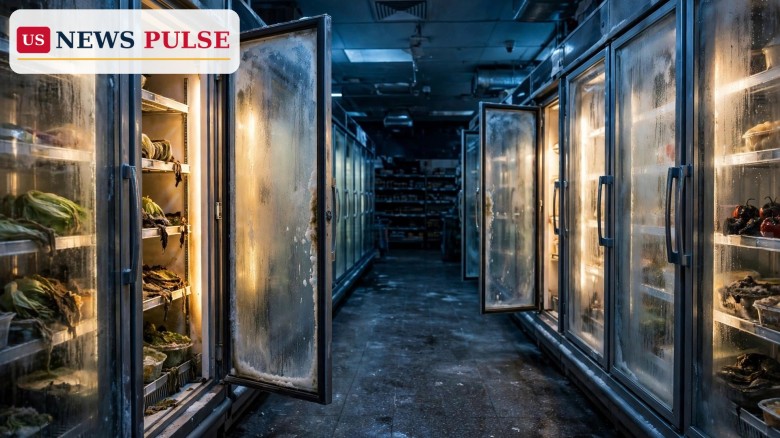
- Hackers remotely raised fridge and freezer temperatures to 50°C (122°F) by switching on defrost cycles, spoiling food and causing at least 15 fires.
- A joint intelligence and cyber agency report blamed Shahid Kaveh, an offensive cyber unit of the Guards, and named three alleged associates.
- Paris prosecutor Laure Beccuau opened a judicial investigation and requested international arrest warrants for the unit's leader and two deputies.
- France summoned Iran's ambassador and will seek EU sanctions; Iran did not immediately comment and routinely denies such operations.
What Happened
Barrot made the announcement on the sidelines of a Group of Seven foreign ministers' meeting in Paris, in one of the sharpest public accusations France has ever levelled at a foreign state over a cyberattack. The target was not a military base or a bank, but the cold chain that keeps French food safe: refrigeration in supermarkets run by E-Leclerc, Intermarché, Carrefour, Monoprix and Cooperative U.
According to the French account, the attackers broke into the fridge and freezer controls and took them over remotely. They switched on defrost cycles and pushed temperatures to 50°C, or 122°F, far above the safe range for chilled and frozen goods. Fresh food spoiled, frozen food thawed and had to be thrown away, and at least 15 fires broke out.
The scale is what makes the incident stand out. Around 700 sites were hit in the October 11-12 operation, a coordinated strike across the country rather than a single store or chain. French officials say the operation was designed to cause damage, not to steal data or money, which is why Barrot described it as sabotage rather than espionage or ordinary cybercrime.
Background and Context
The supermarket attack was not the only strike on French refrigeration in recent weeks. Earlier in November, a separate cyberattack targeted the supplier Coolworld and tried to heat blood plasma stores held by France's national blood service from minus 30°C to as high as 110°C. Alarms caught that attempt quickly and no blood products were lost. The plasma attack was reported as part of a wider European refrigeration attack wave that hit supermarkets in nine countries in October.
The attribution also lands in the middle of a far larger confrontation. The United States and Iran have been at war since February 28, 2026,, with Washington keeping a naval blockade of Iranian ports while talks over a settlement continue. President Donald Trump said on Monday there was "positive momentum" toward a deal after meeting Qatar's prime minister, even as he kept the blockade and warned the United States remained "locked and loaded".
The France-Iran Fridge Cyberattack: How Investigators Traced It
The attribution rests on a joint report by France's spy agency and its cyber agency, which concluded that the operation was carried out by Shahid Kaveh, described as an offensive cyber unit of the Islamic Revolutionary Guard Corps. The report named three alleged associates: Hamid Reza Lashgarian, Mahdi Lashgarian and Reza Salarvand.
Paris prosecutor Laure Beccuau said investigators found that the attackers used the Farsi language and internet addresses pointing to devices in Iran. She has opened a judicial investigation into Shahid Kaveh and requested international arrest warrants for the unit's leader and two deputies, a step that would allow French authorities to seek their detention if they travel outside Iran.
The hackers did not try to hide inside the systems for months or steal information. They seized control, pushed the temperatures up and let the damage spread, an approach French officials say fits a sabotage mission, not a criminal gang seeking a payout.
Reactions and Quotes
Barrot left no doubt about how seriously Paris takes the incident. "An attack of unprecedented scale and unprecedented aggressiveness," he said, adding that it was the first large-scale cyberattack carried out for sabotage purposes on French soil. The word matters: sabotage frames the hacking as an attack on the country, not a crime against a few retailers.
The foreign minister said Paris will seek sanctions "at a European level" against all those responsible, seeking a joint EU response rather than acting alone. France has also summoned Iran's ambassador, the standard diplomatic step when one government formally accuses another of a hostile act.
Iran did not immediately comment. Tehran routinely denies carrying out malicious cyber operations and has dismissed similar Western attributions in the past.
Why It Matters
The attack crosses a line Western governments have warned about for years: the use of cyber tools to damage civilian infrastructure that people depend on every day. A supermarket fridge is not a military system, but when hundreds fail at once, food spoils, fires start and public confidence takes a hit.
The attribution also matters because it names a specific unit and specific people. Western governments often blame a country in general terms; naming Shahid Kaveh and three alleged associates, and seeking arrest warrants, turns a diplomatic complaint into a legal case with names attached.
Finally, the timing matters. The accusation comes as the United States and Iran edge toward a possible settlement and as European governments weigh how hard to press Tehran.
What Happens Next
The immediate next step is diplomatic. France will raise the case with its European Union partners and press for sanctions against the people and the unit behind the attack, a process that requires agreement among member states and can take weeks. The summons of Iran's ambassador is the first formal step.
The legal track will run in parallel. The judicial investigation opened by the Paris prosecutor will continue, and the international arrest warrants she has requested will be pursued through the usual channels. Supermarkets, meanwhile, will be under pressure to show their refrigeration systems are better protected.
Frequently Asked Questions
What happened in the supermarket fridge cyberattack?
Hackers took over refrigeration controls at about 700 supermarket sites across France on October 11-12, 2026, raising temperatures to 50°C (122°F), spoiling food and causing at least 15 fires.
Who does France blame for the attack?
France blames Shahid Kaveh, an offensive cyber unit of Iran's Revolutionary Guards, and has named three alleged associates: Hamid Reza Lashgarian, Mahdi Lashgarian and Reza Salarvand.
How did investigators link the attack to Iran?
The attackers used Farsi and internet addresses pointing to devices in Iran, and a joint spy and cyber agency report attributed the operation to Shahid Kaveh.
What is France doing in response?
France has summoned Iran's ambassador, opened a judicial investigation, requested international arrest warrants for the unit's leader and two deputies, and will seek EU sanctions.
Has Iran responded to the accusation?
Iran did not immediately comment, and Tehran routinely denies carrying out malicious cyber operations.
Leave a Comment