


 | Today's Date:

Trump Turns to China to End Iran War as Bessent Asks Beijing to Press Tehran
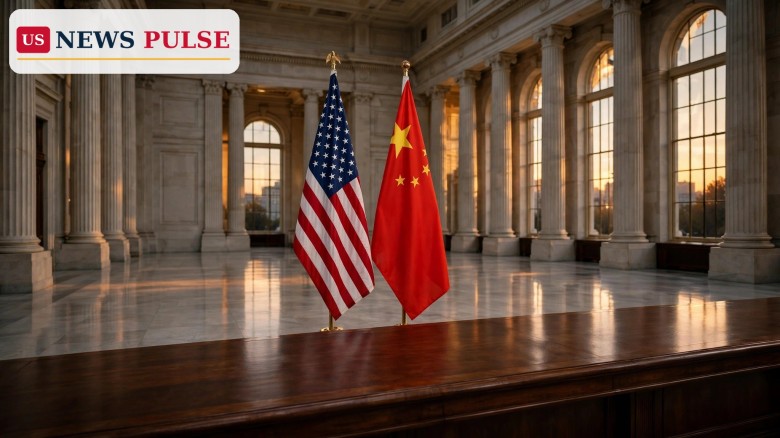
The Trump administration has turned to China for help ending the US-Iran war, asking Beijing to use its influence with Tehran to push the two sides toward a negotiated settlement, the Washington Post reported on Saturday, November 7, 2026. Treasury Secretary Scott Bessent made the request with President Donald Trump's support, and Beijing has since delivered that message to Tehran. The approach opens a new diplomatic channel in a war now in its ninth month, running alongside Vice President JD Vance's indirect talks through Pakistan and Qatar.
Key Points
- Treasury Secretary Scott Bessent, with President Donald Trump's backing, asked China to use its influence with Iran to help end the US-Iran war, the Washington Post reported on November 7, 2026.
- Beijing has delivered the message to Tehran, though neither government has commented publicly on the approach.
- The China channel runs alongside Vice President JD Vance's indirect talks through Pakistan and Qatar, including near-daily calls with Pakistan's Field Marshal Asim Munir and Qatar's prime minister.
- Trump had already asked Chinese President Xi Jinping for help on Iran in Washington in September, and Xi told him privately that Iran should never have a nuclear weapon.
- The issue is expected to come up when Trump and Xi meet in Shenzhen on November 18, a summit Russian President Vladimir Putin will also attend.
What Happened
According to the Washington Post report, by columnist David Ignatius citing a knowledgeable US official, Bessent reached out to Beijing in recent days and asked Chinese officials to press Tehran to move toward a deal. The report did not say what exactly China told Tehran, or how Iran responded.
The move is striking because it puts China, Washington's main strategic rival, at the centre of efforts to end a war the United States is fighting. China is one of Iran's most important partners and the largest buyer of its oil, giving Beijing real leverage over Tehran's finances at a moment when US sanctions and a naval blockade are squeezing the Iranian economy.
Background
The US-Iran war began on February 28, 2026, and is now in its ninth month. The fighting has included US strikes on Iranian targets, Iranian attacks on US bases in the region, and a US naval blockade of Iran in place since July. The war has repeatedly pushed oil prices higher and disrupted shipping through the Strait of Hormuz, the narrow waterway through which a large share of the world's seaborne oil passes.
Diplomacy has run in parallel with the fighting for months. Vance has led the administration's indirect contacts, speaking almost daily for two weeks to Pakistan's Field Marshal Asim Munir and to Qatar's prime minister, and he sent a letter last month to Iran's security chief Mohsen Rezaei. Trump said on Friday, November 6, that Washington was "talking to" Iran, and Vance said on Monday that the two sides had made "progress" toward a negotiated settlement, with no deadline set for a deal.
Bessent Asks China to Press Tehran on the Iran War
The decision to send Bessent, the Treasury secretary, rather than a diplomat, is telling. Treasury controls the sanctions and financial pressure that have been Washington's main non-military weapon against Iran, and Bessent is one of the few senior officials who deals regularly with Chinese counterparts on trade and finance. His message to Beijing was, in effect, that China could use its economic relationship with Iran to help bring the war to an end.
Trump had already tested this ground in person. When he met Xi in Washington in September, he asked the Chinese leader for help on Iran, and Xi told him privately that he agrees Iran should never have a nuclear weapon. That private assurance matters because a verifiable commitment that Iran will not rebuild its nuclear programme, which Vance has said the United States destroyed, is Washington's top demand in any settlement.
Reactions and Quotes
Vance struck an upbeat note about the wider diplomatic effort on Monday, saying he and Trump "both feel pretty good about the prospects for potentially coming to a negotiated settlement" and that the two sides have had "a number of good conversations with the Iranians." He also confirmed that Washington has set no deadline before strikes could resume, saying: "No, we haven't set deadlines."
Trump sounded a similar note on Monday at the reopening of the Lincoln Memorial Reflecting Pool, saying a deal was "coming together very nicely" and that Iran wants a deal. On the Iranian side, Rezaei called the changed US tone a good sign, though he gave no details and said he had not replied to Vance's letter.
Why It Matters
Bringing China into the diplomacy changes the shape of the endgame. Until now, the main channels have run through Qatar and Pakistan, two countries with long-standing ties to both Washington and Tehran. China brings something different: it is Iran's largest oil customer and one of the few major economies still doing large-scale business with Tehran, which means its word carries economic weight that a mediator's alone does not.
What Happens Next
The next milestone is the summit in Shenzhen on November 18, where Trump and Xi are due to meet, with Putin also attending. The Iran war is expected to come up, and the meeting will be a test of whether Beijing is willing to go beyond delivering a message and actively push Tehran toward a deal.
Beijing's Middle East envoy is also due to visit Iran, Oman and Saudi Arabia this month. For now the fighting continues and no deadline has been set, but with three diplomatic tracks running at once, and China involved for the first time, the coming days will show whether the war is finally moving toward a negotiated end.
Frequently Asked Questions
What did Bessent ask China to do?
According to the Washington Post, Treasury Secretary Scott Bessent asked Beijing to use its influence with Iran to help end the US-Iran war, and China has delivered that message to Tehran.
Has China commented publicly?
No. Neither Washington nor Beijing has commented publicly on the request, and the report was based on a knowledgeable US official speaking to columnist David Ignatius.
How does this fit with Vance's talks?
It is a parallel channel. Vice President JD Vance has led indirect talks through Pakistan and Qatar, and he sent a letter to Iranian security chief Mohsen Rezaei.
When do Trump and Xi meet next?
Trump and Xi are due to meet in Shenzhen on November 18, 2026, a summit that Russian President Vladimir Putin will also attend. The Iran war is expected to be discussed.
Is the war close to ending?
Talks have made "progress," Vance said, and Trump called a deal "coming together very nicely," but no agreement has been announced and no deadline has been set.
Related coverage: Vance says US-Iran talks are making progress with no deadline for a deal | Vance leads secret Iran backchannel talks as Qatar says a deal is still possible | Trump pauses Project Freedom Hormuz operation as Iran deal talks advance
Leave a Comment