


 | Today's Date:



US Cuts South Africa and Rwanda From AGOA Duty-Free Trade From January 1
The United States will remove South Africa and Rwanda from its flagship duty-free trade programme for Africa from January 1, 2027, ending decades of preferential access for the programme's largest beneficiary in a decision announced in Washington on Monday, November 2, 2026. The US decision to cut South Africa and Rwanda from AGOA follows an annual eligibility review, and it lands just two months before the new year, leaving exporters, farmers and manufacturers to reprice a trading relationship that has run, in its current form, since 2000.
President Donald Trump has notified Congress and the governments of both countries of his intent to terminate their beneficiary status under the African Growth and Opportunity Act (AGOA), according to the Office of the United States Trade Representative (USTR). US Trade Representative Jamieson Greer announced the decision on Monday, saying the review found practices in both countries that do not meet the programme's eligibility criteria.
Key Points
- The US will terminate South Africa's and Rwanda's AGOA beneficiary status from January 1, 2027, the USTR announced on Monday, November 2, 2026.
- President Trump notified Congress and both governments after an annual interagency review of sub-Saharan African countries' eligibility.
- South Africa has been AGOA's largest beneficiary over 25 years, accounting for 54% of all AGOA-related exports to the US, and exported about $1.7 billion under AGOA in 2025.
- Washington cited barriers to US trade and investment, corruption, and threats to US national security and foreign policy interests in South Africa, and trade barriers, rule of law and human rights concerns in Rwanda.
- South Africa says it has 60 days to address US concerns and will keep engaging Washington while opening markets elsewhere; losing AGOA is not a trade ban, and exports will continue, albeit with duties added.
What Happened
The announcement came from the USTR on Monday, in the form of a statement from Greer following the annual interagency review of AGOA eligibility. The review, led by the USTR, examines whether beneficiary countries continue to meet the programme's conditions, which include maintaining market-based economies and good governance and eliminating barriers to US trade and investment.
"Based on the review, President Trump found that the governments of Rwanda and South Africa are engaging in practices that are inconsistent with AGOA's eligibility criteria," the USTR said. The office described "concerning and pervasive practices" including, but not limited to, barriers that undermine American trade and investment and practices that threaten US national security and foreign policy interests in the region.
"The Trump Administration is working to ensure our African partners take the necessary steps to meet the eligibility criteria," the office added, leaving the door open, in principle, to a future reinstatement if the concerns are addressed.
For South Africa specifically, Washington said it was "deeply concerned by barriers to US trade and investment, corruption, and threats to US national security and foreign policy interests." For Rwanda, Washington highlighted trade barriers, rule of law and human rights among the issues it is deeply concerned about. Rwanda was previously suspended from AGOA benefits in 2018, a precedent that underlines how the annual review has been used before as a lever over eligibility.
Any removal requires 60 days' notice to Congress and the country concerned, which is why a decision announced on November 2 can take effect on January 1. South Africa's trade minister, Parks Tau, had noted before the announcement that the country would have 60 days to address the concerns raised by the United States before any suspension, full or partial, could take effect.
US Cuts South Africa and Rwanda From AGOA: What the Programme Is
AGOA was enacted in 2000 and gives eligible sub-Saharan African countries duty-free access to the US market for more than 1,800 products, in addition to more than 5,000 products eligible for duty-free access under the Generalised System of Preferences programme. It is reviewed annually, and a country's place on the beneficiary list is never permanent: eligibility can be gained, lost and, in principle, restored.
The programme itself has had a turbulent recent history. It expired in September 2025, was retroactively extended to December 2026 in February 2026, and was then extended to the end of 2028 at the end of September 2026. That extension kept AGOA alive as a framework, but it never guaranteed that every country then on the list would stay on it. Monday's announcement is the 2026 eligibility review's verdict for South Africa and Rwanda.
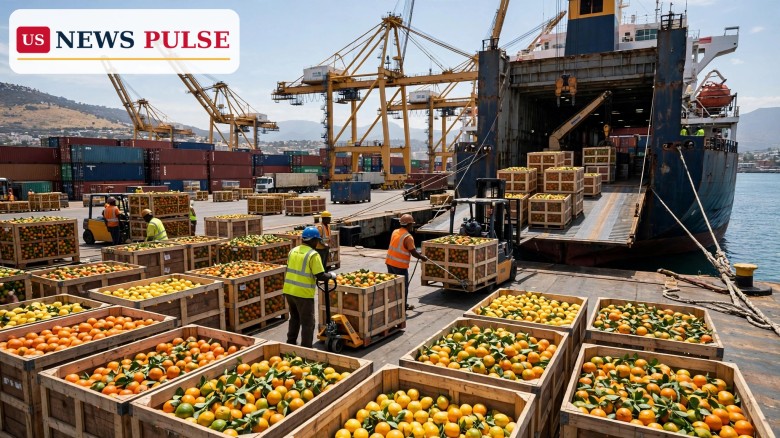
South Africa's weight inside AGOA is what makes this decision more than a routine list update. Over the last 25 years it has been the programme's largest beneficiary, accounting for 54% of all AGOA-related exports to the United States. In 2025 alone it exported about $1.7 billion worth of goods to the US under AGOA. Its main AGOA exports include vehicles, jewellery, ferroalloys, fruit and nuts, and beverages and spirits, while its agricultural shipments to the US include citrus, berries, grapes, raisins, wine, fruit juices, apples, pears, apricots and nuts.
Put in proportion, South Africa's trade ministry had noted before the decision that exports under AGOA make up only about 10% of its total exports to the US and about 1% of its total global exports. The US accounts for about 4% of South African agricultural exports. Those shares explain why South African officials, even while calling the decision a severe blow, have also stressed that it is not the end of the trading relationship.
Background and Context
The decision arrives after two years of fraying diplomatic ties between Washington and Pretoria. The Trump administration has cracked down on South Africa over what Trump says is the persecution of white people, a claim South Africa's government rejects as a falsehood spread by fringe groups. Washington has also taken issue with South Africa's foreign policy, in particular the genocide case it brought against Israel at the International Court of Justice. Israel denies genocide.
Land reform has been another fault line. South Africa has said its land reform and racial transformation imperatives are constitutional imperatives and non-negotiable, while also saying it is open to practical engagement through diplomatic and trade channels. Before Monday's announcement, Trade Minister Parks Tau said South Africa had made "generous offers" to the US in a bid to keep its AGOA access, including offers relating to market access for poultry and pork, and that officials had met US counterparts in September 2026. He declined to disclose details, saying the country was awaiting a formal US response.
President Cyril Ramaphosa had also said in recent weeks that South Africa must prepare for being cut out of the programme, and that it was already doing so by seeking new markets and signing new trade deals with other partners such as China. That preparation is now the centrepiece of Pretoria's response.
Rwanda's position has drawn less public comment in the first reports of Monday's decision, and no immediate response from either government to the termination notices was reported. Rwanda's earlier 2018 suspension, however, shows that Washington has previously used AGOA eligibility to press Kigali on trade and governance concerns, and the issues cited on Monday, trade barriers, rule of law and human rights, echo the programme's standing eligibility tests.
Reactions and Quotes
The USTR's statement is, so far, the fullest official account of the decision. Beyond the finding that both governments are engaging in practices "inconsistent with AGOA's eligibility criteria," it singled out South Africa's barriers to US trade and investment, corruption, and threats to US national security and foreign policy interests, and Rwanda's trade barriers, rule of law and human rights record.
From Pretoria, the response prepared before the announcement has shaped the first reaction. Minister Parks Tau said ahead of the decision that the government was prepared for a negative outcome, that South Africa would continue to engage with the United States and try to forge a trade agreement beyond AGOA, and that it is also pursuing opportunities in other markets. Those markets, he said, include the African Continental Free Trade Area, India, the Southern African Development Community, the European Union, the United Kingdom, the Association of Southeast Asian Nations, MERCOSUR and China, pursued through the Cabinet-approved Industrial Development Strategy and the "Butterfly Strategy."
Economists close to the agricultural sector have tried to put a number on the damage without overstating it. According to Presidential Envoy on Agriculture and Land Wandile Sihlobo, the loss of AGOA would add a 3.4% tariff on top of the 12.5% tariffs the United States already has in effect against South Africa, taking the combined rate to 15.9%. That, he noted, is still much better than the 30% tariff the country faced when the so-called "liberation day" tariffs were implemented in 2025. "Not detracting from the harsh impact of being removed from AGOA," Sihlobo said, it likely would not be a catastrophe.
Sihlobo also stressed that removal from AGOA is not a trade ban with the United States, and that exports will continue. The National Agricultural Marketing Council has estimated the exclusion could reduce South Africa's welfare by $20.8 million and cut output in the vegetables, fruits and nuts sector by 1.3%. Industry groups had warned before the decision that tens of thousands of South African jobs depend on US trade, including about 35,000 in citrus alone, which is why export diversification, in Sihlobo's words, is now more important than ever, even though it is not a replacement for the US, EU, UK and African markets that South Africa must work to retain.
Why It Matters
For South Africa, the practical effect from January 1 is a higher cost of selling into the US, not exclusion from it. AGOA's duty-free preference will be replaced, for affected products, by the relevant most-favoured-nation duty on top of the existing 12.5% Section 301 tariff, taking the illustrative combined rate to about 15.9%. For price-sensitive goods such as citrus and wine, even a few percentage points can decide whether a shipment is competitive against rivals from countries that still enjoy preferential access, such as Chile and Peru.
For Rwanda, the effect is smaller in absolute trade value but similar in principle: preferential access is a competitive edge, and losing it raises the cost of every affected export. For the United States, the decision is a statement about how it intends to use trade preferences, not just as development assistance, but as leverage over market access, governance and foreign policy alignment.
For the wider AGOA system, Monday's move is a reminder that the programme's extension to 2028 did not freeze the beneficiary list. Other countries will read the South Africa and Rwanda decisions as a signal about the 2027 review cycle, and about what Washington now counts as "inconsistent" with eligibility. The programme's value has always depended on predictability, and an annual review that can remove its largest beneficiary is, by design, unpredictable.
What Happens Next
The immediate timetable is fixed: 60 days' notice runs from the November 2 notifications, and termination takes effect on January 1, 2027, unless the concerns are resolved in the meantime. South Africa says it will use that window to keep engaging Washington, including on a trade agreement beyond AGOA, while also accelerating its diversification into African, Asian, European and Latin American markets.
Exporters, meanwhile, face a concrete deadline. Goods shipped under AGOA terms before January 1 keep the preference; from January 1, affected products will attract duties. Industry groups are expected to press both governments for clarity on exactly which product lines lose preference, and on whether any transitional arrangement applies to goods already in transit.
Reinstatement is possible but not quick. If a country can reach a resolution with the USTR on the issues that led to its removal, the US president can restore it, usually during the annual review cycle, with the next formal cycle falling in July 2027. Failing that, a country removed in January could wait a further year to recover membership. That long road back is why Pretoria's emphasis, for now, is on the 60-day window and on markets beyond the United States, rather than on assuming a swift return.
Frequently Asked Questions
What is AGOA?
The African Growth and Opportunity Act, enacted in 2000, gives eligible sub-Saharan African countries duty-free access to the US market for more than 1,800 products, plus more than 5,000 products under the Generalised System of Preferences. Eligibility is reviewed annually.
Which countries are being removed, and when?
South Africa and Rwanda. President Trump notified Congress and both governments on November 2, 2026, and termination takes effect from January 1, 2027, after the required 60 days' notice.
Why did the US remove them?
The USTR said both governments are engaging in practices inconsistent with AGOA eligibility. For South Africa it cited barriers to US trade and investment, corruption, and threats to US national security and foreign policy interests; for Rwanda it cited trade barriers, rule of law and human rights concerns.
Does this ban South African or Rwandan exports to the US?
No. Exports continue, but without the duty-free preference. For South Africa, analysts put the combined tariff at about 15.9%, the existing 12.5% Section 301 tariff plus about 3.4% in restored most-favoured-nation duties.
Can South Africa or Rwanda get back into AGOA?
Yes, in principle. If the issues that led to removal are resolved with the USTR, the president can reinstate a country, usually during the annual review cycle, with the next formal cycle in July 2027.
Related coverage: US-India trade deal nears finish as White House calls talks productive and US warns EU that $3.4bn Airbus loan threatens aircraft trade truce.
Leave a Comment