


 | Today's Date:





Europe Bomb Threats Disrupt Flights as Six Aircraft Searched, No Explosives Found
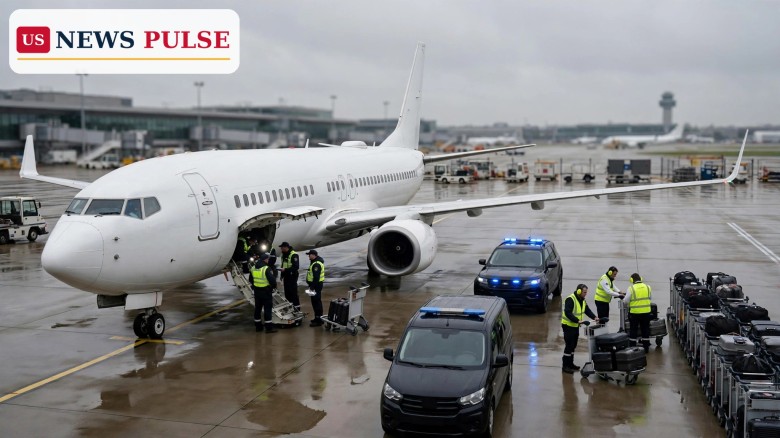
A string of bomb threats disrupted passenger flights across Europe on Tuesday, November 3, 2026, forcing diversions, emergency security sweeps and, in one case, a fighter-jet escort. At least six aircraft were searched in several countries, and no explosive devices were found in the searches completed so far. The Europe bomb threats flights scare unfolded over a few morning hours, touching Italy, Poland, Spain and Bulgaria, and it followed a similar scare the previous day, raising urgent questions about whether the warnings were linked or were separate hoaxes on the same busy travel morning.
For passengers, the disruption was real even though the threats proved empty, as flights were held while police worked through cabins, cargo holds and luggage.
Key Points
- At least six passenger flights across Europe were searched on Tuesday, November 3, 2026, after anonymous bomb threats, and no explosives were found.
- Two Ryanair flights were searched at Rome Fiumicino airport, one from Lisbon and one from Dublin, with the Dublin flight escorted by the Italian Air Force.
- A LOT Polish Airlines Boeing 737 MAX from London Heathrow to Warsaw was diverted to Warsaw-Modlin airport after a threat reported about two hours into the flight.
- Flights landing in Spain and Bulgaria were also searched, including a Ryanair flight from Manchester to Murcia and flights bound for Sofia.
- Authorities have not established a connection between the threats or whether they form a coordinated campaign, and investigations are continuing.
What Happened
The first reports of the day centred on Rome Fiumicino, Italy's busiest airport. Two Ryanair flights were searched there after anonymous warnings. One had arrived from Lisbon and landed at 09:40 CET, while the second, from Dublin, landed at about 10:30 to 10:44 CET and was escorted by the Italian Air Force as a precaution. Passengers, crew, luggage and the aircraft were checked, and the alerts were cleared after nothing dangerous was found.
Elsewhere, a LOT Polish Airlines Boeing 737 MAX operating flight LOT286 from London Heathrow to Warsaw was diverted to Warsaw-Modlin airport after a threat was reported about two hours into the flight. In Spain, a Ryanair flight from Manchester landed safely at Murcia at about 10:30 a.m. and was searched, again with no explosives found. In Bulgaria, a Ryanair flight from Dublin to Sofia landed safely carrying 185 passengers and was searched with nothing found, while a Wizz Air flight from Milan and Bergamo to Sofia was also targeted, according to Bulgaria's transport ministry. A SAS flight from Copenhagen was also reported among those affected.
The incidents followed a Wizz Air flight from London Luton to Budapest that made an emergency landing on a bomb threat the previous day, and investigators are now examining whether that earlier scare is part of the same pattern.
Background and Context
Europe's aviation system is built to absorb a single security scare, but a cluster of them on one morning tests the system in a different way. Every threat must be treated as real until a full search proves otherwise, with each plane, bag and cargo hold checked by local police and airport security teams.
The airlines involved illustrate how interconnected European air travel has become. Ryanair, Wizz Air, LOT Polish Airlines and SAS operate dense short-haul networks, so one search delays not only that flight but the next flights the aircraft was due to operate. False bomb threats against aviation are treated as serious crimes in every European jurisdiction, because of the disruption, fear and emergency-response cost they cause.
Europe Bomb Threats Flights: How Each Aircraft Was Checked
The searches followed a familiar but thorough pattern. Once a threat was received, the aircraft was isolated from normal operations, passengers and crew were removed or held under supervision, and specialist teams worked through the cabin, overhead lockers, cargo holds and luggage. In Rome, the two Ryanair aircraft were checked in full before the alerts were cleared. In Warsaw, the diversion of LOT286 to Warsaw-Modlin meant the security operation took place away from the airline's main hub, with local authorities taking charge of the aircraft, its passengers and their baggage. In Murcia, the Manchester flight was searched after a safe landing, and in Sofia the Dublin flight's 185 passengers were part of a search that ended with no explosives found.
For passengers, the experience is frightening even when the ending is reassuring, and missed connections and lost holiday time cannot always be recovered, even though airlines generally rebook affected travellers.
Reactions and Official Response
Airport and transport authorities responded cautiously: treat the threat as credible, search thoroughly, and say little until the operation is complete. Bulgaria's transport ministry confirmed flights bound for Sofia had been targeted, while teams at Fiumicino, Warsaw-Modlin and Murcia carried out their searches. No authority has announced an arrest, identified a suspect, or publicly linked the threats to one another.
Why It Matters
Tuesday's disruption matters for three reasons. First, it shows how vulnerable a tightly woven aviation network is to threats that cost almost nothing to make but a great deal to answer. Second, it tests public confidence, since air travel depends on passengers believing the system will keep them safe. Third, it tests cross-border cooperation: if the threats share a source, only shared intelligence between police forces, aviation authorities and airlines will identify it.
What Happens Next
Investigations will continue, with police examining how each threat was delivered, whether the wording matches, and whether records point to a common origin. The immediate response suggests procedures worked as intended: threats were acted on, aircraft were searched, and no one was harmed. Passengers on affected routes should check with their airline before travelling and allow extra time at the airport.
Frequently Asked Questions
How many flights were affected by the bomb threats in Europe on November 3, 2026?
At least six flights were searched, including two Ryanair flights at Rome Fiumicino, a LOT flight diverted to Warsaw-Modlin, a Ryanair flight searched at Murcia, and flights bound for Sofia, plus a SAS flight from Copenhagen.
Were any explosives found on the searched aircraft?
No. No explosive devices were found, and all aircraft checked on Tuesday were cleared after thorough security sweeps.
Which airports were involved in the bomb threat disruption?
Rome Fiumicino, Warsaw-Modlin, Murcia and Sofia were among the airports involved, with flights departing from Lisbon, Dublin, London Heathrow, Manchester, Milan and Bergamo, and Copenhagen.
Are the bomb threats believed to be connected?
No. Authorities have not established a connection or confirmed a coordinated campaign, and investigators are comparing the warnings across borders.
What should passengers do if their flight is affected by a security threat?
Follow crew and airport security instructions, stay with airline updates for rebooking, and allow extra time at the airport in the days after an incident.
Related coverage: Russian Bombs Kill 26 at Ukraine Aid Centre School in Komyshuvakha, Kyiv Says, Samuel Sey ICE Arrest: Pro-ICE Blogger Detained at Ohio Airport Faces Removal, and Afghan Deportation Flights: 66 Lawmakers Urge Trump to Cancel Them via Pakistan.
Leave a Comment