

 | Today's Date:




Custodia Bank Supreme Court Bid Rejected in Fed Account Fight - US News Pulse
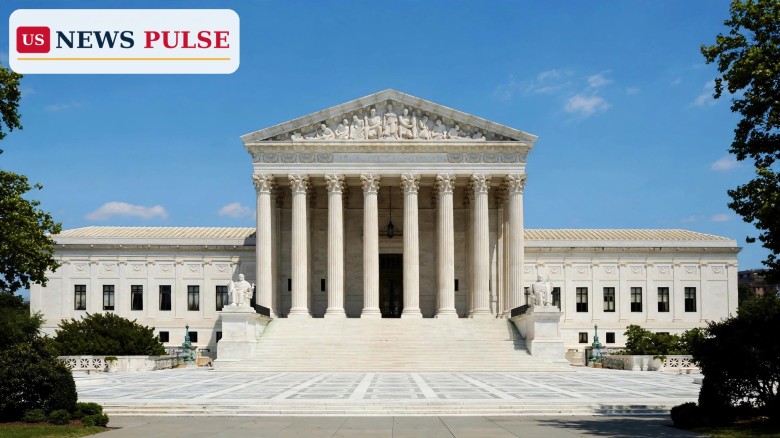
The Custodia Bank Supreme Court fight ended on Monday, when the justices refused to hear the Wyoming crypto bank's appeal in its six-year battle for a Federal Reserve master account. The court listed Custodia Bank, Inc. v. Federal Reserve Board of Governors, No. 26-62, under "certiorari denied" on its November 16 order list, giving no reasons and noting no dissent.
The denial leaves intact an appeals court ruling that regional Federal Reserve Banks may reject master-account applications even from legally eligible banks. For Custodia and the wider crypto industry, it closes the last courtroom door on whether digital-asset banks can plug directly into the American payment system or must keep working through intermediaries.
Key Points
- The Supreme Court declined on Monday, November 16, 2026, to review Custodia Bank's case, ending its six-year fight for a Fed master account.
- It leaves standing a 2-1 Tenth Circuit ruling from October 31, 2025, that regional Fed banks may reject master-account applications from eligible institutions.
- Custodia applied to the Kansas City Fed in October 2020, was told in January 2021 it was eligible, and was denied the account on January 27, 2023.
- A master account is a bank's own account at a Federal Reserve Bank and the gateway to Fedwire and other central-bank payment services.
- Bitcoin traded near $64,700 on Monday, close to a three-month low, amid rising expectations of interest-rate hikes.
What Happened
The court's action came in a single line on its Monday order list, through which the justices accept or turn away petitions each term. Custodia's petition, filed July 10, 2026, by lawyer Kannon Shanmugam, asked whether the Monetary Control Act gives regional Reserve Bank presidents discretion to deny master accounts to legally eligible nonmember banks.
The justices answered by not answering at all. A denial of certiorari is not a ruling on the merits and sets no precedent, but it ends the case and leaves the lower court's judgment in force. The case drew friend-of-the-court filings from the Blockchain Association, the Digital Chamber and Senator Cynthia Lummis, and the full Tenth Circuit declined to rehear it on March 13, 2026.
The court issued the Custodia denial on the same order list on which it also declined to disturb Maryland's sensitive-places gun law. Read more in our report on the Supreme Court letting Maryland's sensitive-places gun law stand.
Background: Six Years of Litigation
Custodia, led by chief executive Caitlin Long, applied to the Federal Reserve Bank of Kansas City for a master account in October 2020, seeking the direct connection to the central bank's payment rails that every traditional bank takes for granted. In January 2021, the Kansas City Fed told the bank it was legally eligible. The approval never came. On January 27, 2023, the account was denied, the same day the Federal Reserve Board denied the bank's application for Fed membership.
Custodia sued, arguing the law left the Reserve Banks no discretion to refuse an account to a legally eligible institution. A trial court sided with the Fed, and the Tenth Circuit affirmed 2-1 on October 31, 2025, holding that regional Reserve Banks retain discretion over master-account applications. The ruling now governs the Tenth Circuit, which covers Wyoming, Kansas, Colorado, New Mexico, Oklahoma and Utah.
What the Custodia Bank Supreme Court Decision Means for Crypto Banks
A master account is the key that lets a bank settle payments directly with the Federal Reserve. Without one, a bank must route payments through a correspondent bank, adding cost, delay and dependence on a competitor. For a crypto bank, which depends on moving dollars in and out of digital-asset markets quickly, that dependence is a serious handicap.
The refusal to intervene means the Tenth Circuit's view now governs, and other Reserve Banks are likely to read it as confirmation that they may weigh an applicant's business model and risk profile rather than treating eligibility as an entitlement. Other state-chartered crypto banks and fintech firms watched the case as a test of whether the Fed's doors must open to them. The answer, for now, is that the Fed may keep them shut.
Reactions
Neither Custodia nor Long had commented publicly as of 10:07 a.m. ET on Monday, hours after the order list was released. The Federal Reserve Board also had nothing to add, and the case ended without the court hearing argument from either side.
The silence contrasted with the interest the case had attracted while pending. The Blockchain Association, the Digital Chamber and Senator Lummis of Wyoming had all filed briefs urging the court to take the case.
Markets took the news in their stride. Bitcoin traded near $64,700 on Monday, close to a three-month low, as traders weighed rising expectations of interest-rate hikes.
Why It Matters
The ruling matters because it settles, for practical purposes, who controls the front door of the American payment system. If Reserve Banks have discretion to refuse master accounts, the Fed, not the courts, decides which new kinds of banks get a direct line to the central bank.
It also matters because the payment system itself has been under strain. On the same day the court turned Custodia away, millions of Americans were still dealing with the aftermath of a nationwide bank outage that locked customers out of Chase, Bank of America and Wells Fargo. Read our coverage in our report on the bank outage that locked out Chase, Bank of America and Wells Fargo customers.
What Happens Next
With the denial, Custodia has no further appeal. It can keep operating through correspondent banking relationships, as it has throughout the litigation, but it will not get the direct Fed connection it sought. It could reapply, but the Tenth Circuit's ruling gives the Kansas City Fed a firm legal basis to say no again.
Attention now turns to Congress, where Senator Lummis and other crypto-friendly lawmakers have pushed legislation to clarify access to Fed services. The court's business rulings this term have already reshaped tariff policy, as our report on tariff refunds topping $100 billion after a Supreme Court ruling shows. For now, the six-year fight is over.
Frequently Asked Questions
What is a Fed master account?
It is a bank's own account at a Federal Reserve Bank, and the entry point to Fedwire and other central-bank payment services, letting a bank settle payments directly with the Fed.
Why did the Supreme Court decline the case?
The court gave no reasons, as is customary when it denies certiorari. The denial is not a ruling on the merits; it simply means the court chose not to hear the appeal.
Can Custodia still get a master account?
It could reapply, but the Tenth Circuit's ruling confirms that the Kansas City Fed has discretion to refuse. The bank will keep operating through correspondent banks.
What does this mean for other crypto banks?
It signals that Reserve Banks may weigh an applicant's business model and risk profile, and that courts in the Tenth Circuit will not force them to grant an account.

The US News Pulse newsroom covers breaking news across the United States and the world, working from wire services, official statements and on-the-record sources. Every story is reviewed against our editorial standards before publication. Corrections and tips: info@usnewspulse.com
About our newsroomLeave a Comment