

 | Today's Date:


UK Sanctions 8 Israeli Settlement Firms and Gaza Aid Group Tzav 9 - US News Pulse
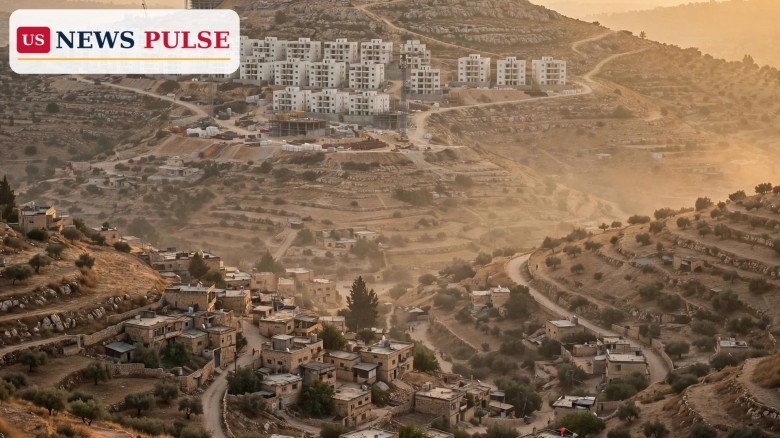
Britain has imposed sanctions on eight Israeli construction and property companies building settlements in the occupied West Bank, and on the activist group Tzav 9, which blocks humanitarian aid convoys bound for Gaza, in the sharpest British action against settlement activity in years.
Foreign Secretary Ed Miliband announced the measures on Tuesday, November 17, 2026, days before the Israel Land Authority opens bids on Thursday for 1,234 homes in the E1 corridor between East Jerusalem and Maale Adumim. It is the first time Britain has sanctioned Israeli entities since last month's inconclusive Knesset election, and the first concrete step since Miliband said on September 8 that Britain would toughen its stance.
Key Points
- Britain sanctioned eight Israeli firms involved in building West Bank settlements, plus the activist group Tzav 9, on November 17, 2026.
- The measures are asset freezes and director disqualifications under Britain's expanded Global Human Rights sanctions regime.
- The eight firms are Har Hevron Development Company, Hemdat Shomron, S.A.G. (Velvel) Construction and Development, Lev HaHar Yazamut, Harey Zahav, Ariel Residential Judea and Samaria, Ami Gvirtzman Architects 2021 and Z.F. Building Company.
- Tzav 9 organised blockades of Gaza-bound aid convoys as recently as October, according to the Foreign Office.
- The announcement came before bids open on Thursday for 1,234 housing units in the E1 corridor.
What Happened
The Foreign Office announced the sanctions on Tuesday, November 17, 2026, targeting companies and people it says are directly involved in building settlements on occupied land and in obstructing humanitarian aid. The measures freeze any assets the designated firms hold in Britain and bar named directors from running British companies, cutting the firms off from British finance and corporate structures.
Miliband said the action would disrupt the firms' finance flows and their ability to support further construction. Tzav 9 has organised roadblocks and protests that stop trucks carrying food, medicine and other aid from reaching Gaza; the group says its actions aim to prevent aid from reaching Hamas. The United States sanctioned Tzav 9 in 2024, and the European Union followed.
Background: Settlements, the E1 Corridor and the Law
Israeli settlements in the West Bank have been one of the most contested issues in the Middle East for decades. About 700,000 Israeli settlers now live in the West Bank and East Jerusalem, in communities that most of the international community regards as illegal under international law. Israel disputes that view and maintains that the settlements are legal.
The E1 project sits at the centre of that dispute. The corridor, known as E1, is a stretch of land east of Jerusalem between the city and the settlement of Maale Adumim. Building 1,234 homes there would effectively join Maale Adumim to Jerusalem and cut the northern West Bank, including Ramallah, off from the southern West Bank and Bethlehem. Critics say that would make a contiguous Palestinian state almost impossible. Previous British governments, along with the United States and the European Union, have opposed E1 for years, and the International Court of Justice said in July 2024 that Israel's presence in the occupied Palestinian territory was unlawful. Britain recognised a Palestinian state in September 2026.
UK Sanctions Israeli Settlements: What the Measures Do
The sanctions were imposed under Britain's Global Human Rights sanctions regime, widened on October 13 to cover serious violations of international humanitarian law. That expansion gave the government the legal basis for these designations.
An asset freeze means the designated firms cannot access money, property or other assets held in Britain, and British banks, businesses and individuals are barred from dealing with them. A director disqualification prevents named directors from acting as directors of British companies. Together, the measures are designed to raise the cost of doing business for the firms and to signal to banks and investors that financing settlement construction now carries sanctions risk.
Reactions
Miliband presented the sanctions as a response to settlement expansion and to the obstruction of aid, saying the measures would disrupt the finance flows that sustain further construction. His argument is that targeting the companies that build settlements is more effective than broad statements, because it hits the business model behind the building.
Tzav 9 has defended its blockades, saying its members are protesting against aid that they believe benefits Hamas rather than civilians in Gaza. Israel's government has long maintained that West Bank settlements are legal and has rejected international criticism of E1.
Why It Matters
The timing is what makes the package significant. With bids for 1,234 E1 homes opening on Thursday, the sanctions arrive as the project moves from planning to construction, and they put the companies involved on notice that building there can carry a cost beyond the West Bank.
The measures also matter for Gaza. Aid agencies have warned repeatedly that deliveries into Gaza remain far below what is needed, and blockades by groups such as Tzav 9 have added to the delays. Sanctioning an aid-blocking group alongside settlement builders signals that Britain regards obstructing humanitarian aid as a sanctions-worthy act in its own right.
What Happens Next
The immediate test comes on Thursday, when the Israel Land Authority opens bids for the 1,234 E1 housing units. The sanctions do not stop the tender, but they may affect which companies bid and how easily winners raise finance.
Watch for three things in the coming weeks: whether the designated firms challenge the measures, whether other European governments or the United States add their own designations, and whether Britain extends the sanctions to more firms.
Frequently Asked Questions
What did Britain sanction?
Eight Israeli construction and property firms involved in building settlements in the occupied West Bank, plus the activist group Tzav 9, which blocks humanitarian aid deliveries to Gaza. The measures are asset freezes and director disqualifications.
Who are the eight firms?
Har Hevron Development Company, Hemdat Shomron, S.A.G. (Velvel) Construction and Development, Lev HaHar Yazamut, Harey Zahav, Ariel Residential Judea and Samaria, Ami Gvirtzman Architects 2021 and Z.F. Building Company.
What is the E1 settlement project?
E1 is a corridor of land east of Jerusalem, between the city and Maale Adumim. A tender opening on Thursday would build 1,234 housing units there, joining Maale Adumim to Jerusalem and cutting the northern West Bank off from the southern West Bank.
What do the sanctions actually do?
They freeze any assets the designated firms hold in Britain, bar British banks and businesses from dealing with them, and disqualify named directors from running British companies.
Has Britain sanctioned Israeli entities before?
Britain has sanctioned individual settlers and settler organisations in recent years, but this is the first such action since last month's inconclusive Knesset election, and the first concrete step since Miliband promised on September 8 to toughen Britain's stance.
Related US news: the Quad summit in Manila ended with critical-minerals deals and a new patrol exercise, and the US and Thailand signed a trade deal in Manila as Bangkok scrapped US tariffs.

The US News Pulse newsroom covers breaking news across the United States and the world, working from wire services, official statements and on-the-record sources. Every story is reviewed against our editorial standards before publication. Corrections and tips: info@usnewspulse.com
About our newsroomLeave a Comment