

 | Today's Date:





US Homebuilder Sentiment Hits Lowest Since 2012 as Rates and Costs Bite - US News Pulse
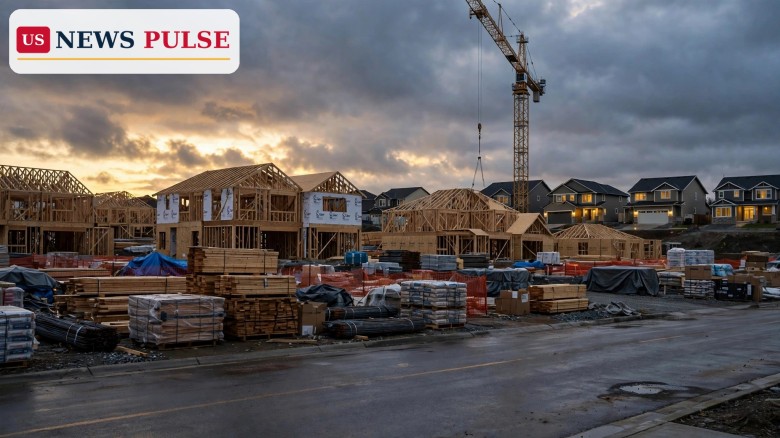
American homebuilders have rarely felt worse. US homebuilder sentiment fell four points to 25 in November, the National Association of Home Builders reported on Tuesday, the lowest reading since April 2012. Every part of the index fell, buyers stayed away in near-record numbers, and almost half of builders said they were cutting prices. With mortgage rates still above 7 percent and construction crews stretched thin, the housing market heads into winter with little momentum and no quick fix in sight.
Key Points
- US homebuilder sentiment, measured by the NAHB/Wells Fargo Housing Market Index, fell four points to 25 in November 2026, its lowest since April 2012.
- Economists polled by Reuters had expected the index to hold steady at 29, so the drop was a clear miss against forecasts.
- All three parts of the index fell: current sales conditions dropped six points to 28, future sales expectations fell two points to 30, and buyer traffic fell two points to 16.
- About 46 percent of builders reported cutting prices this month, the highest share since the pandemic, with the average cut steady at 6 percent for an eighth month.
- The 30-year fixed mortgage rate averaged 7.40 percent in mid-October, a three-year high, before easing to 7.18 percent.
What Happened
The National Association of Home Builders published its November survey on Tuesday, November 17, 2026, and the message was bleak from every angle. The headline Housing Market Index, produced with Wells Fargo, dropped to 25, down from 29 in October. A reading below 50 means more builders see conditions as poor than good, and the gauge has now stayed below that line for more than two years.
The detail was no better than the headline. Current sales conditions fell six points to 28, the sharpest move in the survey, while expectations for sales over the next six months slipped two points to 30. Buyer traffic fell two points to 16, its lowest in 15 years apart from the first weeks of the COVID-19 pandemic in 2020.
Background: Two Years Below the Line
The November reading is not a one-month stumble. Homebuilder confidence has been below 50 for more than two years, tracking the rise in borrowing costs. The 30-year fixed mortgage rate has risen 120 basis points since the United States and Israel attacked Iran in February, and it averaged 7.40 percent in mid-October, the highest in three years, before easing to 7.18 percent. At those rates, the monthly payment on a typical new home is hundreds of dollars higher than two years ago, and many would-be buyers have simply waited.
The resale market tells the same story. The National Association of Realtors reported last week that sales of previously owned homes dropped to the lowest level in more than 16 years in October. When existing homes stop selling, builders lose the move-up buyers who need to sell one home before buying a new one. Costs on the building side have added to the squeeze, with higher fuel prices pushing subcontractors to raise their rates sharply.
US Homebuilder Sentiment: The Numbers Behind the Drop
The November survey shows how broad the weakness has become. The current sales component at 28 means builders are seeing far fewer signed contracts than a year ago, and the expectations component at 30 shows they do not expect a quick rebound. Buyer traffic at 16 is the most telling figure: show homes are quiet, and the foot traffic that usually builds ahead of the spring selling season is not there.
The price-cutting figures underline the point. Nearly half of builders cutting prices at once is a sign of an industry competing hard for a shrinking pool of buyers. An average cut of 6 percent, unchanged for eight months, shows the discounting has become routine rather than a one-off promotion. With 68 percent of builders offering incentives, from mortgage-rate buydowns to free upgrades, the headline price of a new home now tells only part of the story.
Reactions
National Association of Home Builders chairman Bill Owens pointed to the labour market as a growing problem. He blamed stepped-up immigration enforcement for keeping legal workers off job sites, saying it has deepened labour shortages and driven up costs. Higher fuel prices, he added, have pushed subcontractors to raise their rates sharply, adding another layer of cost pressure at a time when demand is already weak.
When crews are short, projects take longer, carrying costs rise, and builders become more cautious about starting new homes. That caution feeds directly into supply: fewer starts today mean fewer homes for sale next year, which keeps prices high even as demand falls.
Why It Matters
Housing is one of the largest engines of the American economy. When builders slow down, the effects ripple outward: fewer jobs for carpenters, electricians and truck drivers, less demand for lumber, concrete and appliances, and less revenue for the local governments that depend on property taxes and building permits. A 14-and-a-half-year low in builder confidence is not just a housing story; it is a warning about the wider economy.
It matters for buyers too. Price cuts and incentives mean better deals for the minority who can still afford to buy, but the deeper problem is affordability itself. Until mortgage rates fall meaningfully or incomes catch up with prices, millions of households will stay locked out of homeownership.
What Happens Next
The next Housing Market Index reading, covering December, will show whether November was a low point or the start of a deeper slide. Builders will be watching the Federal Reserve's December meeting closely: any signal about the direction of rates will shape their plans for the spring selling season, when most new homes are sold.
For now, the industry's playbook is clear: keep cutting prices, keep offering incentives, and slow the pace of new construction until buyers return. The labour question will also stay in focus.
Frequently Asked Questions
What is US homebuilder sentiment in November 2026?
The NAHB/Wells Fargo Housing Market Index fell four points to 25 in November 2026, its lowest reading since April 2012.
Why did homebuilder confidence fall?
High mortgage rates, weak buyer traffic and rising building costs all played a part, with the 30-year fixed rate averaging 7.40 percent in mid-October before easing to 7.18 percent.
How many builders are cutting prices?
About 46 percent of builders reported cutting prices in November, the highest share since the pandemic, with the average cut at 6 percent for an eighth month.
What does a reading below 50 mean?
A reading below 50 means more builders see housing conditions as poor than good. The index has stayed below 50 for more than two years.
What happens next for the housing market?
Builders are expected to keep discounting and slow new construction until mortgage rates ease and buyers return, with the December index and the Federal Reserve's December meeting as the next key markers.
Read more: US retail sales rise 0.2% in October to $748.2 billion, Census Bureau reports, Home Depot names finance chief Richard McPhail as CEO as Q3 sales beat estimates, US credit card debt hits record $1.29 trillion as savings fall below 4%.

The US News Pulse newsroom covers breaking news across the United States and the world, working from wire services, official statements and on-the-record sources. Every story is reviewed against our editorial standards before publication. Corrections and tips: info@usnewspulse.com
About our newsroomLeave a Comment