

 | Today's Date:





US Data Centre Air Pollution Blamed for 650 Premature Deaths a Year, Studies Find
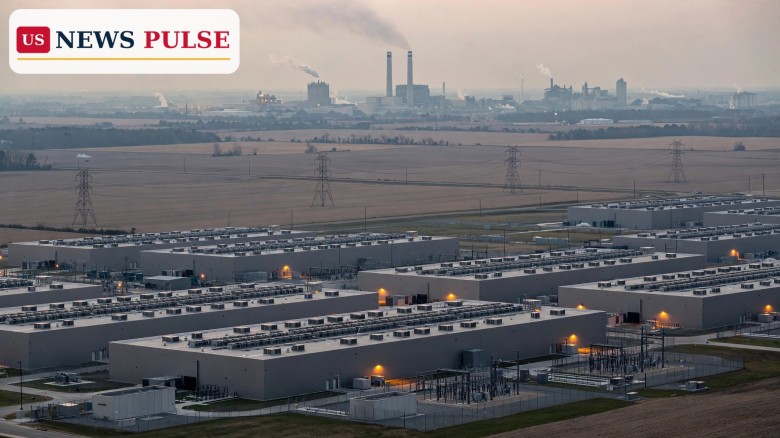
Data centre air pollution in the United States is blamed for about 650 premature deaths a year, according to two peer-reviewed studies published this month that trace the hidden health cost of the artificial intelligence boom. The electricity powering the country's data centres, much of it generated by burning fossil fuels, sends fine particulate matter and ozone drifting downwind, and the people who breathe it often live hundreds of miles from the server halls.
Key Points
- A peer-reviewed MIT study published on November 19, 2026, estimates US data-centre electricity demand in 2023 caused about 650 premature deaths across the contiguous United States.
- Of those, 513 were attributed to fine particulate matter (PM2.5) and 137 to ozone; the 95 percent confidence interval is 559 to 740 deaths.
- The 650 deaths are about 5.3 percent of all US electricity-related mortality, though data centres used only 3.8 percent of national electricity generation.
- A Harvard study published on November 16, 2026, found the 403 largest US data centres produced about 28.3 million tons of carbon dioxide in a year, more than Denmark emits.
- Some 2,000 more data centres are planned, and big tech electricity use rose 240 percent between 2022 and 2025.
What Happened
Two research teams published within days of each other, giving the fullest picture yet of the AI buildout's cost in health and carbon. The MIT study, led by Yuang Chen and colleagues and published in Environmental Research Letters, modelled the air pollution from generating the electricity US data centres consumed in 2023. The Harvard study, published in Nature Sustainability under senior author Francesca Dominici, measured the actual electricity use and emissions of the 403 largest data centres in the year to April 2025.
The MIT figure is a modelled estimate, not a register of named deaths: the team calculated how much extra PM2.5 and ozone the data centres' electricity demand added to the air, then applied established dose-response relationships. Harvard's 403 facilities consumed 82 terawatt-hours in twelve months, enough to power nearly 7 million homes for a year, and produced about 28.3 million tons of carbon dioxide, or 25.7 million metric tons. More than half their electricity came from fossil fuels, and the emissions estimate was two to three times higher than earlier studies suggested.
Background and Context
Data centres are the physical backbone of the AI boom: every chatbot query and cloud workload runs through warehouse-sized buildings packed with servers needing huge amounts of electricity to run and stay cool. In 2023 they consumed 171.0 terawatt-hours, or 3.81 percent of all electricity generated on the American grid, mostly from fossil-fuel units. That share is growing fast, and the buildout is already political, with costs spilling onto household bills and communities pushing back against new sites. Read more: Data Centre Power Costs Could Leave Americans on the Hook, TVA Warns.
The Harvard finding matters because earlier, lower estimates were the ones policymakers used. If the true footprint is two to three times larger, each new facility's cost is larger too. The appetite for power is so great that some firms build their own generation: Anthropic struck a 34-billion-dollar deal for gas generators for its data centres. Read more: Anthropic's $34 Billion Gas-Generator Deal to Power Its AI Data Centres.
Data Centre Air Pollution Falls Downwind, Not Where the Servers Sit
The MIT study's most striking finding is the geography of the harm. Demand was concentrated in Virginia (33.9 terawatt-hours, 25.6 percent of state electricity use) and Texas (21.8 terawatt-hours). But the highest per-capita death rates were in Iowa, Nevada, South Dakota and Kansas, with Nebraska and Iowa reaching 6.5 deaths per million people.
Pollution travels: the plants supplying a Virginia data centre may sit in another state, and their smoke drifts downwind over farming communities with no data centres, jobs or tax revenue from them. Nationally the mismatch is stark: data centres used 3.8 percent of US electricity but caused about 5.3 percent of electricity-related mortality. Senior author Noelle Selin of MIT and her team found data-centre power disproportionately dirty, because the fossil-fuel units supplying it emit more per unit of electricity than the grid average.
Reactions
The studies landed as world leaders met at COP31, where the summit launched the voluntary Antalya Artificial Intelligence Pledge for clean-powered data centres. The pledge sets no binding targets, but its launch alongside the two studies put the health findings at the centre of the climate debate. With 2,000 more data centres planned and big tech electricity use up 240 percent in three years, the 2023 burden is a baseline, not a ceiling. Neither study calls for data centres to close, only for the cost to be counted.
Why It Matters
The harm is invisible and unevenly shared. A data centre looks clean, a quiet grey building with no chimney, but its electricity must be generated somewhere, and when that somewhere is a coal or gas plant, the smoke leaves a stack in another community, often in another state.
The scale is large and growing: about 650 early deaths a year, plus 28.3 million tons of carbon dioxide from just the largest facilities, more than Denmark emits. And the people most affected have the least say: the states with the highest death rates did not approve the facilities, do not host them and do not benefit from them, yet breathe the pollution.
What Happens Next
The test is whether the COP31 pledge turns into real change. It is voluntary, so its effect depends on how many sign up and shift data centres onto clean power; the studies add a new argument, that clean power is a public-health measure as well as a climate one. With 2,000 more centres planned, the choice is between more fossil-fuel generation or new clean capacity built alongside the server halls. Researchers will keep refining the numbers: the MIT figure is a model, and Harvard showed earlier estimates were too low by a factor of two or three.
Frequently Asked Questions
How many premature deaths a year are blamed on US data centre air pollution?
About 650, per a peer-reviewed MIT study published on November 19, 2026 (95 percent confidence interval: 559 to 740). The figures are modelled estimates, not named deaths.
What pollutants are responsible?
Fine particulate matter (PM2.5): 513 deaths. Ozone: 137. Both come from burning fossil fuels to generate the electricity data centres consume.
Where is the risk highest?
Iowa, Nevada, South Dakota and Kansas, with Nebraska and Iowa at 6.5 deaths per million. Demand sits in Virginia and Texas; the pollution falls downwind.
How much carbon dioxide do US data centres produce?
About 28.3 million tons in the year to April 2025 from the 403 largest, more than Denmark emits in a year. More than half their power came from fossil fuels.
What is being done about data centre pollution?
COP31 launched the voluntary Antalya Artificial Intelligence Pledge for clean-powered data centres. Whether new facilities run on clean power decides if the toll grows or shrinks.
The pollution story is part of a wider reckoning with the hidden costs of the AI boom. Read more: Bill Gates Earned $26 Billion From Landfills Polluting the Climate, ProPublica Finds.

The US News Pulse newsroom covers breaking news across the United States and the world, working from wire services, official statements and on-the-record sources. Every story is reviewed against our editorial standards before publication. Corrections and tips: info@usnewspulse.com
About our newsroomLeave a Comment