

 | Today's Date:

Colombia Rejects US Plan to Target Drug Gangs, Forcing Hegseth to Reroute Trip
Colombia has rejected an American proposal for joint military operations against drug gangs, the New York Times reported on Wednesday, in a setback for President Donald Trump’s drug-war campaign that forced Defence Secretary Pete Hegseth to redraw his Latin America tour — although Colombia’s president later denied turning the plan down.
Key Points
- The New York Times reported Wednesday, citing US officials, that President Abelardo De La Espriella rejected a US joint-operations proposal against drug gangs.
- The Title 10 plan would have let US forces join ground operations and airstrikes with Colombian troops against groups including Clan del Golfo.
- De La Espriella said he backed working with the Pentagon but lacked the votes in Congress, which must approve foreign troops fighting in Colombia.
- The reported rebuff forced Hegseth to change his four-country Latin America trip; he instead announced a closer US-Venezuela military partnership in Caracas.
- Hours later, De La Espriella denied the report, and a US official told Reuters Bogota had raised concerns about Congress without confirming a rejection.
What Happened
The New York Times, citing US officials, reported that Colombia’s president turned down the proposal for joint military operations against drug trafficking organisations. The Title 10 plan would have put American forces alongside Colombian forces, striking the gangs that move cocaine out of the country.
De La Espriella’s objection, as described to the Times, was political, not military. He told Washington he backed working with the Pentagon but lacked the votes in Congress. Colombia’s constitution requires legislative approval before foreign troops can fight on national soil.
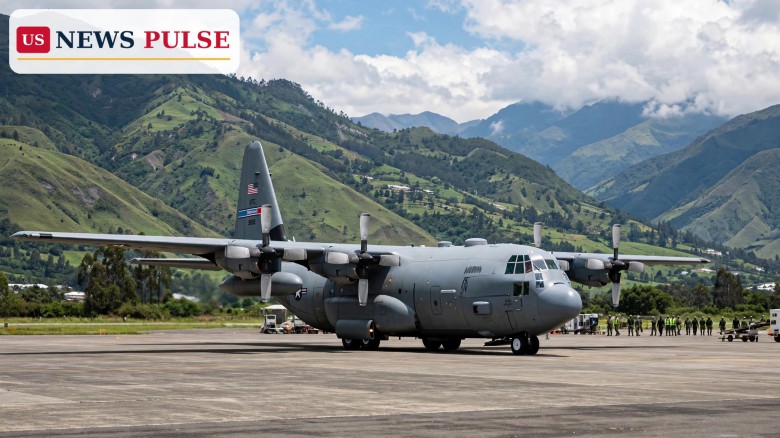
The report landed mid-trip and changed his plans. Instead of the Colombia visit he expected, the defence secretary announced an elevated US-Venezuela military partnership in Caracas on Wednesday with interim President Delcy Rodriguez, then flew to Colombia only to hand over a Lockheed Martin C-130 aircraft.
Then came the twist. Later on Wednesday, De La Espriella denied the Times report, posting in Spanish that he had rejected no Trump administration proposal and that cooperation focuses on intelligence sharing and training. A US official told Reuters Bogota had concerns about Congress, but confirmed no outright rejection.
Background and Context
The episode sits at the centre of the Trump administration’s campaign against drug trafficking in Latin America. Since January, the United States has struck boats it says carried drugs in the Caribbean and the Pacific. Colombia, the world’s largest cocaine producer, has long been its most important and most sensitive partner in that fight.
That sensitivity is written into Colombia’s constitution. Foreign troops cannot fight on Colombian soil without Congress’s approval. Any American proposal to put US personnel into combat operations with Colombian forces must survive a political vote, not just a planning meeting.
The timing matters too. Hours before the Colombia report, Hegseth announced in Caracas that the United States and Venezuela have signed a deal to reestablish military ties, covering training, intelligence sharing and border security. The contrast was striking: a warm embrace in Caracas and a public row in Bogota, America’s oldest ally in the region.
Colombia Rejects US Plan: What the Title 10 Proposal Would Have Meant
A Title 10 arrangement takes its name from the section of US law governing the armed forces. In practice, it would have put American troops into joint ground operations and airstrikes with Colombian forces, far beyond the training and intelligence sharing that has defined the partnership for years.
For Washington, the appeal is clear. US officials argue that the gangs behind the cocaine trade, above all Clan del Golfo, act as organised military threats that Colombian forces struggle to defeat alone, and that American air power and surveillance could break them.
For Bogota, the cost is political. Letting foreign troops fight on Colombian soil touches a sensitive nerve, and a president who agrees without Congress risks a constitutional crisis. De La Espriella’s reported message — that he supports cooperation but cannot deliver the votes — reflects that bind. The denial adds ambiguity: if nothing was rejected, the plan may still be alive.
Reactions
The most important reaction came from De La Espriella himself. In his post on Wednesday, he said he had rejected no proposal from the Trump administration and described cooperation as focused on intelligence sharing and training. The message was aimed at Washington and Congress alike: the partnership is intact, and no sovereignty has been handed over.
The US official who spoke to Reuters was more cautious, confirming Bogota’s concerns about congressional support but stopping short of confirming an outright rejection. That wording leaves room for both accounts to be partly true: a proposal discussed, concerns raised, no formal decision taken.
Hegseth carried on with his reshaped trip. His Caracas announcement, alongside Rodriguez, became the centrepiece of the day, presented as proof the regional strategy is working.
Why It Matters
Colombia is not just another country in the drug war. It is the source of most of the world’s cocaine, the United States’ oldest security partner in South America, and the place where Washington’s strategy succeeds or fails.
It also matters because of the contrast with Venezuela. In one day, the United States signed a military partnership with a government it removed by force in January, and ran into trouble with a democratic ally.
Finally, the episode exposes the constitutional limits on American power. The United States can offer troops, aircraft and intelligence, but it cannot vote in Colombia’s Congress. Any strategy needing foreign combat operations on allied soil must win a political argument abroad.
What Happens Next
Hegseth will continue his Latin America tour, with the Colombia stop reduced to the C-130 handover and talks on support rather than a joint campaign. Attention turns to whether the administration revives the Title 10 proposal in a different form, or shifts focus to Venezuela and other willing partners.
In Bogota, the question is whether De La Espriella’s denial settles the matter or invites scrutiny. Opposition lawmakers will likely ask what was proposed, and the government must explain how intelligence sharing differs from the joint operations the Times described.
Frequently Asked Questions
What did Colombia reportedly reject?
A US proposal, known as a Title 10 arrangement, for joint military operations against drug gangs, including ground operations and airstrikes with Colombian forces against Clan del Golfo.
Did Colombia’s president deny the report?
Yes. Later on Wednesday, President Abelardo De La Espriella posted in Spanish that he had rejected no Trump administration proposal, saying cooperation focuses on intelligence sharing and training.
What is Title 10?
It is the section of US law governing the armed forces. Here it would have let US troops fight with Colombian forces, a deeper role than training and intelligence sharing.
Why did Hegseth change his trip?
The reported rejection forced him to rethink his four-country Latin America tour. He announced a closer US-Venezuela military partnership in Caracas, then visited Colombia only to hand over a C-130 aircraft.
What happens to cooperation now?
Both sides say cooperation continues on intelligence sharing and training. Whether the proposal is revived in another form, or dropped, is not yet clear.

The US News Pulse newsroom covers breaking news across the United States and the world, working from wire services, official statements and on-the-record sources. Every story is reviewed against our editorial standards before publication. Corrections and tips: info@usnewspulse.com
About our newsroomLeave a Comment