

 | Today's Date:




Mamdani Signs Romanch's Law Ending New York City Horse-Drawn Carriages After 150 Years
NEW YORK — New York City Mayor Zohran Kwame Mamdani signed Romanch’s Law into law on Thursday, November 19, 2026, ending the city’s horse-drawn carriage industry after more than 150 years. The horse-drawn carriage ban, approved by the City Council in October by 40 votes to 7, requires carriages to stop operating by June 1, 2028. It closes one of the most recognisable chapters in Central Park’s history and opens a new legal fight over the future of the roughly 200 New Yorkers who work in the trade.
The law is named for Romanch Mahajan, an 18-year-old tourist killed in a horse-drawn carriage accident in Central Park on June 17, 2026. His parents, Sovia and Anuj Thukral, attended the signing at City Hall with Council Speaker Julie Menin and former Mayor Bill de Blasio. Within hours, the Transport Workers Union Local 100, which represents the drivers, filed a federal class-action lawsuit seeking to block the ban.
Key Points
- Mayor Zohran Kwame Mamdani signed Romanch’s Law (Intro 934) on Thursday, November 19, 2026, ending New York City’s horse-drawn carriage industry after more than 150 years.
- Carriages must cease operating by June 1, 2028. The City Council approved the law in October by a vote of 40 to 7.
- The law is named for Romanch Mahajan, an 18-year-old tourist killed in a carriage accident in Central Park on June 17, 2026. His parents attended the signing.
- About 200 New Yorkers work in the industry. A transition plan due by April 2027 includes medallion buybacks, training stipends and career counselling.
- The Transport Workers Union Local 100 sued in federal court the same day, calling the ban unconstitutional and seeking a temporary restraining order over the freeze on buying and selling medallions.
What Happened
Mamdani signed the bill at City Hall on Thursday, November 19, 2026, flanked by the family of the teenager whose death gave the law its name. Romanch Mahajan, 18, was visiting New York as a tourist when he was killed in a horse-drawn carriage accident in Central Park on June 17, 2026. His parents, Sovia and Anuj Thukral, stood with the mayor as he signed Intro 934. Council Speaker Julie Menin, who steered the bill through the Council, and former Mayor Bill de Blasio, who had pushed for a carriage ban in office without succeeding, also attended.
The legal challenge arrived the same day. The Transport Workers Union Local 100, representing roughly 200 drivers, filed a federal class-action lawsuit in the US District Court for the Southern District of New York, arguing the ban is unconstitutional. For drivers who own medallions, the freeze matters at once, because a medallion that cannot be sold loses much of its value overnight.
Background: A 150-Year Fixture in Central Park
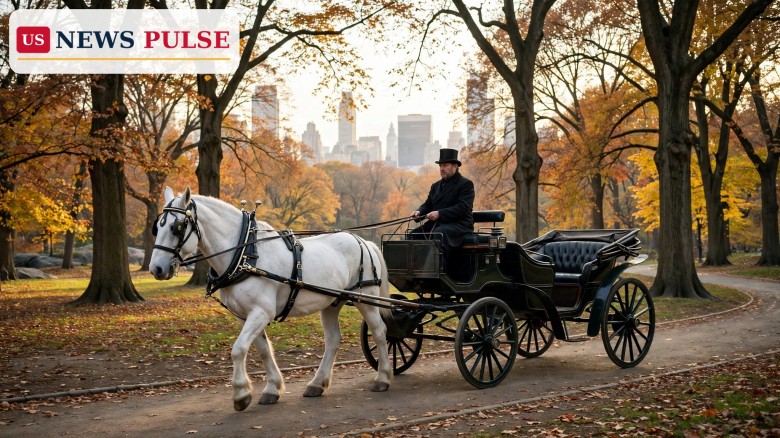
Horse-drawn carriages have carried passengers through Central Park since the 19th century, when the horse was the city’s main form of transport. As cars, buses and subways took over, the carriages survived as a tourist attraction, offering slow rides past the park’s lawns, lakes and skyline. For generations of visitors, a carriage ride became a rite of passage: a honeymoon photograph, a marriage proposal, a child’s first ride. For many New Yorkers, the horses lined up near the park’s southern edge became as familiar as the skyline.
What the Horse-Drawn Carriage Ban Does
Romanch’s Law does more than set a date for the carriages to stop. It sets out how the industry is wound down, and what happens to the people and the horses. The law affects about 200 New Yorkers: medallion owners, the drivers who take the carriages out each day, and the stable hands who care for the horses. A comprehensive transition plan is due by April 2027, including medallion buybacks so owners are compensated for licences that will soon be worthless, plus stipends for workforce training and career counselling.
The law also governs the fate of the horses. It requires their humane disposition and expressly forbids selling them for slaughter or transferring them to other carriage companies. The June 1, 2028 deadline gives the industry about 18 months to wind down, which the mayor’s office has described as enough time for the transition plan, the buybacks and the retraining to begin.
Reactions: Drivers Sue as Animal Advocates Celebrate
Animal welfare advocates, who have campaigned to end the carriage trade for more than a decade, welcomed the law as a long-delayed victory. They pointed to the Mahajan family’s presence at the signing as a sign of what the law is really about: a teenager who should have come home from a holiday alive. For them, the June 2028 deadline ends a fight that began when the horses first became a political issue, and the sanctuary provision is the part of the law that matters most.
Why It Matters
The ban matters for three reasons, reaching well beyond Central Park. First, a teenager died, and the city has decided the industry in which he died should not continue. That link carried the bill through the Council by 40 votes to 7.
What Happens Next
The immediate next step is in federal court. The union’s class-action lawsuit, filed in the Southern District of New York, will first be tested on its request for a temporary restraining order over the medallion freeze. If a judge grants it, the freeze would be paused while the wider case is argued. If not, the freeze stays and the value of the medallions will keep falling. The constitutional challenge to the ban itself will take longer and could run well into 2027.
At City Hall, the deadline that matters is April 2027, when the transition plan is due. It must spell out how the buybacks will work, how much drivers will be paid, what training stipends will be available and which sanctuaries will take the horses. The carriages will keep running until June 1, 2028, unless a court orders otherwise.
Frequently Asked Questions
When will New York City’s horse-drawn carriages stop operating?
By June 1, 2028, under Romanch’s Law, signed by Mayor Zohran Mamdani on November 19, 2026.
Who was Romanch Mahajan?
An 18-year-old tourist killed in a horse-drawn carriage accident in Central Park on June 17, 2026. The law is named for him. His parents, Sovia and Anuj Thukral, attended the signing at City Hall.
How many people work in the carriage industry?
About 200 New Yorkers, including medallion owners, drivers and stable hands.
What happens to the horses?
The law requires humane disposition, forbidding sale for slaughter or transfer to other carriage companies. Sanctuaries are to be ready to take the horses into retirement.
Is the ban being challenged in court?
Yes. The Transport Workers Union Local 100 filed a federal class-action lawsuit in the Southern District of New York on the day of the signing, calling the ban unconstitutional
Read more on the mayor’s first weeks in office: Mamdani unveils Rikers Island closure plan, Mamdani strikes deal with Trump to pause SNAP bodega rules for 90 days and Mamdani plans to disband NYPD strategic response group.

The US News Pulse newsroom covers breaking news across the United States and the world, working from wire services, official statements and on-the-record sources. Every story is reviewed against our editorial standards before publication. Corrections and tips: info@usnewspulse.com
About our newsroomLeave a Comment