

 | Today's Date:





US Energy Exports Hit Record Highs in 2026 as Iran War Shifts Global Trade
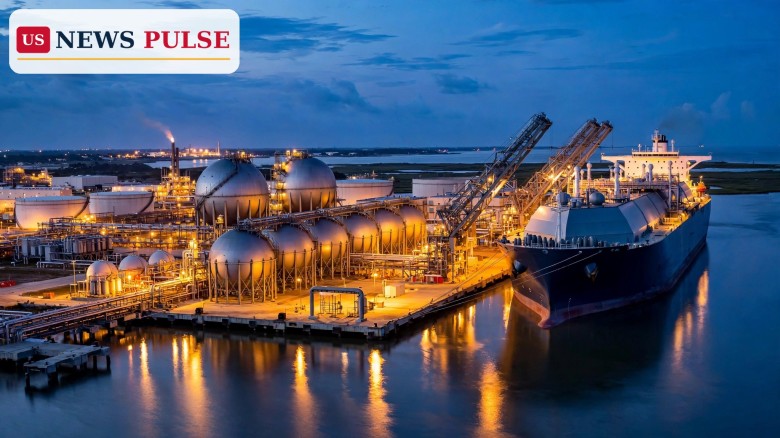
Washington, D.C. — US energy exports have hit record highs in 2026, with American crude oil, fuels and liquefied natural gas flowing abroad at the fastest pace ever recorded, as the war in Iran redraws the map of global energy trade. The surge, documented in an analysis published on November 22, 2026, reflects rising domestic production, new export capacity and a shift in trade flows as buyers turn away from Middle East supply disrupted by the conflict. The United States is now the world's largest exporter of liquefied natural gas.
Key Points
- US exports of crude oil, fuels and liquefied natural gas (LNG) hit record highs in 2026, according to an Oilprice.com analysis of Kpler data by Reuters columnist Gavin Maguire.
- The United States is now the world's largest LNG exporter, holding a 30% global market share in recent months, up from about 5% in 2018, ahead of Qatar and Australia.
- US propane exports hold a record 70% of the global market so far this year, at 2 million barrels per day in the first half of 2026, up 11% year on year.
- US ethane exports hit a record 794,000 barrels per day in August, the latest data from the Energy Information Administration.
- US crude exports are now about 15% of global shipments, and America regularly ships more crude than any OPEC member except Saudi Arabia.
What Happened
The record year was documented in an analysis published on November 22, 2026, drawing on shipping data from Kpler and figures from the US Energy Information Administration. Exports of crude oil, refined fuels and liquefied natural gas all reached all-time highs, driven by rising domestic production and export capacity, and by a reordering of global trade flows caused by the war in Iran.
The conflict, which began in late February 2026, has repeatedly disrupted shipping through the Strait of Hormuz, through which about a fifth of the world's oil normally moves. With cargoes delayed, rerouted or put at risk, importers have turned increasingly to the United States, whose Gulf Coast terminals can load crude, LNG and gas liquids for almost any market. The shift has been clearest in South Asia, where the war crippled Middle East supply to India and other buyers, and American propane has filled much of the gap.
Background: How America Became the World's Energy Exporter
The record year caps a transformation of less than a decade. In 2018, the United States held only about 5% of the global LNG market and its crude exports were at most 5% of world shipments. The shale revolution had already made America the world's largest oil and gas producer, but exporting at scale needed new terminals, pipelines and ships, and the lifting of the decades-old crude export ban in 2015.
Investment followed. LNG export terminals rose along the Gulf Coast in Texas and Louisiana, turning the region into the world's biggest liquefied-gas hub, and the Port of Corpus Christi grew into the largest US crude export hub, handling about 2.3 million barrels a day. By 2026, the United States had overtaken Qatar and Australia as the largest LNG exporter, and its crude shipments had grown to about 15% of the global total.
US Energy Exports by the Numbers
Liquefied natural gas leads the story. The United States holds a 30% share of the global LNG market in recent months, up from about 5% in 2018, ahead of Qatar and Australia, the countries that dominated the trade for years.
Propane tells a similar story. US exports averaged 2 million barrels per day in the first half of 2026, up 11% year on year, and America now holds a record 70% of global propane exports in 2026 to date. Ethane has also set a record, at 794,000 barrels per day in August, the latest Energy Information Administration data. And crude oil, the largest export stream, is now about 15% of global shipments, up from as much as 5% in 2018.
Reactions and Analysis
Energy analysts see the record year as a sign that the global energy map has been redrawn faster than anyone expected. The analysis by Reuters columnist Gavin Maguire, based on Kpler shipping data, points to American supply growth and the war-driven shift in trade flows as the decisive factors. For buyers, the appeal is reliability: with the Strait of Hormuz repeatedly disrupted, importers have diversified toward the United States and signed longer-term deals with US suppliers.
Why It Matters
Energy is now one of America's most important exports, and one of its most powerful tools abroad. Every cargo of LNG, propane or crude leaving a Gulf Coast terminal brings revenue home, supports jobs in producing states such as Texas, Louisiana, New Mexico and North Dakota, and reduces the trade deficit. The boom also gives Washington leverage with allies that depend on imported energy, from Europe to Japan, India and South Korea.
For consumers in importing countries, the rise of American supply has kept energy flowing despite war in one of the world's most important producing regions. Without it, the disruption to Middle East supply could have pushed global oil and gas prices far higher, with knock-on effects for inflation, transport and manufacturing.
What Happens Next
The boom is likely to continue into winter, when demand for heating fuels rises in the Northern Hemisphere and LNG shipments typically peak. New export terminals under construction on the Gulf Coast will add capacity in the coming years, and analysts expect the United States to widen its LNG lead even if the Iran war ends.
Much depends on the war. If fighting eases and shipping through the Strait of Hormuz returns to normal, some buyers may return to Middle East suppliers, whose cargoes are often cheaper to ship to Asia. If the conflict drags on, American exports could climb higher still.
Frequently Asked Questions
How much of the world's LNG does the US export?
The United States is the world's largest LNG exporter, with a 30% global market share in recent months, up from about 5% in 2018, ahead of Qatar and Australia.
Why are US energy exports at record highs in 2026?
Rising domestic production and export capacity met a shift in trade flows: the Iran war disrupted Middle East supply and Hormuz shipping, pushing buyers to American oil and gas.
What are US propane exports in 2026?
US propane exports averaged 2 million barrels per day in the first half of 2026, up 11% year on year, for a record 70% share of global propane exports, per the Energy Information Administration.
How much crude oil does the US export?
US crude exports are about 15% of global shipments, up from as much as 5% in 2018, and America regularly ships more crude than any OPEC member except Saudi Arabia.
Will the export boom continue?
New Gulf Coast terminals and winter demand should keep shipments high, though much depends on the Iran war.
Read more: Brent Crude Falls Below $90 for First Time Since August as Iran War Nears End; Trump Extends Jones Act Waiver 90 Days to Keep Foreign Tankers Moving US Oil; US Ports Under Cyber Siege as Hackers Launch Thousands of Attacks a Day.

The US News Pulse newsroom covers breaking news across the United States and the world, working from wire services, official statements and on-the-record sources. Every story is reviewed against our editorial standards before publication. Corrections and tips: info@usnewspulse.com
About our newsroomLeave a Comment