

 | Today's Date:



Virginia Supreme Court Second Amendment Ruling Restores Gun Rights for Felon
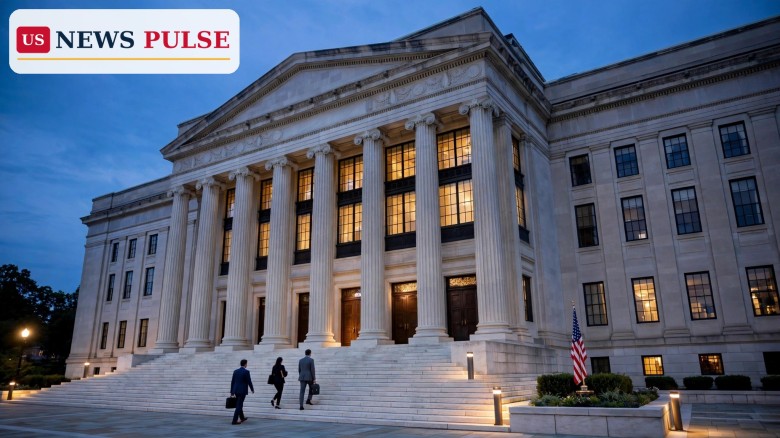
The Supreme Court of Virginia ruled on Tuesday that a felony conviction alone does not strip a person of Second Amendment rights, striking down the application of the state's felon-in-possession law to a man convicted only of possessing a shotgun after he had served his sentences. In a 41-page opinion, the court reversed the Court of Appeals, vacated Derek Wade Ginevan's conviction and entered final judgment in his favour.
Key Points
- Virginia's highest court ruled on November 25, 2026, that Code § 18.2-308.2 is unconstitutional as applied to Derek Wade Ginevan.
- “A felony conviction alone does not remove one from 'the people' protected by the Second Amendment,” Justice Wesley G. Russell Jr. wrote.
- The court said the US Supreme Court's remarks on felon gun bans in Heller are dicta, not holdings, and applied the Bruen test instead.
- The ruling is narrow: the statute was not struck down on its face.
- Ginevan was arrested in January 2023 after a domestic-disturbance call and charged only with possessing a shotgun.
What Happened
Ginevan was arrested on January 24, 2023, after police responded to a domestic-disturbance call. He was charged only with possessing a shotgun. Although there was evidence he may have pointed the shotgun at someone, he was charged with no use of the weapon, and the court stressed its review was focused on whether the Commonwealth could ban his mere possession.
Ginevan had prior felony convictions, including a 2011 conviction for possession with intent to distribute a controlled substance, a conviction for obtaining money by false pretenses and a conviction for possession of ammunition by a previously convicted felon. He pleaded guilty, and the Court of Appeals upheld the conviction. The Supreme Court of Virginia reversed in Ginevan v. Commonwealth, Record No. 250051, vacating the conviction and entering final judgment for Ginevan. The ruling does not free every convicted felon in Virginia to own a gun: the court struck down the statute only as applied to Ginevan.
Virginia Supreme Court Second Amendment Ruling: Why the Court Rejected Heller's Felon Language
The heart of the opinion is a close reading of District of Columbia v. Heller (2008), where the majority said “nothing in our opinion should be taken to cast doubt on longstanding prohibitions on the possession of firearms by felons and the mentally ill.” Justice Russell's opinion says that reading is wrong: “these statements about dispossessing felons all were made in cases where the question of whether the Second Amendment allowed legislatures to forever bar felons from possessing firearms was not an issue,” the opinion states. “As such, the statements about felon-in-possession bans contained in these cases are properly understood as dicta and not holdings of the Supreme Court.”
With the Heller language set aside, the court applied the Bruen (2022) test: when the Second Amendment's plain text covers conduct, the Constitution presumptively protects it, and the government must show the regulation fits the nation's historical tradition of firearm regulation. The court said he did: the US Supreme Court has defined “the people” as “all members of the political community,” a phrase that also appears in the First and Fourth Amendments.
The court then found the Commonwealth's historical case wanting. Laws banning all convicted felons from possessing firearms, it noted, are “a creature of twentieth century legislatures”: the Commonwealth could not identify a single American statute that predated the 1960s. The court also rejected the argument that, because felonies were once punished by death, permanent disarmament must also be allowed. “The Second Amendment right is not a lesser right and is of equal dignity as the other rights elucidated in the Bill of Rights,” the opinion states.
The Commonwealth stood on firmer ground with historical surety laws, which allowed temporary disarmament of people found to pose a danger. But those laws required a finding of dangerousness, as does the federal ban upheld in Rahimi, and nothing in Ginevan's record supplied one.
Reactions
The opinion itself reads as a rebuke of the Commonwealth's central argument. The court rejected the claim that the General Assembly's classification of his offences proved he was dangerous, and that his earlier ammunition conviction proved it either. The opinion states that no proof of Ginevan posing a credible threat was needed for his earlier ammunition conviction.
It does not question bans on gun possession by people found to be dangerous, and it does not touch the federal felon-in-possession ban. The US Supreme Court last week declined to hear a challenge to Maryland's law banning guns in sensitive places, leaving it in force, a decision US News Pulse reported on November 16. The Justice Department has sued Glendale, California, over $2,000 concealed-carry permit fees it calls a Second Amendment violation, a case US News Pulse reported on November 11.
Why It Matters
The decision is the most significant state high court ruling yet on whether a felony conviction permanently ends Second Amendment rights. By treating the Heller felon language as dicta and applying Bruen strictly, the court has given everyone in Virginia who has completed a felony sentence a new argument: the state must show a historical tradition for disarming someone in their position. For prosecutors, the ruling raises the bar: a felon-in-possession charge will now be harder to sustain without a judicial finding that the defendant poses a credible threat. For defence lawyers, the opinion is a template for other challenges to the statute.
The ruling also sharpens a split the US Supreme Court may eventually have to resolve: federal courts have divided over whether the federal felon-in-possession ban survives Bruen. Virginia's answer is among the most protective of gun rights issued by any state supreme court.
What Happens Next
The Commonwealth can ask for a rehearing, and it could seek review in the US Supreme Court. Either way, the ruling is final for Ginevan: his conviction has been vacated and final judgment entered in his favour. Prosecutors and defence lawyers across Virginia are expected to test the ruling's limits in pending cases. The General Assembly could also rewrite the statute to tie the ban to a finding of dangerousness, while the federal ban under 18 U.S.C. § 922(g)(1) remains in force and unaffected.
Frequently Asked Questions
Does the ruling mean all felons in Virginia can now own guns?
No. The court struck down the statute only as applied to Derek Ginevan. The law remains on the books.
What did the court say about the Heller decision?
It said the Heller majority's remarks about felon gun bans were dicta, not holdings. The court therefore applied the Bruen framework instead.
Why did the Bruen test matter so much?
Under Bruen, the government must prove its regulation fits the nation's historical tradition of firearm regulation. Virginia could not point to a pre-1960s statute banning all felons from possessing guns.
What happens to Derek Ginevan now?
His conviction has been vacated and the court entered final judgment in his favour. The state cannot punish him for possessing the shotgun in this case.
Does the ruling affect federal gun law?
No. The case concerned only Virginia Code § 18.2-308.2. The federal felon-in-possession ban, 18 U.S.C. § 922(g)(1), was not before the court and remains in force.

The US News Pulse newsroom covers breaking news across the United States and the world, working from wire services, official statements and on-the-record sources. Every story is reviewed against our editorial standards before publication. Corrections and tips: info@usnewspulse.com
About our newsroomLeave a Comment