

 | Today's Date:




Dragon Bravo Fire Review Blames Leadership Failures for Grand Canyon Lodge Loss
A federal review has concluded that leadership failures — not the weather — doomed the historic Grand Canyon Lodge in the 2025 Dragon Bravo Fire, one of the most destructive wildfires ever to strike an American national park. The 65-page Significant Wildland Fire Review, published by the US Department of the Interior in mid-November, found systemic failures in leadership, decision-making and preparedness behind the response to the lightning-sparked blaze, which burned about 145,500 acres, destroyed 114 structures and cost more than $141 million.
Key Points
- The Interior Department’s 65-page review says “the most consequential drivers were not environmental” in the Dragon Bravo Fire response.
- Sparked by lightning on July 4, 2025, the fire burned about 145,500 acres and destroyed 114 structures, including the century-old Grand Canyon Lodge.
- Park leaders chose “confine and contain” on July 6 and reaffirmed it July 9 and 11, with no documented reassessment as conditions worsened.
- Superintendent Ed Keable lacked the required fire-administrator certification; no qualified administrator arrived until July 30.
- The review calls the failures “foreseeable, preventable, and reflective of broader institutional issues.”
What Happened
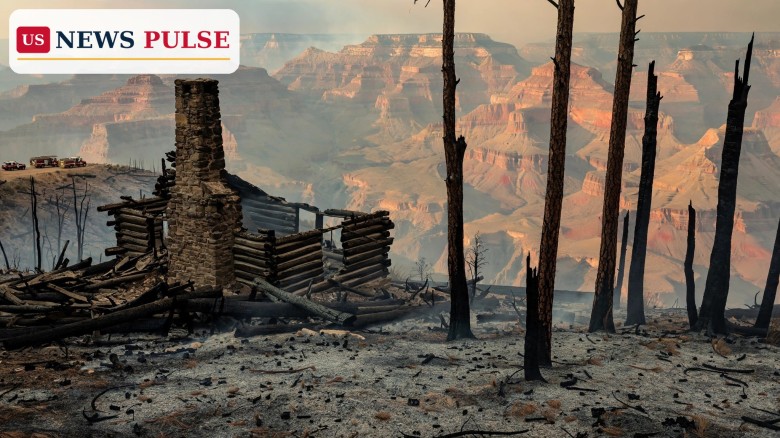
The Dragon Bravo Fire began on July 4, 2025, when lightning struck the North Rim of the Grand Canyon in Arizona. Over the following weeks it burned about 145,500 acres of forest and canyon country. Among the 114 structures it destroyed were the century-old Grand Canyon Lodge, historic cabins and employee housing.
The review, posted to the Interior Department’s Wildland Fire Lessons Learned Center, is the fullest official account yet of how the fire was fought — and where the response went wrong. Its central conclusion is blunt: “the most consequential drivers were not environmental.” The loss of the lodge, it says, was shaped less by wind, heat or drought than by the decisions of the people in charge.
Background: A Historic Lodge on the North Rim
The Grand Canyon Lodge was the centrepiece of the North Rim’s developed area, a stone-and-timber landmark that had welcomed visitors for nearly a century. With the historic cabins and employee housing around it, the lodge gave the North Rim its character: quieter and more remote than the busy South Rim, it drew visitors for the high country, the pine forest and the canyon views.
When lightning started the fire, managers faced a familiar choice: a lightning fire in a remote area can be managed rather than attacked head-on, allowed to burn within set boundaries while crews protect what matters most. That is what the superintendent chose on July 6: a “confine and contain” strategy, meant to keep the fire within a defined area. It was reaffirmed on July 9 and again on July 11, even as conditions worsened, with no documented reassessment. Worse, the North Rim developed area itself — the lodge, the cabins and the housing — was not fully included in the formal planning area, so commanders worked from a plan that left the most important ground uncovered.
Dragon Bravo Fire: How the Response Broke Down
The review lays out a series of specific breakdowns. Seven incident commanders led the response from July 4 to July 14, and the changes were not made face to face — turnover that makes it hard for any commander to grasp the fire, the terrain and the risks.
Fire retardant — the chemical dropped from aircraft to slow a blaze — was delayed for days. The decision to use it came only after the lodge and other structures were already lost, when it could no longer save them. The review does not say the retardant would certainly have saved the lodge — only that the delay removed the option.
Then there was the question of who was qualified to run the response. Superintendent Ed Keable, the park’s top official, lacked the required fire-administrator certification. No qualified agency administrator was brought in until July 30 — more than three weeks after the fire began, and long after the lodge had burned. For the decisive weeks of the fire, that role was effectively unfilled by anyone properly qualified.
Reactions
The sharpest language comes from the review itself. Federal wildfire reviews are usually written in careful, technical prose, which makes its central findings stand out. “The most consequential drivers were not environmental,” it says of a fire that destroyed a national landmark. The failures it documents, it concludes, were “foreseeable, preventable, and reflective of broader institutional issues.”
The Interior Department published the 65-page review openly, posting it to the Wildland Fire Lessons Learned Center. Its recommendations are practical rather than punitive: administrator training, clearer lines of authority and regular strategy reassessment.
Why It Matters
The loss of the Grand Canyon Lodge is not just a local tragedy. The lodge was a piece of American history, its destruction is a permanent loss to the national park system. Rebuilding a landmark like it will take years and far more than the $141 million the fire already cost.
The review also matters because it challenges a familiar story. When a wildfire destroys something precious, the usual explanation is the weather: extreme heat, high winds, drought-stressed forests. This review says that explanation does not fit. But the decisions were the difference between a fire that was managed and a fire that consumed the North Rim’s heart. That finding has consequences beyond the Grand Canyon: every national park with a remote backcountry faces the same choice when lightning strikes. The same questions apply to other recent park tragedies, including the plane crash on the North Rim that US News Pulse reported this month, and to the wider risks wildfires pose to drinking water, which studies say can linger for a decade.
What Happens Next
The immediate question is whether the Interior Department adopts the review’s recommendations in full: administrator training, clearer lines of authority and regular reassessment of fire strategy. The review’s own language — “broader institutional issues” — suggests the problems run deeper than one park.
The second question is the future of the North Rim itself. The lodge, the cabins and the housing are gone, and the review says nothing about whether or when they will be rebuilt. For now, the review stands as the official record of what went wrong.
Frequently Asked Questions
What was the Dragon Bravo Fire?
A lightning-sparked wildfire that began on July 4, 2025, on the North Rim of the Grand Canyon. It burned about 145,500 acres, destroyed 114 structures and cost more than $141 million.
What did the federal review find?
The Interior Department’s 65-page review found systemic failures in leadership, decision-making and preparedness, concluding that “the most consequential drivers were not environmental.”
Why was the Grand Canyon Lodge destroyed?
A “confine and contain” strategy chosen on July 6 and reaffirmed without documented reassessment; a planning area that excluded much of the North Rim developed area; and retardant use delayed until after the lodge was lost.
Who was in charge of the fire response?
Superintendent Ed Keable led the park but lacked the required fire-administrator certification. Seven incident commanders led the response between July 4 and 14, and no qualified agency administrator arrived until July 30.
What does the review recommend?
Administrator training, clearer lines of authority and regular reassessment of fire strategy.

The US News Pulse newsroom covers breaking news across the United States and the world, working from wire services, official statements and on-the-record sources. Every story is reviewed against our editorial standards before publication. Corrections and tips: info@usnewspulse.com
About our newsroomLeave a Comment