


 | Today's Date:




JonBenét Ramsey DNA Retesting Begins in Boulder Nearly 30 Years After Her Murder
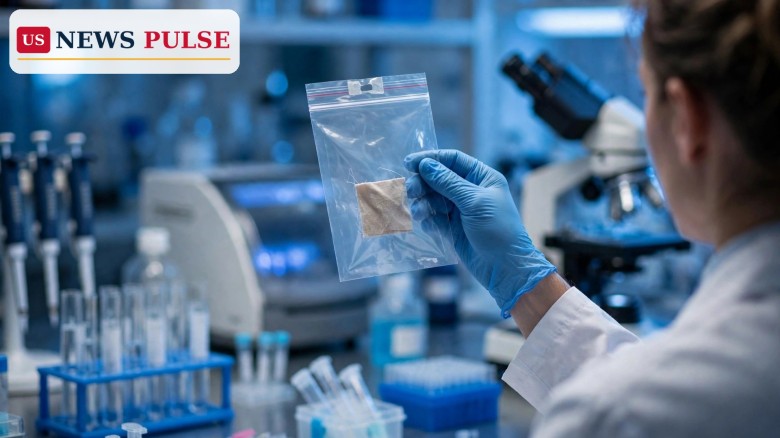
Nearly 30 years after six-year-old JonBenét Ramsey was found dead in the basement of her family's home in Boulder, Colorado, investigators are going back to the evidence — this time with DNA technology that did not exist when the case went cold. Boulder police confirmed this week that decades-old items are being retested, and genetic genealogy could finally name the unknown man whose DNA was found there.
Key Points
- Boulder Police Chief Steve Redfearn and District Attorney Michael Dougherty confirmed at a November 2026 briefing that investigators are retesting evidence from the case with modern DNA technology.
- The new testing began in fall 2025, JonBenét's half-brother John Andrew Ramsey said, and the family learned about it this year.
- DNA from an unknown male was found in JonBenét's underwear mixed with her blood; investigators hope genetic genealogy can identify him.
- A cold case review panel of local, state and federal investigators guides the renewed work.
- If the testing yields nothing, police may release previously unreleased evidence in the hope that someone comes forward, Redfearn said.
What Happened
Boulder Police Chief Steve Redfearn and Boulder County District Attorney Michael Dougherty told reporters at a news briefing in November 2026 that the JonBenét Ramsey investigation has entered a new phase. Decades after the six-year-old was killed at home, detectives are retesting evidence examined with 1990s science, using tools that transformed forensics.
"We're also going back, based on that cold case review, and retesting things that were tested 30 years ago with newer technology," Redfearn said. It was the clearest signal yet that one of the most famous unsolved murders in America is receiving an active new push. The retesting began in fall 2025, JonBenét's half-brother John Andrew Ramsey said, and the family learned this year that it was under way. A cold case review panel of local, state and federal investigators guides the work, and its review is why old evidence is being pulled from storage for modern testing.
Background: A Case That Has Haunted Boulder for Three Decades
JonBenét Ramsey, 6, was found strangled and suffering head trauma in the basement of her family's Boulder home on December 26, 1996. She had been reported missing earlier that morning, and her body was discovered by her father hours later. No one has been convicted in the case in nearly 30 years. The early investigation was marked by missteps, including the handling of the crime scene in the first hours, when friends and family moved through the house before it was secured. The family was formally cleared by DNA evidence.
What has endured is the DNA itself. Dougherty said DNA from an unknown male was found in JonBenét's underwear, mixed with her blood. That sample, taken from the crime scene in 1996, has been the most important physical evidence in the case — and the one that modern science may now read far more clearly than the technology of the time allowed. The 30th anniversary falls in late December 2026.
JonBenét Ramsey DNA Retesting: What the New Science Can Do
At the heart of the renewed effort is forensic investigative genetic genealogy, which combines DNA testing with genealogy research to identify persons of interest. Where traditional DNA matching depends on finding a suspect in a criminal database, genetic genealogy works outward from the DNA itself, building family trees from genetic matches in public genealogy databases and narrowing them down to one person. The unknown male DNA has never matched anyone in law enforcement databases.
Retesting also means revisiting items tested long ago: evidence that yielded only partial results in the 1990s, or was never tested, can now be examined with methods that recover DNA from far smaller and more degraded samples. Police have promised no result, but the work is under way after long stretches in which the case appeared untouched.
Reactions and Quotes
Chief Redfearn's comments were measured but left the door open to a dramatic step if the science fails. "There's still plenty of things that are not out there that we have," he said, referring to evidence police have held back from the public for three decades. The implication was clear: if the testing yields nothing, police may release previously unreleased evidence in the hope that someone comes forward. District Attorney Dougherty's confirmation puts that DNA sample firmly back at the centre of the investigation. For the family, the retesting is the latest chapter in a wait that has lasted almost their entire adult lives.
Why It Matters
The JonBenét Ramsey case is more than a single unsolved murder. It has become a symbol of how a high-profile investigation can go wrong, and how a case can stay open for a generation. A breakthrough now would be a landmark moment in modern American criminal justice — and it would show that even the most famous cold case in the country is not beyond the reach of modern science. For Boulder, a resolution would close a wound that has never healed; for the family, it would mean an answer after 30 years. If it works here, it will strengthen the case for the same treatment in every cold case with viable DNA.
What Happens Next
Retesting began in fall 2025, and the cold case review panel continues its work. Police have given no timeline, and genetic genealogy — which takes months of painstaking research — does not produce quick answers. A genetic lead would be confirmed by comparing a DNA sample from the person identified with the crime scene sample. If the testing yields nothing, the next step may be the release of previously unreleased evidence. The 30th anniversary falls in late December 2026, and it will bring the case back into the spotlight. Related coverage: a murder case that ended after 30 years shows how long justice can take, and our report on the Logan Circle shooting near the White House covers another major crime investigation under way in the capital.
Frequently Asked Questions
What is being retested in the JonBenét Ramsey case?
Boulder police are retesting decades-old evidence from the 1996 murder with DNA technology that did not exist then. The work began in fall 2025, guided by a cold case panel.
What is forensic investigative genetic genealogy?
It combines DNA testing with genealogy research. Investigators use a DNA sample to find genetic relatives in public databases, build a family tree, and narrow it down to one person — a method that has solved other cold cases.
Whose DNA was found at the crime scene?
District Attorney Michael Dougherty said DNA from an unknown male was found in JonBenét's underwear mixed with her blood. It has never been matched to a known person.
When was JonBenét Ramsey killed?
JonBenét, 6, was found strangled and with head trauma in the basement of her family's Boulder home on December 26, 1996. No one has been convicted in nearly 30 years.
What happens if the new DNA testing finds nothing?
Police Chief Steve Redfearn said that if the testing yields nothing, police may release previously unreleased evidence in the hope that someone comes forward. He said: "There's still plenty of things that are not out there that we have."
Leave a Comment