

 | Today's Date:




Ukraine Launches Record Drone Attack on Russia, Hits Crimea Bridge in Biggest Barrage
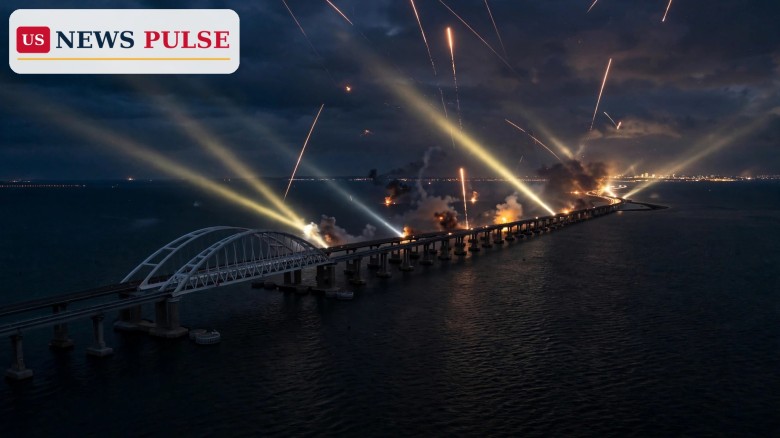
Ukraine launched its biggest overnight drone attack on Russia since the full-scale war began in 2022, striking the strategically vital Crimea bridge as Moscow reported the interception of 1,336 drones across 16 regions on Monday, November 16, 2026. The record barrage passed the previous high of 1,254 drones recorded on October 29, and it came as President Volodymyr Zelenskyy claimed Ukrainian strikes had disabled more than half of Russia's oil refining capacity.
Key Points
- Moscow said its air defences shot down 1,336 Ukrainian drones across 16 regions on Monday, November 16, 2026, the largest single-night total of the war, beating the October 29 record of 1,254.
- The 19-kilometre Crimea bridge over the Kerch Strait was struck. Sergei Aksyonov, the Russian-backed governor of Crimea, confirmed the attack, and the Kremlin called the damage minor.
- Road traffic across the bridge was suspended for repairs, while rail traffic continued as normal, Russian officials said.
- Moscow Mayor Sergei Sobyanin said about 600 drones headed toward the Moscow region, with 191 intercepted as they approached the capital.
- President Volodymyr Zelenskyy said late on Sunday, November 15, that Ukrainian strikes had disabled more than 55 percent of Russia's oil refining capacity, a claim Reuters could not independently verify.
What Happened
The attack unfolded overnight into Monday, November 16, 2026, when waves of Ukrainian drones crossed into Russian airspace in what Moscow described as the largest single-night drone assault since the full-scale invasion began in February 2022. Russia's Defence Ministry said its air defences brought down 1,336 drones across 16 regions, a figure that would dwarf every previous night of the war.
The most sensitive target was the Crimea bridge, the 19-kilometre road-and-rail link over the Kerch Strait connecting Crimea with Russia's Krasnodar region. Aksyonov confirmed the strike, and officials said road traffic was halted while repair crews assessed the damage, though rail traffic kept running. The Kremlin called the damage minor, but the closure showed the strike had disrupted one of Russia's most heavily defended pieces of infrastructure.
Background and Context
The Crimea bridge is far more than a transport link. Opened in 2018, it is the longest bridge in Europe and the main road-and-rail artery between Russia and Crimea, which Moscow seized from Ukraine in 2014. It carries military supplies to Russian forces in Crimea and southern Ukraine, and it has long been one of the most potent symbols of Russian control over the peninsula.
The bridge has been hit before, including a truck explosion in October 2022 that badly damaged the road deck and sea-drone strikes in July 2023 that closed the crossing for months. Monday's strike shows the bridge remains within Ukraine's reach, and it fits a pattern building since the summer of 2026: Ukrainian drone attacks on Russian territory have grown steadily in scale and frequency, with targets widening to refineries, airfields and ammunition depots. The previous record, 1,254 drones on October 29, stood barely two weeks. Read our report on President Volodymyr Zelenskyy urging the US and Elon Musk to lift Starshield curbs as Ukrainian drones lose their link.
Ukraine Drone Attack on Crimea Bridge Tests Russia's Defences
The attack posed a severe test for Russia's air defences. Shooting down 1,336 drones in one night, if the Russian figures are taken at face value, would be an enormous defensive effort, and Moscow has not said how many drones got through. The figures are Russia's own claims and have not been independently verified. What is clear is that the attack forced Russian defences to engage across 16 regions at once.
The bridge strike matters because of what the bridge carries. Every tonne of fuel, ammunition and equipment that crosses it supports Russian forces in Crimea and the occupied south. Even a short closure forces Moscow to reroute supplies over land through territory within range of Ukrainian strikes. The refinery campaign adds another layer: Zelenskyy said Ukrainian strikes had disabled more than 55 percent of Russia's oil refining capacity, a claim Reuters could not independently verify.
Reactions and Quotes
Aksyonov confirmed the bridge strike, while the Kremlin described the damage as minor and said repair work was under way. The emphasis from Moscow was on control: road traffic suspended only temporarily, rail traffic unaffected, defences working as intended. It was the standard official response to an attack on a prestige target.
Sobyanin gave the most detailed official account, saying about 600 drones had been headed toward the Moscow region and 191 were intercepted near the capital. Zelenskyy, speaking late on Sunday before the full scale of the barrage was known, framed the campaign in terms of its effect on Russia's war machine, presenting the long-range drone campaign as a strategic weapon. Read our report on Saudi Arabia intercepting Houthi drones targeting Mecca and Medina.
Why It Matters
The record barrage matters for three reasons. First, it shows the direction of the drone war: Ukraine can now mount attacks of a scale unimaginable a year ago, forcing Russia to spend heavily on air defence across its entire western territory. Second, the bridge strike shows no Russian target is safe; each closure, however brief, disrupts the logistics sustaining Moscow's forces in the south. Third, the campaign targets Russia's ability to keep fighting. Refineries, fuel depots and supply lines are the connective tissue of a mechanised war, and Ukraine has made them its priority.
What Happens Next
The immediate question is how quickly the bridge's road deck is repaired. Russian officials have not given a timetable, and past repairs have taken weeks or months depending on the damage. Rail traffic is continuing, which limits the disruption, but any extended closure would force Moscow to rely more on land routes through occupied southern Ukraine.
The wider question is whether Ukraine can repeat an attack of this scale. A barrage of 1,336 drones requires enormous stockpiles and coordination, and Kyiv will want to show Monday was not a one-off. The pattern since the summer suggests it was not: each record has been followed by a larger one.
Frequently Asked Questions
How many drones did Russia say it shot down? Moscow said its air defences brought down 1,336 Ukrainian drones across 16 regions on Monday, November 16, 2026, the largest single-night total of the war.
Was the Crimea bridge damaged? The bridge was struck, and the Russian-backed governor of Crimea confirmed the attack. The Kremlin described the damage as minor, and road traffic was suspended for repairs.
How many drones were headed for Moscow? Moscow Mayor Sergei Sobyanin said about 600 drones were headed toward the Moscow region, with 191 intercepted as they approached the capital.
What did Zelenskyy claim about Russian oil refineries? President Volodymyr Zelenskyy said late on Sunday, November 15, that Ukrainian strikes had disabled more than 55 percent of Russia's oil refining capacity. Reuters could not independently verify the claim.
Why is the Crimea bridge so important? The 19-kilometre road-and-rail bridge over the Kerch Strait is the main link between Russia and Crimea, carrying military supplies to Russian forces in the south.

The US News Pulse newsroom covers breaking news across the United States and the world, working from wire services, official statements and on-the-record sources. Every story is reviewed against our editorial standards before publication. Corrections and tips: info@usnewspulse.com
About our newsroomLeave a Comment