


 | Today's Date:

Trump Asks Supreme Court to Curb APA Nationwide Rulings on Agency Rules
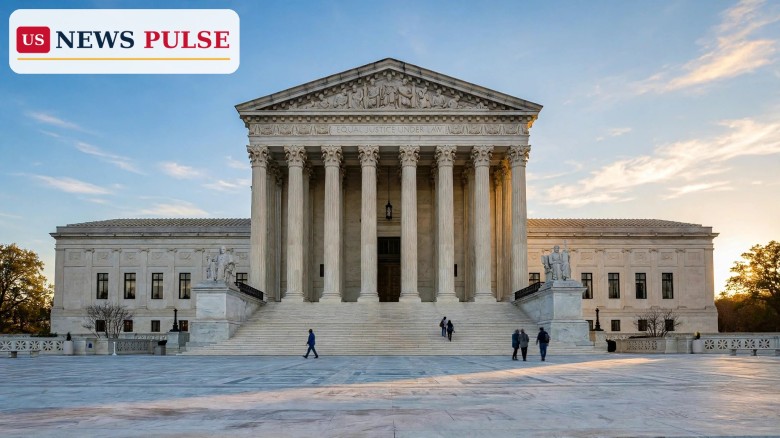
President Donald Trump's Justice Department has asked the Supreme Court to strip federal judges of a powerful tool against the executive branch: the ability to throw out a federal agency's regulation for the whole country under the 1946 Administrative Procedure Act. The pending appeal argues a court that finds a rule unlawful should block it only for the people who sued — not wipe it off the books nationwide.
Key Points
- The Justice Department asks the Supreme Court to curb judges' power under the Administrative Procedure Act (APA) to "hold unlawful and set aside" rules nationwide.
- The administration says courts should only block a rule against the specific plaintiffs who sued, not shut it down entirely.
- The case comes from Texas medical providers challenging federal rules under the surprise-billing law Trump signed in his first term.
- The 5th Circuit voided parts of the rule nationwide in August 2026; the administration accepts that finding and challenges only the remedy's scope.
- The justices are expected to decide early next year whether to take it up.
What Happened
An appeal filed by Trump's Justice Department, now pending before the Supreme Court, urges the justices to curtail judges' longstanding ability to halt the actions of federal agencies carrying out the president's priorities. Courts, the administration says, should not shut down a regulation entirely, but limit relief to the specific plaintiffs who sued.
The move is the latest step in the administration's push to make it harder for the judiciary to impede executive action. Since Trump returned to office in January 2025, his administration has faced hundreds of lawsuits challenging its moves on immigration, deportation, diversity initiatives and transgender rights.
The appeal targets a tool the Supreme Court's June 2025 ruling on nationwide injunctions left untouched. If the justices agree, it could further shield his agenda from broad legal attacks. Read our report on the Supreme Court deciding the fate of Trump's asylum ban at the US-Mexico border. The administration contends, as it did against universal injunctions, that the APA does not grant courts such authority. "The Supreme Court should return the lower courts to their proper role under the APA," the Justice Department said in its filing.
Background and Context
The lawsuits targeted by the administration are brought under a 1946 US law, the Administrative Procedure Act, which governs how federal agencies operate. Judges and appeals courts have long claimed the power under it to "hold unlawful and set aside" regulations they deem illegal, invalidating them universally.
At the administration's behest, the Supreme Court in June 2025 clamped down on nationwide — or "universal" — injunctions that can block the government from enforcing a policy against anyone, not just the challengers who sued. That ruling came in litigation over Trump's bid to limit birthright citizenship and addressed judicial power, not the directive's legality. The 2025 ruling was a major victory for Trump, though the Biden administration had also sought limits on universal injunctions. Read our report on the Supreme Court rejecting Trump's bid to set aside California ballots before the midterms.
The Supreme Court APA Case: Why the Surprise-Billing Rule Is the Vehicle
The new appeal arises from a challenge by Texas medical providers to federal rules implementing a statute Trump signed during his first term to limit unexpected medical bills. The regulation sought to constrain "surprise" bills from hospitals and health providers outside a patient's insurance network. A Texas association of doctors, air-ambulance providers and other plaintiffs argued it violated the APA and deflated their insurance reimbursement rates.
The New Orleans-based 5th US Circuit Court of Appeals voided parts of the rule nationwide in August 2026 on APA grounds. The administration accepts that finding. It seeks only to stop courts using the APA to halt a policy nationwide — a narrow question that lets the justices decide the remedy without revisiting the billing rule.
Reactions and Quotes
Aditya Bamzai, a University of Virginia expert in administrative law, said a win for Trump could let the government keep enforcing rules broadly on all but the plaintiffs, potentially for years, even after judges deemed them unlawful. Siding with Trump "would give more flexibility to the executive branch," Bamzai said, adding: "Whether you like or dislike that flexibility can perhaps depend on whether you like or dislike a particular administration's policies."
Ronald Levin, a law professor at Washington University in St. Louis, warned it would slow the removal of unlawful rules. "When an agency adopts a rule that has been held to be unlawful, sometimes the only sensible solution is to wipe it off the books," Levin said. "You can't have a food-safety rule that applies only to some. You can't have an auto-safety manufacturing rule that applies only to some manufacturers," he said. "It's a tool they (judges) should have — not one they should use in every case."
Levin added that if the court agrees, "it would take longer for challengers to get unlawful regulations removed from the books." Texas, Florida and other Republican-led states urged the 5th Circuit not to "neuter" the APA. "The APA is a critical tool ... to curb federal overreach and incursions into state sovereignty by executive-branch agencies," they said.
Why It Matters
If the Supreme Court sides with the administration, a rule a judge has found unlawful could keep applying to nearly everyone it touches while challengers fight through years of litigation, case by case. Many federal rules only make sense if they apply to everyone at once: a food-safety standard or an auto-safety requirement cannot easily apply to some companies and not others. A plaintiff-only remedy would create a patchwork in which the law means one thing for those who sued and another for everyone else. For the administration, the stakes are the durability of its agenda.
What Happens Next
The Supreme Court is expected to consider whether to take up the case early next year. If the justices grant review, briefing and argument would follow in 2027, with a decision likely by the end of that term. Until then, the 5th Circuit's decision voiding parts of the surprise-billing rule stands. If the case is granted, expect friend-of-the-court briefs from state attorneys general, business groups, medical providers and civil-liberties organisations. It will also be watched alongside the court's review of the asylum ban at the southern border.
Frequently Asked Questions
What is the Administrative Procedure Act? A 1946 law governing how federal agencies make regulations. Judges have long held it lets them "hold unlawful and set aside" a rule they find illegal.
What is the Trump administration asking the Supreme Court to do? To rule that a court which finds a rule unlawful under the APA may only block it against the plaintiffs who sued, rather than voiding it nationwide.
What case is behind the appeal? Texas medical providers challenged federal surprise-billing rules under the APA; the 5th Circuit voided parts of the rule nationwide in August 2026.
How is this different from the 2025 universal-injunction ruling? That ruling restricted nationwide injunctions, which block enforcement. This appeal targets a separate power it left untouched: a judge's ability under the APA to "set aside" a regulation entirely.
Leave a Comment