


 | Today's Date:




CVS Says GLP-1 Weight-Loss Drugs Pay for Themselves Below $350 a Month
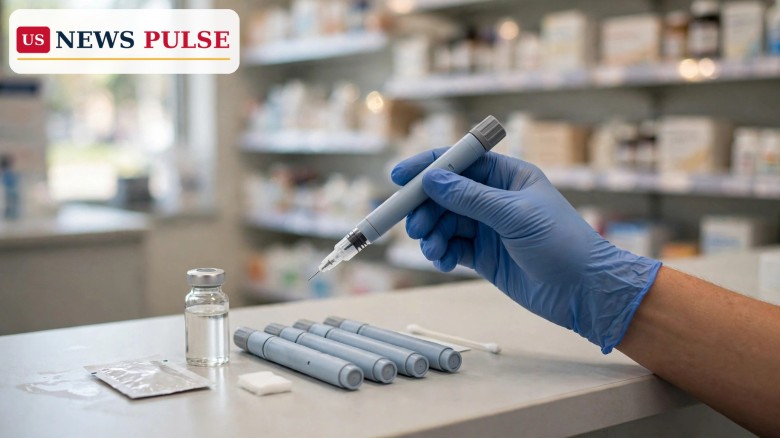
CVS Health said on Friday that GLP-1 weight-loss drugs could pay for themselves if priced below $350 a month, because savings on hospital stays and emergency-room visits would cover the cost of the medicines. The finding, from an analysis of insurance claims at CVS's Aetna unit, puts a hard number on one of the biggest arguments in American health care: whether the wildly popular weight-loss drugs are worth what employers and insurers pay for them.
At today's prices the drugs still add to overall spending, CVS said, but the gap is not as wide as many employers assume, and a modest price cut would turn them from a cost into a saving. With millions of Americans taking medicines such as Zepbound, Wegovy, Ozempic and Mounjaro, the $350 figure could become a key reference point in the price negotiations that will decide who gets the drugs and at what price.
Key Points
- CVS says employers and health plan sponsors could break even on GLP-1 drugs if they cost less than $350 a month.
- GLP-1 use was linked to 10 to 12 percent fewer emergency-room visits in the first and second years of treatment.
- Among patients still taking the drugs after three years, hospitalisations fell by 34 to 42 percent.
- Over three years, plans saved $9,400 per person on medical bills but spent $13,300 more on prescriptions, a net added cost of $3,900 per person.
- Cash-pay prices for Zepbound and Wegovy are about $299 and $349 a month, while employers and plan sponsors pay $617 to $766 a month.
What Happened
CVS Health released the findings on Friday, November 14, 2026, in a report based on claims data from Aetna, the health insurance business it owns. The analysis compared patients who had newly started taking GLP-1 medicines from Eli Lilly and Novo Nordisk with similar patients who were not taking the drugs, following them for up to three years. Patients in the study started the medicines between 2023 and 2025. The drugs covered were Mounjaro and Ozempic, prescribed for type 2 diabetes, and Zepbound and Wegovy, prescribed for obesity. All four belong to the GLP-1 class, which works by mimicking a gut hormone that reduces appetite and slows digestion.
The headline result was the break-even price. CVS said that if GLP-1 drugs cost less than $350 a month, the medical savings they generate would be enough to offset what plans spend on the prescriptions. Over three years, plan sponsors saved $9,400 per person on medical care but spent $13,300 more on the drugs themselves, leaving a net added cost of $3,900 per person at current prices.
The study also put numbers on the health gains behind those savings. In the first year of treatment, covering about 60,000 people, emergency-room visits were 10 to 12 percent lower among GLP-1 users than among comparable patients who did not take the drugs. The same reduction held in the second year, covering about 20,000 people. Among the roughly 4,000 people who were still taking the drug after three years, hospitalisations fell by 34 to 42 percent.
Background and Context
The GLP-1 boom has transformed both medicine and the economics of American health care. Drugs developed for diabetes turned out to produce large, sustained weight loss, demand exploded, and analysts now expect the global market for GLP-1 medicines to reach well over $100 billion a year. The drugs have become central to the earnings of Eli Lilly and Novo Nordisk, the two companies that dominate the market.
But the drugs are expensive, and that has made them a flashpoint. Many employers and insurers have limited coverage, required prior authorisation, or dropped coverage altogether, because the monthly cost multiplied across a large workforce runs into millions of dollars. Patients and doctors argue the drugs prevent heart attacks, strokes and diabetes complications, and that refusing to pay for them is a false economy. The CVS analysis is notable because it rests on real claims data from a large insurer rather than modelling: Aetna is one of the largest health insurers in the United States, and CVS also runs the CVS Caremark pharmacy benefit manager and thousands of CVS pharmacies, giving it a wide view of both drug spending and medical spending.
GLP-1 Drugs and the $350 Break-Even Point
The $350-a-month threshold is the most consequential number in the CVS analysis, because it turns an abstract debate about value into a concrete negotiating target. The arithmetic is straightforward. Over three years, each patient taking a GLP-1 drug cost their plan $13,300 more in prescriptions than a comparable patient who did not take one, but generated $9,400 less in medical bills, largely through fewer emergency-room visits and hospital stays. The gap is $3,900, and because the prescription cost is so much larger than the medical saving, cutting the drug price by roughly a third would be enough to erase it.
That matters because $350 a month is not a fantasy number. It is close to what the manufacturers already charge cash-pay customers: Zepbound costs about $299 a month and Wegovy about $349. The US government has also negotiated a lower price, agreeing last year to pay $245 a month for injectable GLP-1 weight-loss drugs in an 18-month Medicare pilot programme. If the government can pay $245 and cash customers can pay $299, the CVS analysis implies, there is no reason employers should have to pay $617 to $766 a month, the range found by a 2025 Employee Benefit Research Institute study.
The study has limits that CVS itself acknowledges. It is an analysis of insurance claims, not a randomised trial, so it cannot prove the drugs caused the lower rates of emergency visits and hospitalisations. Patients who start GLP-1 drugs may differ from those who do not in ways claims data cannot fully capture. And the three-year results rest on a much smaller group, about 4,000 people, than the first-year results, because many patients stop taking the drugs within a year or two.
Reactions and Quotes
Dr Amy Compton-Phillips, the chief medical officer of CVS Health, said the manufacturers' own direct-to-consumer prices show they can still make money at lower prices. She pointed to the cash-pay prices of about $299 and $349 a month as evidence that the drugs can be sold profitably below the $350 threshold, and argued that the prices charged to employers and plan sponsors do not reflect what the drugs need to cost.
The finding is likely to sharpen the debate over who should pay for GLP-1 drugs and how much. Employers have been among the loudest critics of current prices, insurers have argued they need lower prices before they can broaden coverage, and drugmakers have responded that list prices are not what most payers actually pay after rebates. CVS will present the full findings on Sunday, November 15, at the HLTH USA conference in Las Vegas, where employers, insurers and the drug industry will be watching closely.
Why It Matters
The stakes go well beyond one company's analysis. Tens of millions of Americans are eligible for GLP-1 drugs, and the question of who pays for them, and at what price, will shape the cost of health care in the United States for years. If prices fall to the level CVS says would break even, coverage could expand sharply, giving many more people access to drugs that cut the risk of heart disease, diabetes and other serious conditions.
For employers, the study offers a framework for deciding whether to cover the drugs, and a concrete number to negotiate around. For patients, it is a reminder that the price they see is not the only price that matters: a drug that looks expensive on a pharmacy bill may save money elsewhere in the health system by keeping people out of hospital. But at current prices, the CVS data shows, those savings are not yet enough, and the gap falls on the people who pay for health coverage: employers, taxpayers and, ultimately, workers themselves.
What Happens Next
The immediate next step is the presentation at the HLTH USA conference in Las Vegas on Sunday, November 15, where CVS will lay out the full analysis. Health care executives, employers and investors will be watching for details on how the savings were calculated and whether the results hold up across different patient groups.
Longer term, the $350 figure is likely to feature in price negotiations between drugmakers and the large pharmacy benefit managers, including CVS Caremark itself, which negotiates drug prices for employers and insurers. It may also feed into the debate over Medicare coverage: the government's pilot programme, which pays $245 a month for injectable GLP-1 weight-loss drugs, runs for 18 months, and its results could influence whether Medicare covers the drugs more broadly. Newer GLP-1 drugs, including oral versions that come as pills rather than weekly injections, are also entering the market, and competition could push prices down on its own.
Frequently Asked Questions
What did CVS say about GLP-1 drug prices?
CVS Health said employers and health plan sponsors could break even on GLP-1 drugs if they were priced below $350 a month, because lower spending on hospitalisations and emergency-room visits would offset the cost of the prescriptions.
How much do GLP-1 drugs cost now?
Zepbound and Wegovy cost about $299 and $349 a month for cash-pay customers, while employers and plan sponsors pay $617 to $766 a month, according to a 2025 Employee Benefit Research Institute study.
What health benefits did the study find?
GLP-1 use was linked to 10 to 12 percent fewer emergency-room visits in the first and second years, and among patients still taking the drugs after three years, hospitalisations fell by 34 to 42 percent.
Which drugs were covered in the CVS analysis?
The study covered GLP-1 medicines from Eli Lilly and Novo Nordisk: Mounjaro and Ozempic for diabetes, and Zepbound and Wegovy for obesity.
What is the Medicare pilot price for GLP-1 drugs?
The US government agreed last year to pay $245 a month for injectable GLP-1 weight-loss drugs in an 18-month Medicare pilot programme.
Related coverage: the US Food and Drug Administration has ordered Ozempic, Wegovy, Mounjaro and Zepbound to carry a warning about vision-loss risk; Novo Nordisk has raised its 2026 outlook as Wegovy pill sales hit $810 million; and CVS Health itself is splitting into two companies in 2028.
Leave a Comment