


 | Today's Date:



Colorado Firefighter Deaths Blamed on Understaffing, Failed Radios and Aggressive Fire Policy
A federal investigation has blamed chronic understaffing, failing radios and an aggressive fire-suppression policy for the Colorado firefighter deaths that killed four members of a Rifle Helitack crew in western Colorado on June 27, 2026. The U.S. Department of the Interior released the findings on Thursday, November 12, concluding that no single mistake caused the tragedy — more than 20 separate problems piled up until a fast-moving wildfire overran the crew in a remote canyon. Three firefighters died at the scene, a fourth died of his burns on July 24, and a fifth was injured.
Key Points
- The Interior Department released its Serious Accident Investigation into the June 27, 2026 Knowles Fire burnover on Thursday, November 12, 2026.
- Four federal wildland firefighters died — Emily Barker, Nick Hutcherson and Sydney Watson at the scene, and Nathan Matthews on July 24 — and a fifth was injured.
- The Snyder Fire travelled more than seven miles in under three hours, forcing the Rifle Helitack crew to deploy emergency fire shelters.
- Investigators found more than 20 problems, including chronic understaffing, a crashing radio system and no air-attack cover for two hours.
- The report recommends filling vacant posts, consolidating dispatch and improving trigger-point guidance.
What Happened
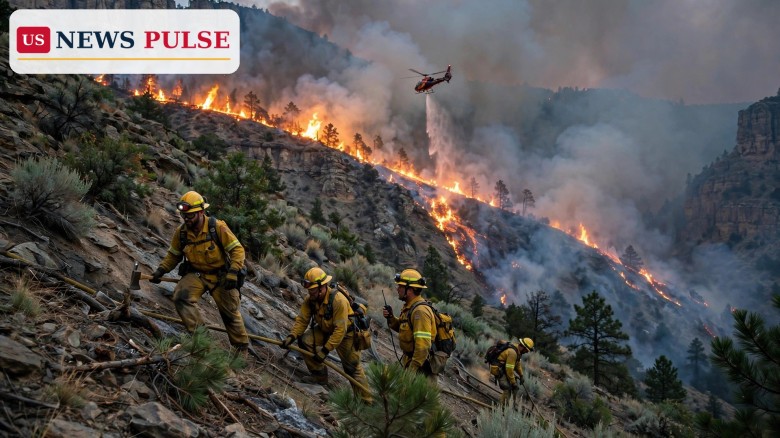
The Rifle Helitack crew was working initial attack on the Knowles and Gore fires in Mesa County's Black Ridge Canyon Wilderness on the morning of June 27, 2026, when the larger Snyder Fire surged across canyon and mesa terrain at a speed and scale not previously seen in the area.
The fire covered more than seven miles in under three hours and cut off the crew's escape routes. The firefighters deployed their emergency fire shelters — the last-resort shields they carry for exactly this situation. Barker, Hutcherson and Watson were killed at the scene; Matthews died of severe burns on July 24, and a fifth crew member survived with burn injuries.
The joint U.S. Wildland Fire Service and U.S. Forest Service investigation calls the incident a burnover — a fire running over a crew's position — and blames the cumulative interaction of extraordinary fire behaviour, strained communications, incomplete situational awareness and gaps in aerial supervision.
Background and Context
The crew belonged to the Rifle Helitack unit, a helicopter-based team that flies into remote fires to attack them while they are still small. Helitack crews are among the most exposed firefighters in the country, working in steep, roadless country where escape is slow and help is far away — and the Black Ridge Canyon Wilderness is exactly that kind of terrain.
Federal fire managers had revived an aggressive approach to new fires: hit them hard and early, while still small, to stop cheatgrass — an invasive grass that fuels fast fires — protect sage-grouse habitat and shield a downwind community. Investigators found that drive shaped the June 27 decisions, pushing crews into difficult ground against a fire already behaving in extreme ways.
Colorado Firefighter Deaths: What the Investigation Found
The report lists more than 20 problems that combined on June 27. Chronic understaffing and dispatch vacancies left the operation short-handed, the dispatch centre relied largely on trainees, and the ageing mobile radio system's software crashed during the incident.
There was also a two-hour gap in the air. From 2:30 p.m. to 4:30 p.m., while the crew was being overrun, there was no air-attack coverage — no aircraft to watch the fire, direct water drops or warn firefighters on the ground. In a canyon, where fire cannot be seen until it is close, that loss of eyes in the sky was critical.
Investigators stressed the fire's behaviour alone was extraordinary, and the crew's awareness never caught up. The report blames no single person — it describes a system under strain, with too few people, unreliable radios and no margin for error.
Reactions and Quotes
Interior Secretary Doug Burgum released the report with a message to the families of the four dead firefighters. "Every day, wildland firefighters answer the call to serve and protect their fellow Americans, and their safety will always be our highest priority," Burgum said. "It is our duty to always remember their service and sacrifice."
Burgum said the department would apply the report's lessons in the firefighters' honour, "in the service of protecting all those who follow."
Deputy Secretary Kate MacGregor said the four "were out there for the people of western Colorado," adding: "We honor them by better understanding the circumstances of this fire."
U.S. Wildland Fire Service Chief Brian Fennessy said investigators followed the facts wherever they led, and that the report "provides insights into the contributing factors that can help improve the safety of firefighters across the wildland fire community."
Why It Matters
The Knowles Fire report is more than a record of one bad day — a warning about America's wildland firefighting system as fires grow bigger, faster and more frequent. If dispatch centres are staffed mainly by trainees, radios crash mid-incident, and crews go two hours without air cover, the margin between a close call and a fatality is dangerously thin.
The findings also put the aggressive-suppression policy under scrutiny. Attacking every new fire hard sounds sensible, but it can push crews into exposed positions against fires already beyond control — and fire managers must now ask when the push to keep a fire small puts its fighters at unacceptable risk.
What Happens Next
The report makes three main recommendations: fill the vacant firefighting and dispatch posts, consolidate dispatch across jurisdictions, and improve trigger-point guidance — the clear, pre-agreed signals that tell a crew when conditions have become too dangerous and it is time to leave.
The Interior Department said the lessons will help improve firefighter safety and carry the fallen firefighters' legacy forward, but has not said when the changes will be in place. The Snyder Fire burned into July, and the findings will now shape how federal crews are staffed, equipped and deployed.
Frequently Asked Questions
Who were the four firefighters who died?
Emily Barker, Nick Hutcherson and Sydney Watson died at the scene on June 27, 2026; Nathan Matthews died of burns on July 24. A fifth firefighter survived.
What happened on June 27, 2026?
The Snyder Fire surged more than seven miles in under three hours and overran the crew in Black Ridge Canyon Wilderness. They deployed fire shelters; four did not survive.
What did the investigation blame?
Extraordinary fire behaviour, chronic understaffing, dispatch vacancies, a crashing radio system and no air cover from 2:30 to 4:30 p.m. — over 20 problems in all.
What is an emergency fire shelter?
A lightweight tent-like shield carried as a last resort. Firefighters shelter inside as fire passes over. It protects, but cannot guarantee survival in extreme conditions.
What changes will the report bring?
Fill vacant posts, consolidate dispatch across jurisdictions, and improve trigger-point guidance on when to withdraw. The Interior Department says the lessons will guide future safety work.
Read more on US News Pulse: Southwest flooding turns deadly as 2 die in Flagstaff and Arizona declares emergency; Yosemite helicopter crash: NTSB details final water drop that killed two pilots; and US homelessness falls to 698,425 in largest drop in over a decade, HUD says.
Leave a Comment