


 | Today's Date:




Abu Dhabi Peace Talks End Without Ceasefire Deal as Envoys Head to Moscow
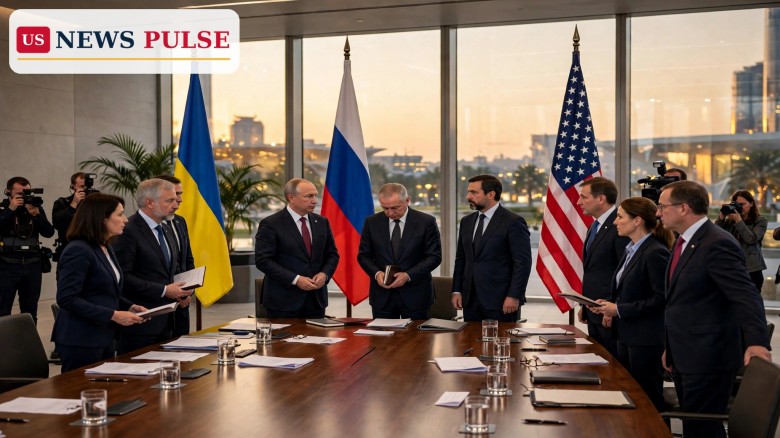
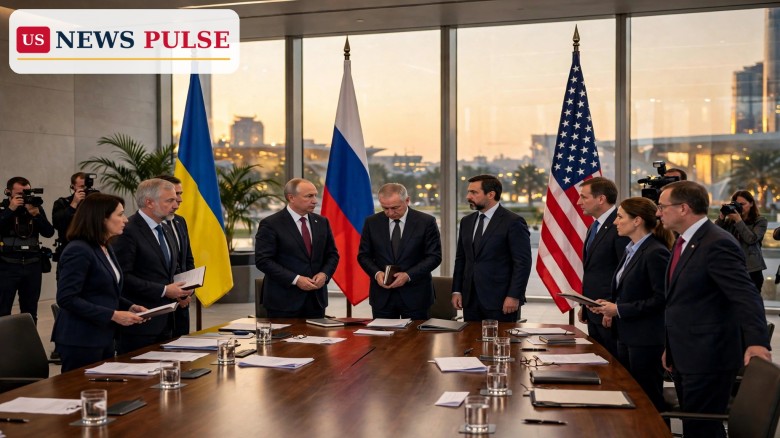
The Abu Dhabi peace talks ended on Wednesday, November 11, 2026, without a clear breakthrough toward a ceasefire in the Ukraine war, but the American mediators left with a new mission: Jared Kushner and Steve Witkoff will fly to Moscow on Thursday to put the day’s discussions directly to Russian President Vladimir Putin. The two-day meeting was the first trilateral gathering of Ukrainian, Russian and American negotiators in nine months, and it produced one concrete result — an agreement on what Kushner called the “biggest humanitarian release of prisoners” of the war.
Key Points
- The two-day US-mediated trilateral talks in Abu Dhabi ended Wednesday, November 11, 2026, without a clear breakthrough toward a ceasefire.
- US envoy Jared Kushner said he and special envoy Steve Witkoff will travel to Moscow on Thursday, November 12, to meet President Vladimir Putin, then fly to Dublin to debrief President Volodymyr Zelenskyy.
- The one concrete outcome was an agreement on the “biggest humanitarian release of prisoners” of the war, confirmed by Kushner, Russian delegation head Vladimir Medinsky and Ukrainian negotiator Rustem Umerov, with exact numbers to be finalised on Thursday.
- The second day lasted about two hours, followed by a separate meeting between Ukrainian, European and US representatives.
- Despite the talks, Russia struck six large electricity substations in four central Ukrainian regions on Wednesday, according to Prime Minister Sergii Koretskyi.
What Happened
The delegations returned to the table on Wednesday morning for the second and final day of a round that had opened on Tuesday with cautious optimism. The first day had produced the prisoner-exchange agreement and a sense that the gaps between the sides had narrowed. The second day tested whether that momentum could reach the harder questions. It could not.
After roughly two hours, the formal session closed. Kushner briefed reporters in Abu Dhabi, saying he and Witkoff would travel to Moscow on Thursday “to go over what was discussed today and to try to make more progress”, then fly on to Dublin to debrief Zelenskyy. A separate meeting followed between Ukrainian, European and US representatives, a sign Kyiv’s allies are being kept close even as Moscow resists a formal European role. No details were released. Secretary of State Marco Rubio called the meeting “very productive” but cautioned a breakthrough will take time.
Background
The Abu Dhabi round was the fourth round of direct negotiations between Ukraine and Russia, and the first trilateral meeting since a failed round in Geneva in February 2026. The nine-month gap was filled by fighting, not diplomacy: Russia pounded Ukraine’s power grid in the days before the delegations arrived, and the war, now in its fourth year, has continued at full intensity through every previous round.
The American team was led by Witkoff and Kushner, President Donald Trump’s son-in-law and a central figure in the administration’s diplomacy. Ukraine’s delegation was headed by Rustem Umerov, with Kyrylo Budanov and Davyd Arakhamia; Russia’s by veteran negotiator Vladimir Medinsky. President Zelenskyy had called the first day “constructive and quite substantive” and said “the release of prisoners is a priority”. Prisoner exchanges have been the one area where the two sides have repeatedly agreed even while fighting continued: the last large exchange, in February 2026, freed 157 prisoners from each side.
Abu Dhabi Peace Talks: What Was Agreed — and What Was Not
What was agreed is narrow but real. All three sides confirmed the prisoner-exchange agreement: Kushner announced it, Medinsky confirmed it for Russia, and Umerov confirmed it for Ukraine. The exchange will be the largest humanitarian release of the war, with exact numbers to be finalised on Thursday, November 12 — the same day the American envoys are in Moscow. The International Committee of the Red Cross, which facilitated previous exchanges, is expected to oversee the handover.
What was not agreed is everything else. The sides still disagree on sequencing, the question that has blocked every round: Ukraine insists Russia must stop military operations before broader security talks can proceed, while Moscow resists that order and also resists European participation. Medinsky said mutual understanding had been reached “on some points” but not on others.
Reactions
Kushner’s tone was measured: progress had been made, more work was needed, and the next step was to take the discussion to Putin in person. His description of the prisoner agreement as the “biggest humanitarian release of prisoners” of the war was echoed by both other delegations, giving it unusual credibility.
Medinsky’s comment that understanding had been reached “on some points” was the Russian version of the same story: something moved, not everything. Rubio’s verdict — “very productive”, but a breakthrough will take time — set expectations for the Moscow trip: the envoys are going to test whether Putin will move, not to announce that he has.
Why It Matters
The round matters because it proves the channel between Kyiv and Moscow is still open after nine months without a trilateral meeting, and because it produced something tangible. A prisoner exchange does not end a war, but it is proof the two sides can still agree on something concrete. It also matters because of what it did not produce: the sequencing dispute — ceasefire first, or settlement first — is the same obstacle that has blocked every round, and the Moscow trip is an attempt to break it by going to the top.
What Happens Next
Thursday, November 12, is the next decisive day. Kushner and Witkoff will meet Putin in Moscow, carrying the results of two days in Abu Dhabi and testing whether the Russian president is prepared to move on any of the points where understanding was not reached. The same day, the final numbers for the prisoner exchange are to be settled, showing whether the round’s one agreement becomes a real swap with real names and a real date.
Frequently Asked Questions
Did the Abu Dhabi talks produce a ceasefire?
No. The two-day talks ended on Wednesday, November 11, 2026, without a clear breakthrough toward a ceasefire, though the sides agreed on a large prisoner exchange.
What did Ukraine and Russia agree in Abu Dhabi?
The “biggest humanitarian release of prisoners” of the war, confirmed by Kushner, Medinsky and Umerov. Exact numbers are to be finalised on Thursday, November 12.
Where are Kushner and Witkoff going next?
To Moscow on Thursday, November 12, to meet President Vladimir Putin, and then to Dublin to debrief President Volodymyr Zelenskyy.
Why did the talks not reach a ceasefire?
The sides disagree on sequencing: Ukraine insists Russia must stop military operations before broader security talks, while Moscow resists European participation and has not agreed to halt the fighting first.
Is there a date for a third round of talks?
No. No third round has been scheduled, and no joint statement was issued after the Abu Dhabi round closed.
Read more on the peace talks: Ukraine and Russia Agree Large-Scale Prisoner Exchange in Abu Dhabi Talks, Abu Dhabi Peace Talks End Day One With Gaps Narrowed but Donetsk Unresolved, Ukraine, Russia and US Open First Trilateral Peace Talks in Nine Months in Abu Dhabi.
Leave a Comment