


 | Today's Date:




El Salvador Troops Launch First Major Haiti Operation Against Gang Strongholds
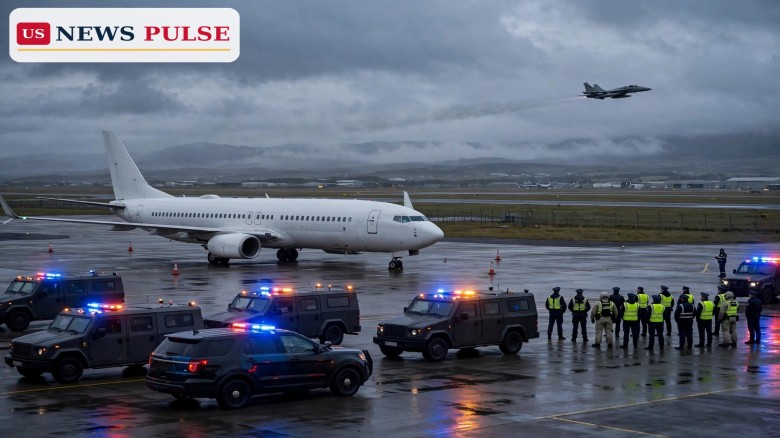
Salvadoran troops launched their first major operation in Haiti, moving into the gang-held Cul-de-Sac plain northeast of Port-au-Prince to take on the Chen Mechan and 400 Mawozo gangs, two of the country's most powerful groups. The operation, which began Monday, November 2, 2026, is the first time Bukele's forces have gone on the offensive beyond the capital since arriving.
More than 2,500 Salvadoran troops and special forces have been airlifted to Haiti, the Wall Street Journal reported on November 5, making them the largest contingent in the country after Haiti's national police. The operation follows the October 18 ambush of four Salvadoran military-aviation technicians, whose fate remains unknown, as gangs control roughly 90 percent of the capital.
Key Points
- Salvadoran troops launched their first major operation in Haiti on November 2, 2026, in the Cul-de-Sac plain northeast of Port-au-Prince.
- It targets the Chen Mechan and 400 Mawozo gangs, two of the capital's most powerful armed groups.
- More than 2,500 Salvadoran troops and special forces are now in Haiti, the largest armed contingent after the Haitian National Police.
- The trigger was the October 18 ambush in Croix-des-Bouquets that left four Salvadoran technicians missing; their burned truck was found November 3.
- Most Salvadoran troops operate under their own commanders under a bilateral pact with Haiti; several hundred serve in the multinational Gang Suppression Force.
What Happened
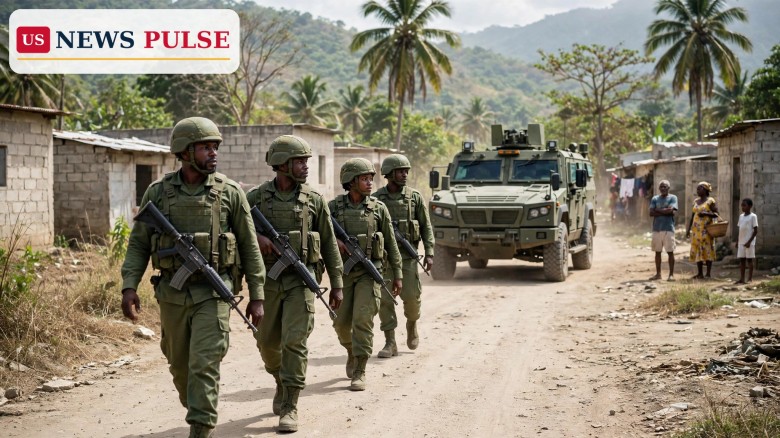
Salvadoran troops launched their first major operation in Haiti on Monday, November 2, 2026, in the Cul-de-Sac plain, a farming area northeast of Port-au-Prince held by the Chen Mechan and 400 Mawozo gangs, teleSUR reported November 3. It aims to weaken the gangs' grip northeast of the capital.
The deployment has grown rapidly, with the United States and Colombia providing logistical help ferrying troops and supplies into Haiti. Most Salvadoran troops operate under their own commanders through a bilateral agreement with Haiti's government, while several hundred have joined the multinational Gang Suppression Force, the UN-backed mission that has struggled to reach its planned strength. Bukele says El Salvador covers 90 percent of the deployment's costs, with the force capped at 2,500 for now.
Background: How El Salvador Got to Haiti
El Salvador's involvement began as a support mission and hardened into a combat role in less than two months. The first contingent arrived with the Gang Suppression Force to help Haiti's overwhelmed police fight the gangs that control most of the capital. Initially, the Salvadorans were described as pilots and technicians, not front-line fighters.
That changed on October 18, when an armored vehicle carrying four Salvadoran military-aviation technicians was ambushed and set on fire in Croix-des-Bouquets, outside Port-au-Prince. The four men — air force technicians returning to base from a market, according to Bukele — have not been seen since. The leader of the 400 Mawozo gang, Wilson Joseph, has denied holding them, while Bukele has said he believes they are alive and held hostage. No gang has claimed responsibility. The burned remains of the technicians' truck were found on Tuesday, November 3.
El Salvador's Haiti Operation: Bukele's Gamble Abroad
For Nayib Bukele, it is the biggest test yet of the security model that made him one of Latin America's most popular — and controversial — leaders. At home, his state of emergency and mass arrests crushed the MS-13 and Barrio 18 gangs and made El Salvador one of the region's safest countries. Abroad, where he has no political base, no shared language and no control over the courts and prisons behind his domestic crackdown, the same approach faces very different conditions. The plain's roads carry food, fuel and medicine into Port-au-Prince, and the gangs controlling them can strangle the capital at will. But the risks are clear: the gangs are estimated to field up to 15,000 armed combatants in the capital alone, and the October 18 ambush showed they can strike foreign troops and disappear.
Reactions
President Nayib Bukele has been the operation's most vocal champion. Warning gang leaders on Wednesday, November 4, he said his forces would "finish" them as he did in El Salvador, a message aimed as much at the gangs in Haiti as at his audience at home. Wilson Joseph, leader of the 400 Mawozo gang, denies holding the four missing technicians or responsibility for the ambush. Haitian police have said little publicly about the search for the four men. In Washington, the Trump administration has backed the Salvadoran role, seeing Bukele's forces as the force's most combat-ready element.
Why It Matters
It is the first time a foreign force in Haiti has gone on the offensive at this scale, rather than guarding installations or escorting convoys. If it loosens the gangs' grip on the roads northeast of the capital, it could reopen supply routes closed for months and give Haitian police room to reassert control in areas they abandoned. For the people of Port-au-Prince, the stakes are immediate: gangs control the roads that bring in fuel, medicine and food, and around 1.5 million Haitians have been displaced. It is also a test of a new model for international security missions. The UN peacekeeping approach in Haiti collapsed amid cholera and abuse scandals; the Gang Suppression Force was designed to be different: smaller, more willing to fight, and led by countries from the region. El Salvador's largely self-funded bilateral deployment is the most ambitious version of that model yet.
What Happens Next
The operation is expected to continue, with Salvadoran troops pressing Chen Mechan and 400 Mawozo positions northeast of the capital. How long it lasts, and whether it expands to other gang strongholds, will depend on what the troops encounter — and on whether the gangs fight, melt away, or strike back elsewhere. The fate of the four missing Salvadoran technicians remains the most urgent unresolved question: more than two weeks after the ambush, there is still no proof of life and no ransom demand. Bukele has capped the force at 2,500, but expansion or casualties could bring pressure to send more troops — or to pull back.
Frequently Asked Questions
What is the Salvadoran operation in Haiti?
The first major operation by Salvadoran troops in Haiti, launched on November 2, 2026, in the Cul-de-Sac plain against Chen Mechan and 400 Mawozo.
How many Salvadoran troops are in Haiti?
More than 2,500 troops and special forces, the Wall Street Journal reported on November 5 — the largest contingent in Haiti after the national police.
What happened to the four missing Salvadoran technicians?
Four Salvadoran aviation technicians went missing after their vehicle was ambushed and burned in Croix-des-Bouquets on October 18, 2026. No proof of life has emerged; their burned truck was found on November 3.
Who are the Chen Mechan and 400 Mawozo gangs?
Two of Haiti's most powerful armed groups, controlling territory and roads northeast of Port-au-Prince, the 400 Mawozo led by Wilson Joseph.
Why is El Salvador involved in Haiti?
El Salvador first sent personnel with the UN-backed Gang Suppression Force, then expanded its role after the October 18 ambush. Bukele says El Salvador covers 90 percent of costs.
Related coverage: El Salvador sent 1,000 soldiers to Haiti after four troops went missing and Haiti police found the burned truck of the four missing technicians.
Leave a Comment