

 | Today's Date:




Iran Warns It Will Not Wait for a US Strike First as Tehran Says War Continues
Iran will not wait for the United States to attack first, Tehran's deputy foreign minister warned on Sunday, in the bluntest signal yet that Tehran is prepared to strike pre-emptively if it believes another American attack is coming. Kazem Gharibabadi told Iranian state television that Washington may be using diplomacy to buy time to prepare a new attack, and said Iran was preparing for three scenarios at once: diplomacy, an economic blockade, or military aggression. His warning came on the same day the USS Theodore Roosevelt arrived in the Middle East, giving the United States three aircraft carriers in the region.
Key Points
- Deputy Foreign Minister Kazem Gharibabadi said on Sunday that Iran "will not wait for the US to attack first".
- He said Iran is preparing for diplomacy, blockade, or military aggression, and the Revolutionary Guards are producing missiles with "new ranges".
- Iran will not allow the International Atomic Energy Agency to inspect its nuclear facilities until the war is permanently ended.
- Gharibabadi said Iran remains in a state of war, rejecting the description "neither war nor peace".
- Iran has proposed a seven-day timeline for ending the war and reopening the Strait of Hormuz.
What Happened
Gharibabadi spoke to Iranian state television on Sunday, November 15, 2026, in an interview carried by the Fars news agency. He accused Washington of possibly using diplomacy to buy time to prepare another attack. "Iran is not Cuba that you can blockade, nor is it Venezuela that you can force to surrender," he said.
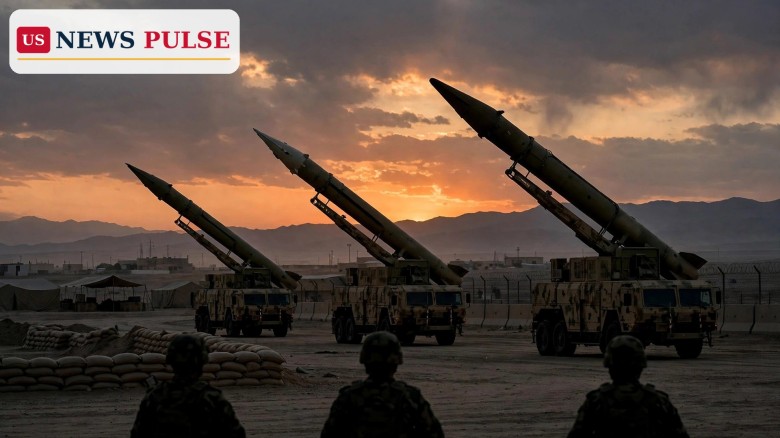
The deputy minister said the Revolutionary Guards are producing missiles with "new ranges", which would extend Iran's arsenal beyond the roughly 2,000-kilometre limit Tehran has observed for years. He gave no figures and no test evidence, and said the Guards will not allow the International Atomic Energy Agency to inspect Iran's nuclear facilities until the war is permanently ended, with the United States guaranteeing Tehran's conditions first.
Gharibabadi said Iran remains in a state of war, rejecting the description "neither war nor peace", and said Iran had proposed a seven-day timeline for ending the war and reopening the Strait of Hormuz. Parliamentary spokesman Hassan Qashqavi warned that any Iranian response would not be brief, even if the attack lasted only a few days.
The Guards also claimed a supertanker carrying more than two million barrels of crude sank after hitting a mine near the strait — unconfirmed by any outside source.
Background and Context
The warning lands in the ninth month of a war that began on February 28, 2026. In recent weeks the United States has struck Iran's Qeshm Island, and Iran has claimed drone attacks on American bases in the Gulf, including a radar base in Bahrain that Bahrain said its defences intercepted, as reported earlier. Oil prices jumped after the Qeshm strikes, as covered earlier.
Talks have continued through Qatari intermediaries in Doha. Vice President JD Vance said on November 2 that Washington had made "progress" and set "no strict deadline", while President Donald Trump said a deal was "coming together very nicely". Gharibabadi's warning suggests Tehran doubts that timetable.
The USS Theodore Roosevelt arrived in the Middle East on Sunday, joining two other American carriers, as reported earlier, three days before Trump meets Xi Jinping and Vladimir Putin in Shenzhen on November 19.
Iran Will Not Wait for a US Strike
The heart of the message is a change of posture. For most of the war, Iran has presented its strikes as retaliation. Saying Tehran "will not wait" flips that logic, claiming the right to fire first if it concludes an attack is being prepared — a doctrine of pre-emption that lowers the threshold for the next round, because Iranian perceptions, rather than an actual strike, become the trigger.
The missile claim fits the same message. Longer-range missiles would put more American bases, and more of Israel and the Gulf, within reach, though Gharibabadi gave no figures and no test evidence, so the claim may be as much signalling as hardware. Together with the blockade warning, it tells one story: Iran believes it can survive pressure and hit back harder than before.
The inspection refusal is the third leg. The Agency has been unable to inspect Iran's nuclear sites for months, and Gharibabadi tied any return of inspectors to a permanent end of the war, guaranteed by the United States — making inspectors a bargaining chip, not a technical question. It also means the world will have no independent account of Iran's nuclear programme while the war continues.
Reactions and Quotes
Qashqavi's warning was plainly coordinated with Gharibabadi's: one sets out the doctrine, the other the duration. Neither said when Iran would judge an attack imminent.
Washington has not responded publicly. The Roosevelt's arrival is a response in itself, with no announced timetable for strikes. The administration's line remains Vance's: talks have made progress, there is no strict deadline, and the United States retains military and non-military options. Gulf governments have spent the war pressing Washington for restraint; a pre-emptive Iranian doctrine makes their balancing act harder.
Why It Matters
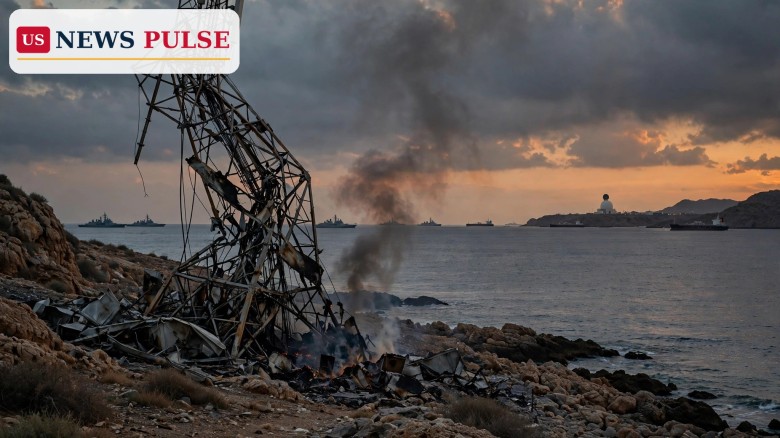
It matters first because of the strait. Gharibabadi linked his warning to a seven-day timeline for ending the war and reopening the Strait of Hormuz, the chokepoint for roughly a fifth of the world's seaborne oil. The strait has been the war's economic front since April, when the United States imposed a naval blockade. A pre-emptive strike, or even a credible threat of one, puts that trade at risk again.
It matters second because three American carriers are now in range of Iranian missiles that Tehran says reach further than before: the more firepower both sides mass in the Gulf, the more a single miscalculation can do. Third, the nuclear question is now openly tied to the war's end: while inspectors are kept out, neither side can verify what the other has done.
What Happens Next
The next test comes in days. Trump meets Xi and Putin in Shenzhen on November 19, and the war will be on the agenda. Mediators in Doha are still carrying messages, and the seven-day timeline will be measured against what they produce. Watch for the Roosevelt strike group's movements, for any Iranian missile test backing up the "new ranges" claim, and for whether the supertanker claim is confirmed or quietly dropped. If none appear, the warning may be pressure, not preparation.
Frequently Asked Questions
What did Iran's deputy foreign minister actually say?
Kazem Gharibabadi said on Iranian state television on Sunday that Tehran "will not wait for the US to attack first".
Is Iran threatening a pre-emptive strike?
That is the plain reading, though he did not say when Iran would judge an attack to be imminent.
What are the "new ranges" for Iranian missiles?
He gave no figures and no test evidence, so the claim is unverified.
Why won't Iran let nuclear inspectors in?
He said the Guards will not allow Agency inspections until Tehran's conditions are met and the war is permanently ended.
Did a supertanker really sink near the Strait of Hormuz?
The Guards claimed one sank after hitting a mine, but no outside source has confirmed it.

The US News Pulse newsroom covers breaking news across the United States and the world, working from wire services, official statements and on-the-record sources. Every story is reviewed against our editorial standards before publication. Corrections and tips: info@usnewspulse.com
About our newsroomLeave a Comment