

 | Today's Date:




Mrima Hill Critical Minerals: Kenya Picks US Consortium for Huge Deposit
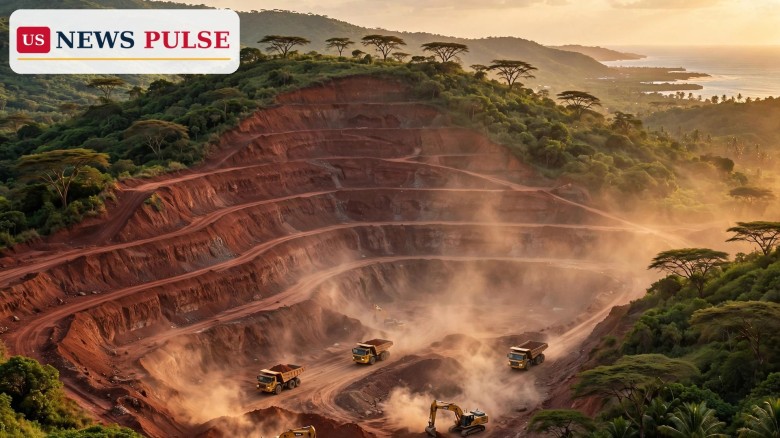
Kenya has handed a United States-led consortium the rights to develop one of Africa's most promising critical minerals deposits, choosing American firms over Chinese rivals in a decision that reaches far beyond the mine itself. The Frontier Minerals Consortium will develop the Mrima Hill deposit in Kwale County, southeastern Kenya, a site believed to hold tens of billions of dollars' worth of rare earth elements and niobium. Announced on Thursday, November 19, 2026, the award is a clear win for Washington in the race for the minerals behind fighter jets, electric vehicles and wind turbines.
Key Points
- Kenya awarded the Mrima Hill tender to the Frontier Minerals Consortium on Thursday, November 19, 2026.
- The Kwale County deposit holds niobium and rare earth elements, with preliminary assessments suggesting tens of billions of dollars in value.
- The consortium brings together Frontier Minerals LLC, Bunker Hill Mining Corp, ReElement Technologies of Indiana and American Resources Corporation.
- Seven bidders were shortlisted in July, including two Chinese firms that later withdrew; two losing bidders plan legal challenges.
- China refines 47% to 87% of the world's copper, lithium, cobalt, graphite and rare earths, according to the International Energy Agency.
What Happened
Kenya's mining ministry announced on Thursday that the Frontier Minerals Consortium had won the tender to develop Mrima Hill, a mine and processing complex in Kwale County near Kenya's southeastern coast. The award ends a contest that began with seven shortlisted groups in July and puts an American-led team in charge of one of Africa's largest undeveloped critical minerals deposits.
The consortium's four companies will build the mine and the processing facilities needed to turn raw ore into usable minerals, where much of the value lies. Alongside the two American-led consortia, the bidders included an Australian consortium, a Kenyan-British joint venture and two Chinese companies, both of which later withdrew. Work cannot start yet: the winner must engage local communities and obtain prospecting licences, and the site lies in forest considered sacred by local communities. Two losing bidders have signalled they will contest the decision: RareX of Australia, which says it will challenge by December 10, and Mrima Earth Limited.
Background: The Race for Critical Minerals
Rare earth elements are essential to electric vehicle motors, wind turbines, smartphones and advanced weapons systems, while niobium is used in aerospace alloys, energy infrastructure and electronics. The problem for the United States is not scarcity in the ground but processing: according to the International Energy Agency, China refines between 47% and 87% of the world's copper, lithium, cobalt, graphite and rare earths, giving Beijing leverage over almost every advanced industry.
That dominance has driven President Donald Trump's administration to push for new supply outside China, and US officials have identified Mrima Hill as a key target. The award comes as Washington pursues minerals deals on several fronts at once: Quad leaders in Manila agreed new critical minerals cooperation, nine nations signed the San Francisco Declaration to shield artificial intelligence supply chains from China, and Myanmar has lobbied Washington to invest in its rare earth sector as an alternative to Chinese supply.
Mrima Hill Critical Minerals: What the Deposit Holds
Mrima Hill is seen as a potentially huge source of niobium and rare earth elements, the backbone of the magnets used in electric vehicles and wind turbines. Kenya's mining ministry said preliminary assessments suggest tens of billions of dollars' worth of rare earth minerals plus niobium, although reports putting the figure above 60 billion dollars remain unconfirmed, according to experts.
Early valuations are often revised once drilling and feasibility studies are complete, and the gap between a headline figure and a bankable reserve can be enormous. What is not in doubt is the scale of interest: seven groups competed for the tender. The site adds complexity, lying in forest considered sacred by local communities, whose engagement will shape the project's timetable and reputation
Reactions
Kenya's mining ministry presented the award as the straightforward outcome of a competitive tender, pointing to its preliminary assessments of the deposit's value, and it has not commented publicly on the threatened challenges. Experts quoted in reporting on the deal urged caution about the largest figures circulating, noting that reports of more than 60 billion dollars in value are unconfirmed.
The result also shows how the minerals contest is playing out across Africa. A Chinese venture pairing Fangda Special Steel with Sinohydro won two other Kenyan tenders in the same round, for chromite and copper. Beijing is not being shut out of Kenya's mining sector; it simply lost the most prominent prize in it.
Why It Matters
For the United States, Mrima Hill is about supply security: every additional source of refined rare earths and niobium outside China reduces Beijing's leverage over defence and clean energy industries. A producing mine in a friendly African country, developed by American companies, is exactly the kind of project Washington has tried to encourage, and the win over Chinese rivals makes it a political as well as a commercial success.
For Kenya, the stakes are economic: investment, jobs and export revenue for Kwale County, with processing at home keeping far more of the value inside the country. For the wider contest, the award is a signal. African governments hold deposits the world now wants, and Kenya's choice shows that the United States can still win those contests when it competes for them.
What Happens Next
The consortium must now begin community engagement and apply for prospecting licences, while the legal challenges run their course: RareX by December 10, and Mrima Earth Limited alongside it. If Mrima Hill moves from award to production, it will become a template for American-backed mining deals elsewhere in Africa. If it stalls in disputes or licensing delays, it will be cited as proof that winning a tender is the easy part. Either way, the deposit has moved from a geological curiosity to a front line in the contest for the minerals of the future.
Frequently Asked Questions
Where is Mrima Hill? Mrima Hill is a critical minerals deposit in Kwale County, southeastern Kenya, near the country's coast. It is known for niobium and rare earth elements.
Who won the tender to develop it? The Frontier Minerals Consortium, comprising Frontier Minerals LLC, Bunker Hill Mining Corp, ReElement Technologies of Indiana and American Resources Corporation.
How much is the deposit worth? Preliminary assessments suggest tens of billions of dollars in rare earth minerals plus niobium. Reports of more than 60 billion dollars are unconfirmed, according to experts.
Why did the Chinese companies lose out? Two Chinese companies were shortlisted in July but later withdrew from the process. US officials had identified Mrima Hill as a key target in President Donald Trump's drive to secure critical minerals supply outside China.
When will mining start? Not immediately. The winner must engage local communities and obtain prospecting licences first, and two losing bidders, RareX and Mrima Earth Limited, say they will challenge the decision.
Related coverage: Myanmar Rare Earths Lobby Pushes US to Invest and Challenge China's Grip; Nine Nations Sign San Francisco Declaration to Shield AI Supply Chains From China; China Confirms Xi-Trump-Putin Meeting Talks as US Presses Beijing on Trade Deal.

The US News Pulse newsroom covers breaking news across the United States and the world, working from wire services, official statements and on-the-record sources. Every story is reviewed against our editorial standards before publication. Corrections and tips: info@usnewspulse.com
About our newsroomLeave a Comment