


 | Today's Date:




New Zealand Election 2026 Too Close to Call as Luxon Clings to One-Seat Lead
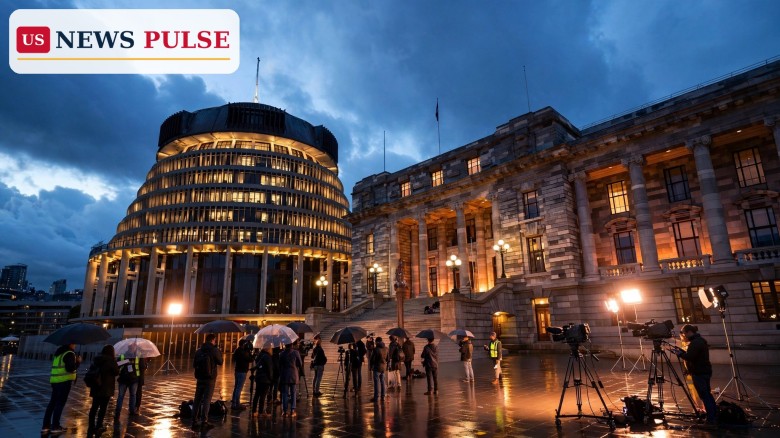
New Zealand's general election ended without a winner on Saturday, November 7, 2026, as Prime Minister Christopher Luxon's conservative bloc clung to a one-seat lead in a result so tight that hundreds of thousands of uncounted special votes could still overturn it. With more than 95 percent counted, National and its coalition partners held a projected 67 seats in a 130-seat parliament — one more than the 66 needed for a majority. The two main parties finished almost deadlocked, each just under 30 percent, separated by only a few thousand votes. Luxon told supporters in Auckland that "it is too close to call," while insisting National had "a pathway to forming the next government." Labour leader Chris Hipkins has not conceded. The final answer comes with the official count on November 27, when an estimated 500,000 to 700,000 special votes are added.
Key Points
- Luxon's bloc — National, ACT and New Zealand First — held a projected 67 of 130 seats, with 66 needed for a majority.
- National and Labour finished neck and neck, each just under 30 percent, separated by only a few thousand votes.
- Newcomer centrist party Opportunity, led by 38-year-old Qiulae Wong, crossed the 5 percent threshold and is projected to win seven seats — the first new party in parliament in more than a decade.
- About 500,000 to 700,000 special votes remain uncounted and historically favour the left; the final result comes November 27.
- Neither Luxon nor Hipkins has claimed victory, and Hipkins has not conceded.
What Happened
New Zealanders voted on Saturday, November 7, 2026, in an election framed as a verdict on the cost of living and the economy. Voting had begun on October 26, and nearly 3.8 million people were eligible. Early returns put Labour narrowly ahead on the party vote, 29.71 percent to National's 29.41 percent, and the projected seat counts swung back and forth through the night.
With more than 95 percent of ballots counted, the right bloc had edged in front. National, ACT and New Zealand First together held a projected 67 seats — a majority, but by the slimmest possible margin. The left bloc of Labour, the Greens on about 16 seats and Te Pati Maori on five held about 56 to 58 seats, short of a majority. The night's biggest surprise sat between the two blocs: Opportunity, led by 38-year-old Qiulae Wong, crossed the 5 percent threshold and was projected to win seven seats, the first new party in parliament in more than a decade.
Yet the election-night numbers are only preliminary: the Electoral Commission still has to count 500,000 to 700,000 special votes — ballots cast overseas and by voters outside their home electorates. In past elections those votes have tilted left, which is why observers in Wellington refused to call the result even after the right bloc's lead appeared.
Background: How New Zealand Votes
New Zealand elects its parliament under the mixed-member proportional system (MMP), in which voters cast one vote for a local candidate and one for a party. The party vote decides each party's overall share of seats, and a party needs either 5 percent of the party vote or one electorate seat to enter parliament. Opportunity crossed that threshold on Saturday night.
The system almost always produces coalition governments. Luxon has governed since 2023 in coalition with ACT and New Zealand First, and the campaign was fought largely on the cost of living and the economy. Labour, under Hipkins, argued the government's medicine had made life harder for ordinary families. The near-tie suggests the country is split down the middle.
New Zealand Election 2026: A Parliament on a Knife's Edge
The headline figure — 67 seats against a 66-seat majority — hides how fragile the result really is. A one-seat majority is the weakest governing position in New Zealand politics: a single by-election loss or defection can bring a government down.
That fragility is doubled by the special votes still to come. If the historical pattern holds and the late count leans left, the right bloc's lead could evaporate entirely, leaving neither side with a majority. In that scenario, Opportunity's seven seats could become the most important numbers in New Zealand politics.
Reactions and Quotes
Luxon addressed supporters in Auckland as the count stretched into the early hours. "It is too close to call," he said, while telling the crowd that National had "a pathway to forming the next government" — claiming the momentum without claiming a victory the numbers do not yet support.
Hipkins has not conceded, and Labour figures pointed to the special votes as reason to wait: the preliminary count is not the final count, and the votes still in envelopes have favoured Labour and its allies in election after election.
Why It Matters
New Zealand is a small country, but its elections are watched closely across the Pacific and beyond. The result speaks to the cost-of-living politics that have defined elections across the democratic world: an incumbent government that campaigned on economic competence finished essentially tied with the opposition, neither rewarded nor punished decisively. Opportunity's arrival also changes parliament's shape, giving voters unrepresented by the two big blocs a voice in the House for the first time in more than a decade.
Then there is stability: a hung parliament and three weeks of uncertainty are not a crisis, but the next government will be built on a very narrow foundation, whoever leads it. For more on governments forming around the world, see our coverage of Trump's claim that Russia and Ukraine want to settle for the first time and Russia's appointments for the Abu Dhabi peace talks.
What Happens Next
The Electoral Commission will now count the special votes, with the official result due on November 27. If the right bloc holds its lead, Luxon will move to renew his coalition with ACT and New Zealand First. If the count flips, Hipkins and the left bloc will face their own coalition puzzle, with the Greens, Te Pati Maori and possibly Opportunity in the frame. Either way, no government will be sworn in until the official count lands.
Frequently Asked Questions
Who won the New Zealand election?
Nobody yet. With more than 95 percent counted, Prime Minister Christopher Luxon's right bloc leads with a projected 67 seats, but 500,000 to 700,000 special votes remain uncounted and the final result is due November 27.
How many seats does a party need to govern in New Zealand?
A majority in the projected 130-seat parliament is 66 seats. Luxon's bloc holds a projected 67 — a majority of one.
What are special votes?
Special votes are ballots cast overseas or outside a voter's home electorate. They are counted after election day and have historically favoured the left, which is why the result remains too close to call.
Who is Qiulae Wong?
Qiulae Wong, 38, leads the newcomer centrist Opportunity party, which crossed the 5 percent threshold on Saturday and is projected to win seven seats.
When will the final result be known?
The official count, including all special votes, is expected on November 27, 2026. Only then will it be clear which bloc can form the next government.
Leave a Comment