


 | Today's Date:


Trump Would 'Certainly Consider' Military Force in Cuba to 'Get It Done'
President Donald Trump has said he would “certainly consider” using military force against Cuba, putting a possible American operation against the island on the table for the first time with a deadline attached: before he leaves office. In a phone interview on Thursday, November 12, 2026, with conservative radio host Hugh Hewitt of the Salem News Channel, Trump said, “I want to get Cuba done before I leave,” adding that his administration was “watching it very closely.”
Key Points
- Trump told Hugh Hewitt he would “certainly consider” military force to “free Cuba” and wants to “get Cuba done” before leaving office.
- He called Cuba “essentially a failed … place, nation, whatever you wanna call it” and said Secretary of State Marco Rubio “would love to do it.”
- Politico called it the first time Trump has put a timeline on a Cuba operation.
- The remarks follow a de facto US oil blockade imposed in January and an executive order calling Cuba an “unusual and extraordinary threat.”
- The blockade has caused repeated nationwide blackouts and fuel and food shortages; Cuban officials call it “collective punishment.”
What Happened
The exchange came during a phone interview with Hewitt on Thursday, November 12. Asked whether he was considering “freeing Cuba” through military intervention, the president replied that he would “certainly consider” it, then volunteered a timetable he had never attached to the idea before. “I want to get Cuba done before I leave,” Trump said, adding that the administration was “watching it very closely.”
Trump’s language was striking even by his own standards on the island. He called Cuba “essentially a failed … place, nation, whatever you wanna call it,” and said Secretary of State Marco Rubio, whose parents are from Cuba, “would love to do it.” He has threatened to topple Cuba’s authorities before — on Monday, November 9, he said Cuba “will fall fairly soon” and the US would help “on a humanitarian basis,” and in March, as the power grid collapsed, he said he believed he would have “the honour of taking Cuba.” Thursday’s interview made those warnings concrete.
Background: How the US Pressure Campaign on Cuba Escalated
The remark is the latest step in a pressure campaign that has tightened steadily through 2026. In January, the US placed Cuba under a de facto oil blockade after seizing Venezuela’s President Nicolas Maduro and cutting off Venezuelan oil shipments that Havana depended on. Trump then signed an executive order declaring Cuba an “unusual and extraordinary threat” and threatening tariffs on any country that supplies it with fuel.
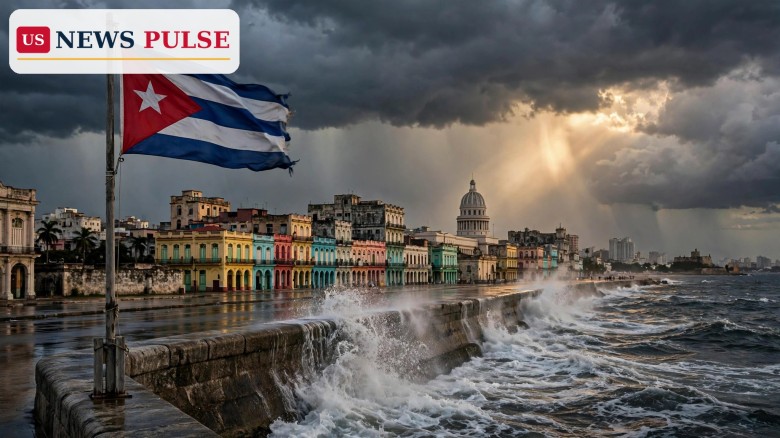
The effect on the ground has been severe: repeated nationwide blackouts and shortages of fuel and food, as Cuba struggles to keep its power grid running without the oil it once received from Caracas. Cuban officials have called the blockade “collective punishment.” Washington has added sanctions against Cuba’s state oil company, President Miguel Diaz-Canel and relatives of Raul Castro; a new round this month targeted 10 more people and entities, and the US has issued an arrest warrant for Castro. See our report on the expansion of Cuba sanctions. In March, the head of US Southern Command told senators US troops were not rehearsing for an invasion of Cuba.
Trump Cuba Military Force: What the President’s Words Mean
The significance of Thursday’s interview lies less in any single phrase than in the combination of three things: a willingness to use force, a named partner in Rubio, and a deadline. Each element on its own would be notable. Together, they amount to the clearest statement yet that the president sees Cuba as unfinished business for his presidency — something to be settled, not managed.
That framing matters because of what has already happened in the region this year. The January seizure of Maduro showed this administration is prepared to use force against a Latin American government it regards as hostile, with little advance warning. The Cuba remarks come in that shadow: a president who has already ordered one such operation is now openly weighing another, against Cuba, 90 miles from Florida. But the interview left the biggest questions unanswered: Trump did not say what “getting Cuba done” would look like, whether he had ordered any planning, or whether the March assurance still stands.
Reactions: Washington and Havana
The interview drew immediate attention in Washington, where the president’s willingness to contemplate force against Cuba — and his self-imposed deadline — was the sharpest new element in a week already full of foreign-policy news. Politico noted it was the first time Trump had put a timeline on a possible operation. In Havana, the government’s standing position is on the record: Cuban officials have called the oil blockade “collective punishment.” What neither side has done, in the reporting available so far, is spell out a next move.
Why It Matters
Cuba sits 90 miles off Florida, home to a large Cuban-American community that has watched the island’s crisis unfold in real time, and it is the subject of one of the longest-running confrontations in American foreign policy. Florida’s politics are bound up with the island’s fate, as shown by the state’s recent subpoena of democratic socialists over alleged foreign funding from Cuba and China, covered in our earlier report. The human stakes are immediate: the blockade has already left Cubans facing repeated blackouts and shortages, and any escalation would land on a population whose power grid has already collapsed once this year. Governments across the region will also read the remarks as a signal about how far Washington is prepared to go.
What Happens Next
The first thing to watch is whether the White House or the State Department clarifies the president’s remarks — and whether Rubio himself weighs in publicly. A statement from Rubio would show whether the administration treats the interview as settled policy or as the president thinking aloud. The second is Havana’s response, expected in the coming days. The third is the practical picture on the island: whether the blackouts and shortages worsen, and whether any military signals follow the president’s words. Until they appear, the interview remains a threat with a deadline and no plan attached — but it is now on the public record.
Frequently Asked Questions
What did Trump actually say about Cuba?
In a phone interview with Hugh Hewitt on November 12, 2026, Trump said he would “certainly consider” military force against Cuba. He added: “I want to get Cuba done before I leave.”
Has Trump set a deadline for action on Cuba?
He has put a broad timeline on it — before he leaves office — but no specific date.
What is the US oil blockade on Cuba?
A de facto blockade imposed in January 2026 after the US seized Venezuela’s President Nicolas Maduro and cut off its oil to Cuba.
Why is Marco Rubio central to the Cuba policy?
Rubio is secretary of state and the administration’s leading voice on Cuba policy. His parents are from Cuba, and Trump said Rubio “would love to do it.”
Has the US military rehearsed an invasion of Cuba?
In March, the head of US Southern Command told senators US troops were not rehearsing for an invasion of Cuba.
Leave a Comment