


 | Today's Date:




Zelenskyy Says Starshield Speed Cap Is Back, Slowing Ukraine Drone Defence
President Volodymyr Zelenskyy said on Thursday, November 12, 2026, that a speed limit on Starshield, the military version of SpaceX's Starlink satellite network, is back in force across Ukraine, slowing the terminals that guide the country's drone interceptors and letting some Russian jet-powered drones slip through. Ukrainian units have recorded significant disruptions for several days along the entire front line and in Russian-occupied territory, and the military concluded the cause is a systematic cap of 161 kilometres per hour, or 100 mph, on terminal speeds.
Key Points
- President Volodymyr Zelenskyy said on Thursday, November 12, 2026, that Ukrainian units have recorded significant Starshield disruptions for several days across the entire front line and Russian-occupied territory.
- The military concluded the cause is a systematic speed cap of 161 km/h (100 mph): terminals lose connection when they move faster, including terminals on high-speed interceptor drones.
- The cap makes it much harder to intercept Russian jet-powered drones, and Zelenskyy said some Russian strikes already got through because interceptors could not build up enough speed in time.
- It is the second such cap in a month: the same 161 km/h limit ran from October 14 to 24, 2026, before full service was restored.
- Ukraine is seeking an explanation from the United States, and SpaceX has not commented.
What Happened
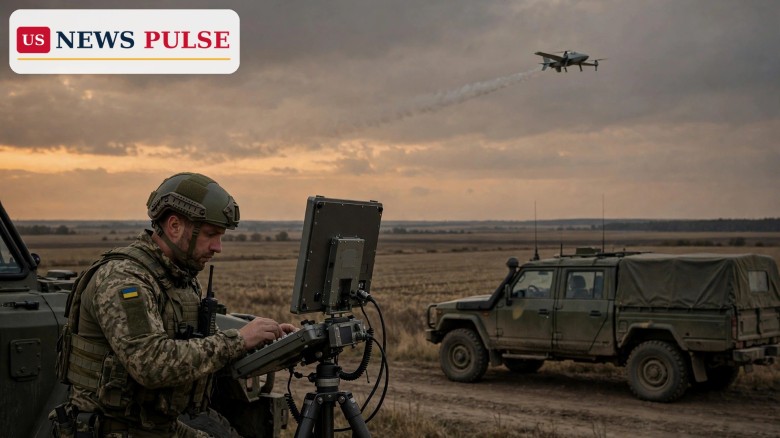
Zelenskyy raised the alarm on Thursday, saying the disruptions were not isolated faults but a pattern recorded by units across the whole front. Starshield is the military version of Starlink, built for government and defence users, and it carries the data links Ukrainian drone crews rely on to steer interceptors toward incoming Russian aircraft and drones. When a terminal moves faster than the cap allows, the link drops.
The practical effect is serious. Ukraine's interceptor drones chase fast, jet-powered Russian drones built to outrun older propeller-driven defences. An interceptor that cannot hold its satellite link at high speed cannot close the final gap, and Zelenskyy said that is exactly what has happened: some Russian strikes have already got through because interceptors could not reach sufficient speed in time. The renewed cap surfaced a day after two days of US-mediated talks between Russia and Ukraine in Abu Dhabi ended, the first direct talks since February, with no ceasefire agreed. Read more in our report on the Abu Dhabi talks ending without a ceasefire deal.
Background and Context
This is not the first time Ukrainian forces have hit this wall. The same 161 km/h cap was imposed from October 14 to 24, 2026, cutting drone links whenever a terminal moved above that speed, before full service was restored on October 24. That episode triggered a political row in Washington and Kyiv, and Zelenskyy later told the PBS NewsHour, in an interview aired on November 2, that he was "not sure that he could do it personally alone, without any representatives from American government" — referring to SpaceX chief Elon Musk and who ordered the slowdown. Read more in our report on Zelenskyy doubting Musk acted alone in the Starlink slowdown.
Musk has said SpaceX enforced its own terms of service, while earlier saying the US military and "ultimately" the president decide such limits. Defence Secretary Pete Hegseth has denied any US directive behind the October cap. Zelenskyy has said he asked President Donald Trump about four times to lift Starshield restrictions so Ukraine could strike Russian ballistic missile launchers, without success.
Starshield Speed Cap: How the 161 km/h Limit Hits Ukraine's Drones
The cap works by cutting the connection once a terminal passes 161 km/h, or 100 mph. A terminal fixed to a building or a parked vehicle is unaffected, which is why the restriction went unnoticed by many users at first. But a terminal carried by a fast-moving drone crosses that threshold as a matter of routine, and the link drops exactly when the drone is accelerating to intercept its target. Ukrainian units recorded the same failure, at the same speed, across the entire front over several days.
The effect is worst against Russia's jet-powered drones, which fly faster than the propeller-driven Shahed-type drones Ukraine has learned to shoot down in large numbers. Catching a jet drone means matching its speed, and an interceptor that loses its link at 161 km/h cannot do that. The result is a gap in the shield over Ukrainian cities and infrastructure. Read more in our report on Russia pounding Ukraine's power grid before the Abu Dhabi talks.
Reactions and Quotes
Zelenskyy's message on Thursday was blunt: the disruptions are real, they are systematic, and they are already costing Ukraine interceptions. He did not name who imposed the cap, and Kyiv is seeking an explanation from Washington rather than assigning blame in public. That restraint fits the October episode, when Ukrainian officials pressed the United States privately while Zelenskyy questioned publicly whether Musk could have acted alone.
Why It Matters
The renewed cap matters because it weakens Ukraine's cheapest and most flexible air defence at a moment when Russia is pressing its air campaign. Interceptor drones are far cheaper than missiles, they can be launched in large numbers, and they have become the backbone of the nightly battle against Russian drone waves. A speed limit that grounds them, in effect, hands Russia a free advantage without a single shot being fired.
It also matters because the pattern is now repeating. One cap could be dismissed as a mistake or a contract dispute. A second cap, at the same speed, a fortnight after the first was lifted, looks like a policy, and it raises the same question as the October episode: who decides the limits on a network Ukraine's defence depends on?
What Happens Next
Ukraine is seeking an explanation from the United States, and the answer it receives will shape what happens next. If the cap is lifted again, as it was on October 24, interceptor operations can return to full speed within days. If it stays, Ukrainian engineers will have to find workarounds while Russia keeps flying jet drones through the gap.
The diplomatic track continues in parallel. American envoys Jared Kushner and Steve Witkoff travelled to Moscow after the Abu Dhabi talks ended, and the outcome of those meetings will set the tone for the weeks ahead.
Frequently Asked Questions
What is the Starshield speed cap?
A limit of 161 km/h (100 mph) on Starshield satellite terminals. Terminals moving faster lose their connection, which affects terminals mounted on high-speed interceptor drones.
How is the cap affecting Ukraine?
It makes it much harder to intercept Russian jet-powered drones. Zelenskyy said some Russian strikes already got through because interceptors could not reach sufficient speed in time.
Has this happened before?
Yes. The same 161 km/h cap ran from October 14 to 24, 2026, before full service was restored. The November cap is the second such restriction in a month.
Who imposed the cap?
That is not known. Ukraine is seeking an explanation from the United States, SpaceX has not commented, and Defence Secretary Pete Hegseth has denied any US directive behind the October cap.
Leave a Comment