


 | Today's Date:


Russia Revives Demand NATO Pull Back to 1997 Borders in Ukraine Deal Talks
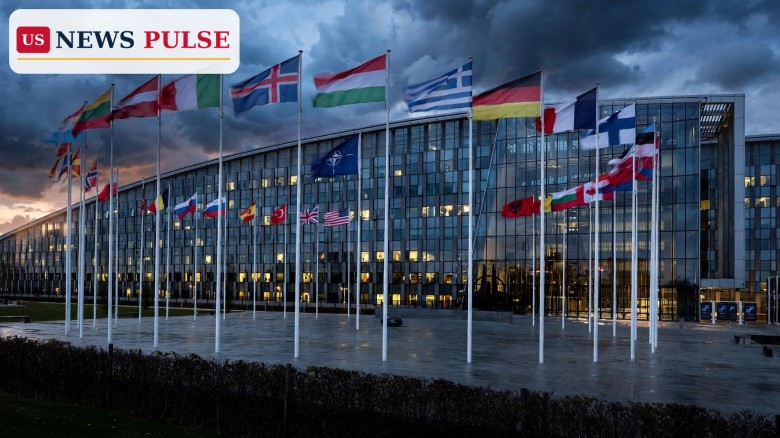
Russia has revived its demand that NATO pull its troops and bases back to the alliance's 1997 borders in exchange for a deal ending the war in Ukraine, putting a condition the West rejected four years ago at the centre of the Abu Dhabi talks with President Donald Trump's envoys.
The demand was laid out in a paper dated November 10, 2026, obtained by The New York Times and confirmed authentic by a second person involved in the talks. It comes days before President Vladimir Putin meets Trump next week in Shenzhen, China, their second meeting of Trump's second term.
Key Points
- Russia handed Trump's envoys Jared Kushner and Steve Witkoff a paper dated November 10, 2026, reviving its December 2021 demands almost word for word.
- The paper calls for NATO to pull back to the alliance's 1997 borders, rule out further enlargement, and end military activity in Ukraine, Eastern Europe, the South Caucasus and Central Asia.
- Carrying it out would require NATO to withdraw forces from Poland, the Baltic states and Finland, which joined in 2023.
- NATO Secretary General Mark Rutte rejected the demand: NATO will not return to its 1997 borders — "This is not a discussion."
- Putin told the US envoys the only acceptable line of demarcation is Russia's claimed "state border," including all of Donetsk, Luhansk, Zaporizhzhia and Kherson, including territory beyond Russia's control.
What Happened
The paper surfaced during closed-door talks this week in Abu Dhabi between Russian negotiators and Trump's envoys, Kushner and Witkoff. It is a "non-paper" — no letterhead, no signature — and it represents Russia's opening position, not a final offer, though officials signalled Putin could be flexible.
At its heart is the demand that NATO retrench to where it stood in 1997, before its expansion into Central and Eastern Europe. That would mean withdrawing alliance troops and bases from Poland, the Baltic states and Finland, which joined NATO in 2023. The paper also calls on NATO to rule out further enlargement and halt military activity across Ukraine, Eastern Europe, the South Caucasus and Central Asia.
Russian Deputy Foreign Minister Sergei Ryabkov, who led Moscow's January 2022 talks, confirmed on Thursday that negotiators had returned to the "ideas and approaches" of the December 2021 drafts. Putin added a second hard line: the only acceptable line of demarcation is Russia's claimed "state border," including all of Donetsk, Luhansk, Zaporizhzhia and Kherson, including territory Russian forces do not control.
Background and Context
The December 2021 drafts framed the pre-war crisis: Moscow demanded NATO stop expanding eastward, withdraw to 1997 positions, and pledge never to admit Ukraine. The US and NATO rejected them, and Russia invaded Ukraine weeks later.
The Abu Dhabi talks are part of a renewed diplomatic push. Witkoff and Kushner met Putin in Moscow before travelling to the Gulf, and the envoys have been shuttling between the parties as the Trump administration presses for a settlement. The war has not paused: NATO jets were scrambled twice as drones crossed into Lithuania and Latvia in recent days, a reminder that the alliance's eastern members feel the war at their borders.
Russia's NATO 1997 Borders Demand: What Moscow Wants
The 1997 demand is the most sweeping item in the paper, and the one NATO is least likely to accept. In 1997, NATO had 16 members and no forces stationed permanently in Central or Eastern Europe. Today it has 32 members, with battlegroups in Poland and the Baltic states, and Finland's long border with Russia now inside the alliance.
Reversing that would mean dismantling nearly three decades of expansion and telling four member states that the troops defending them must leave. It would also hand Moscow a veto over NATO's future membership, since the paper rules out further enlargement — a principle the alliance has treated as non-negotiable.
The paper's other demands are no smaller. Ending NATO military activity across Ukraine, Eastern Europe, the South Caucasus and Central Asia would strip the alliance of partnerships and training missions across a vast region. With Putin's insistence on the four Ukrainian regions as Russia's "state border," the paper reads as a maximalist opening bid — though its "non-paper" status suggests it is meant to be traded away.
Reactions and Quotes
Rutte's response was the bluntest. The NATO secretary general said the alliance will not return to its 1997 borders, adding, "This is not a discussion." Noting 16 countries have joined since 1997, he framed the demand as a non-starter, not a point for negotiation.
Ryabkov's confirmation cut the other way. By saying negotiators had returned to the "ideas and approaches" of the December 2021 drafts, he made clear the paper was a deliberate return to Moscow's pre-war position. He led the January 2022 talks where those drafts were presented and rejected.
Neither the White House nor the US envoys publicly responded to the paper's contents. That silence is typical of the shuttle diplomacy under way, in which Witkoff and Kushner carry positions between capitals without commenting in public. The envoys are also working on a major prisoner exchange alongside the wider talks.
Why It Matters
The demand tests whether the current diplomacy can bridge a gap that was unbridgeable in 2022. The 1997 borders condition was rejected before the war, and NATO has only grown since. If Moscow holds the same line, the talks face the same wall — unless the paper is an opening bid meant to be traded away.
It also matters for the countries named. Poland, Estonia, Latvia, Lithuania and Finland are NATO members whose security rests on the alliance's presence, and a deal trading their protection for a settlement in Ukraine would shake the alliance to its foundations. For Ukraine, Putin's "state border" would require Kyiv to surrender land it still holds.
What Happens Next
The next milestone is the Putin-Trump meeting in Shenzhen next week. If the paper's demands reach the leaders' table, Trump must decide whether to press Moscow to soften them or put them to Ukraine and NATO as the price of a deal.
Frequently Asked Questions
What is Russia demanding of NATO? In a paper dated November 10, 2026, handed to Trump's envoys in Abu Dhabi, Russia revived its December 2021 demands: NATO should pull back to its 1997 borders, rule out further enlargement, and end military activity in Ukraine, Eastern Europe, the South Caucasus and Central Asia.
Which countries would NATO have to leave? NATO would have to withdraw forces from Poland, Estonia, Latvia, Lithuania and Finland, which joined in 2023.
How did NATO respond? Secretary General Mark Rutte rejected it, saying NATO will not return to its 1997 borders: "This is not a discussion." Sixteen countries have joined NATO since 1997.
What did Putin say about Ukraine's borders? Putin told the US envoys the only acceptable line of demarcation is Russia's claimed "state border," including all of Donetsk, Luhansk, Zaporizhzhia and Kherson, including territory beyond Russia's control.
When do Putin and Trump meet next? Putin meets Trump next week in Shenzhen, China, at the Asia-Pacific economies gathering, their second meeting of Trump's second term.
Leave a Comment