


 | Today's Date:


Cole Tomas Allen Hit With Terrorism Charge Over White House Dinner Attack
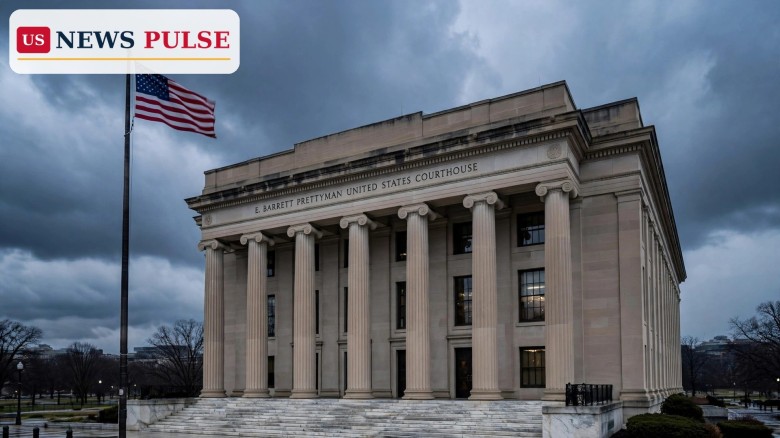
A federal grand jury has added an attempted-terrorism charge against Cole Tomas Allen, the California man accused of opening fire at the White House Correspondents' Dinner in April, in a new indictment in a case already built around an alleged attempt to assassinate President Donald Trump.
The superseding indictment was returned on Thursday, November 12, 2026, and announced on Friday, November 13, by US Attorney Jeanine Pirro. It brings the total charges against Allen to five.
Key Points
- A federal grand jury returned a superseding indictment on Thursday, November 12, 2026, adding one count of committing an act of terrorism while armed under D.C. law.
- Cole Tomas Allen, 31, of Torrance, California, now faces five counts, including attempting to assassinate President Donald Trump.
- Prosecutors say Allen ran through a Secret Service checkpoint at the Washington Hilton on April 25, 2026, and fired a Mossberg 12-gauge shotgun that struck an officer's vest.
- The terrorism count rests on a D.C. statute because no single federal domestic-terrorism law covers the conduct; prosecutors could seek a terrorism sentencing enhancement if Allen is convicted.
- Allen pleaded not guilty to the original charges; a status conference is set for December 4, 2026, and a jury trial for September 7, 2027, before Judge Trevor McFadden. He has not entered a plea on the new count.
What Happened
The superseding indictment replaces the original charging document and adds the terrorism count to the four counts Allen already faced: attempting to assassinate the president, assaulting a federal officer with a deadly weapon, transporting a firearm and ammunition in interstate commerce with intent to commit a felony, and discharging a firearm during a crime of violence.
There is no single federal domestic-terrorism law that broadly outlaws acts of terrorism, so prosecutors turned to the District of Columbia's terrorism statute, which covers committing an act of terrorism while armed. The same D.C. statute was used against Floyd Fee Corkins, the gunman convicted of attacking the Family Research Council in 2012.
The choice of law is possible because the US Attorney's Office for the District of Columbia is the only federal prosecutor's office that handles both federal crimes and most local crimes involving adult defendants. It can therefore charge violations of both federal and D.C. law in the same case. The office is led by Pirro, a former judge and Fox News host appointed by the president.
Background and Context
The case goes back to the evening of Saturday, April 25, 2026, when the White House Correspondents' Association was holding its annual dinner at the Washington Hilton. Prosecutors allege that Allen charged through a Secret Service checkpoint armed with a 12-gauge pump-action shotgun, a .38-caliber pistol, multiple knives and daggers, and a significant amount of ammunition,
President Donald Trump and Vice President JD Vance were rushed off the stage, and Secret Service officers stopped Allen. Prosecutors say he fired the Mossberg shotgun during the confrontation and that a pellet struck an officer's protective vest. Investigators later confirmed the pellet had struck the vest, and no officer was seriously hurt.
Federal authorities also allege that Allen had scheduled emails to be sent to his family, friends and a former employer explaining his actions, which prosecutors are likely to cite as proof the attack was planned. He was arrested at the scene and has been held in custody ever since. On October 29, 2026, Judge McFadden set jury selection for September 7, 2027.
Cole Tomas Allen Terrorism Charge: What the New Count Changes
The terrorism count changes the case in two ways. First, it reframes the April 25 attack in the language of terrorism rather than only as an assault on the president and on a federal officer, letting prosecutors present it as an act aimed at intimidating the government and the public.
Second, it raises the possible sentence. A terrorism sentencing enhancement would add years to any prison term for the other counts. The attempted-assassination charge already carries a possible life sentence. The count also shows prosecutors working around a gap in federal law: Congress has never passed a broad federal domestic-terrorism statute, so cases like this one depend on state and local terrorism laws where they exist.
Reactions and Quotes
The indictment itself carries the prosecution's central allegation in stark terms. Federal prosecutors allege that Allen "attempted to kill the President of the United States, Donald J. Trump" when he charged through the Secret Service checkpoint armed with the shotgun, the pistol and the knives.
Pirro's office announced the superseding indictment on Friday, November 13; no comment from Allen's lawyers was reported, and Allen has not entered a plea on the new count.
Why It Matters
The new charge matters because it tests how the justice system treats an attack on the president at a public event. An assassination attempt is already among the gravest federal charges; adding a terrorism count signals that prosecutors view the April 25 attack as an assault on the democratic process itself, not only on one man. It also matters for the debate over domestic-terrorism law: the United States has no broad federal statute criminalising domestic terrorism as such. This case shows prosecutors reaching for a local statute to fill that gap, and the outcome may shape how future cases are charged.
What Happens Next
The next step is a status conference on December 4, 2026, before Judge McFadden, where the court is expected to deal with the new charge and set the schedule ahead. Allen will need to enter a plea on the terrorism count, and his lawyers may challenge the superseding indictment. After that, the case moves toward jury selection on September 7, 2027.
Frequently Asked Questions
Who is Cole Tomas Allen?
Cole Tomas Allen, 31, of Torrance, California, was arrested on April 25, 2026, at the Washington Hilton during the White House Correspondents' Association dinner, after prosecutors say he charged through a Secret Service checkpoint armed with a shotgun.
What is the new terrorism charge?
A federal grand jury added one count of committing an act of terrorism while armed under D.C. law, in a superseding indictment returned on November 12, 2026, and announced on November 13 by US Attorney Jeanine Pirro.
Why was the charge brought under D.C. law?
There is no single federal domestic-terrorism law that broadly outlaws acts of terrorism, so prosecutors used Washington's terrorism statute. The D.C. US Attorney's Office prosecutes both federal and most local crimes.
What are the five charges against Allen?
Attempting to assassinate the president, assaulting a federal officer with a deadly weapon, transporting a firearm and ammunition in interstate commerce with intent to commit a felony, discharging a firearm during a crime of violence, and committing an act of terrorism while armed under D.C. law.
When is the trial?
Jury selection is set for September 7, 2027, before US District Judge Trevor McFadden, with the trial expected to last three to four weeks. A status conference is set for December 4, 2026.
Read more on this case: Pirro says Cole Allen's bullet struck Secret Service agent at Trump dinner and Alex Murdaugh indictments challenged as defence says grand jury was misled.
Leave a Comment